
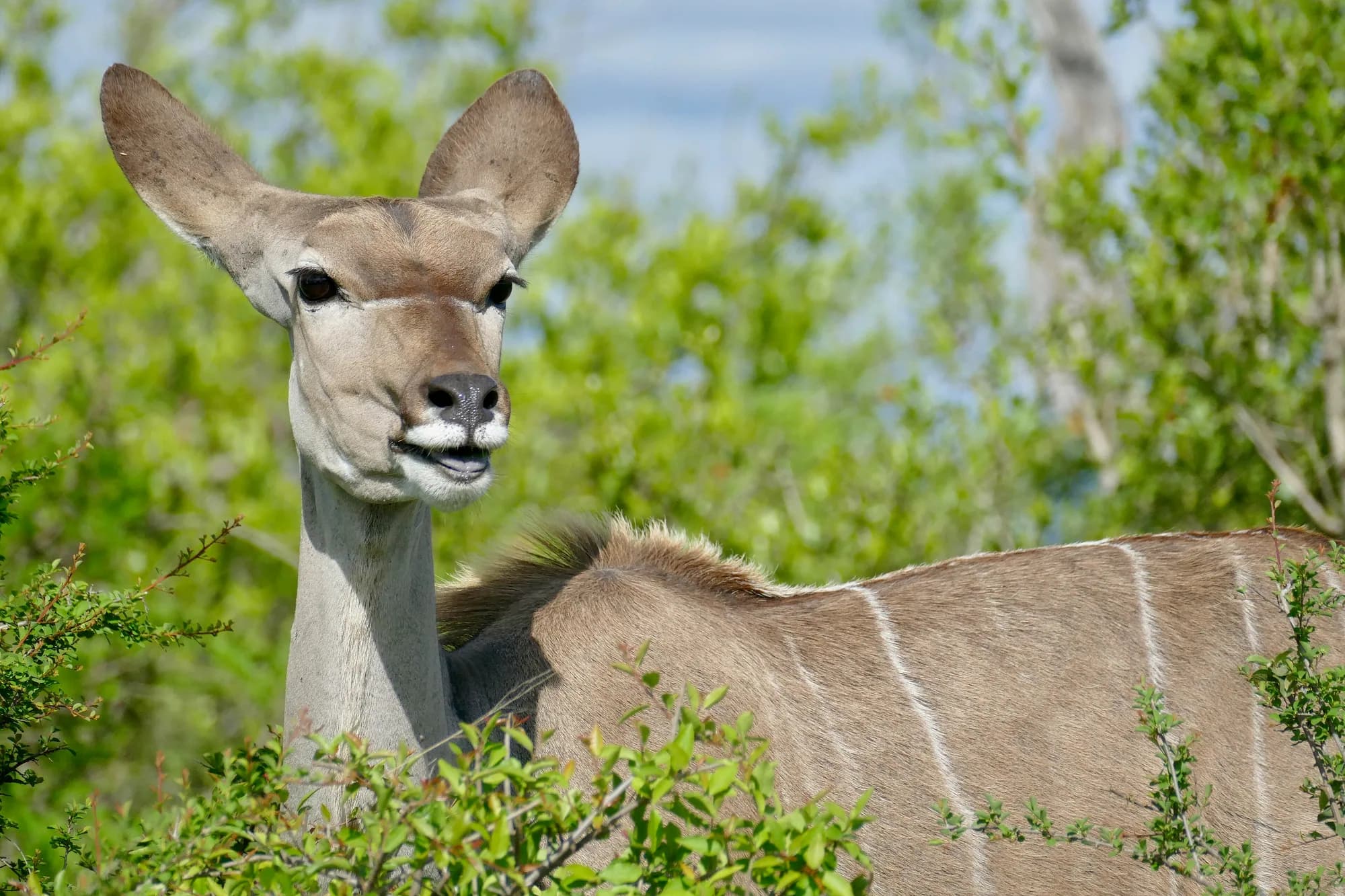
Species · Tragelaphus strepsiceros
Greater kudu
A very large antelope with spiral horns over a metre long, and the animal people most often fail to see because it is standing still ten metres away. Kudu are a bush species, and their whole defence is not moving.
Also called
- Tandala mkubwa · Swahili
- Koedoe · Afrikaans
- Nhoro · Shona
Checked 27 Sept 2026
- Where
- Eastern and southern bushveld
- Best months
- Dry season, June–October
- Horns
- Bulls only; two and a half twists
- Odds
- Good in thornveld, poor on plains
Thornveld, broadleaf woodland and rocky hill country with cover — not open plain. Widespread through eastern and southern Africa wherever there is bush to disappear into, which is why the arid Cape parks and the short-grass plains both miss them.
Where it is
HabitatThornveld, broadleaf woodland and rocky hill country with cover — not open plain.
Worth travelling for
One of very few parks where greater and lesser kudu overlap, alongside sable and roan.
Eastern Cape hill country with high density and very few visitors.
Broken sandstone and thick bush, with kudu, sable and roan together.
Common in the woodland and regularly at the pumped waterholes.
Also occurs
KenyaBotswanaZambiaUgandaEthiopiaMozambique
Present, but not where you would go to see one.
Where to actually go
Ranked, with the reason each — these are not interchangeable.
- 01RuahaTanzaniaOne of very few parks where greater and lesser kudu overlap, alongside sable and roan. The best antelope park in East Africa.Both kudu species
- 02Mountain ZebraSouth AfricaEastern Cape hill country with high kudu density and very few visitors.Quiet, and reliable
- 03HwangeZimbabweCommon in the woodland and regularly at the pumped waterholes, which is the easy way to see one in the open.At a pan
- 04Waterberg PlateauNamibiaBroken sandstone and thick bush on the plateau, with kudu, sable and roan together.With the rarer antelope
- 05KarooSouth AfricaAt the arid edge of the range, in the river valleys rather than on the open Karoo itself.The range margin
Where you will not see one
- Open short-grass plainsThe Serengeti plains, the Mara's open west and the crater floor are the wrong habitat. Kudu need cover.
- East Africa, for this speciesKenya and Tanzania also hold the lesser kudu, which is smaller, greyer and more heavily striped. Ruaha and Tsavo are among the few places both occur.
- The Cape reservesTable Mountain, Agulhas and the West Coast have none.
When to go
When to go
- J
- F
- M
- A
- M
- J
- J
- A
- S
- O
- N
- D
January: marginal. February: marginal. March: marginal. April: good. May: good. June: best. July: best. August: best. September: best. October: best. November: good. December: marginal.
Through the day
- Dawn
- Morning
- Midday
- Afternoon
- Dusk
- Night
Dawn: most active. Morning: active. Midday: usually resting. Afternoon: active. Dusk: most active. Night: active.
What it looks like in the field
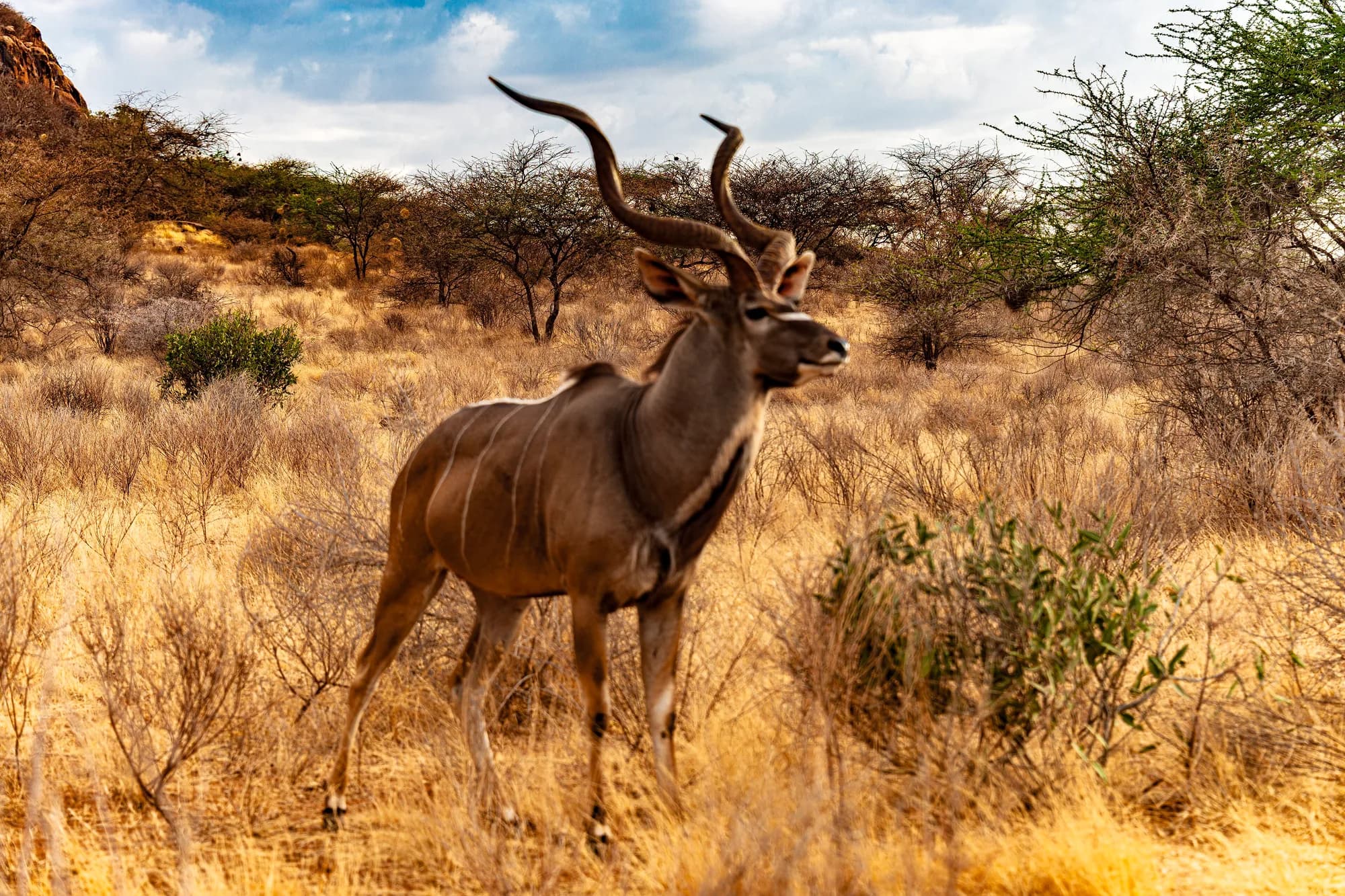
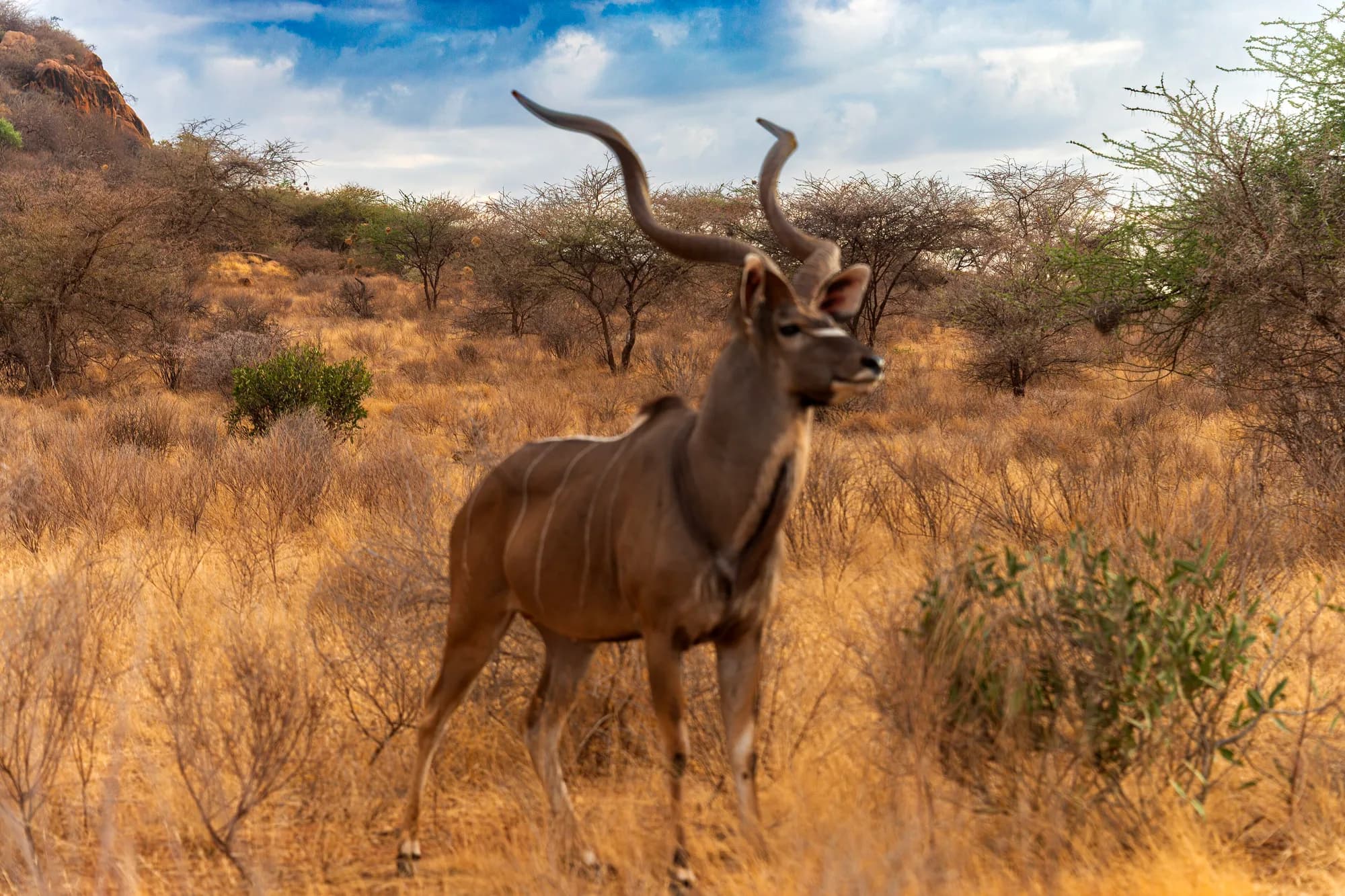
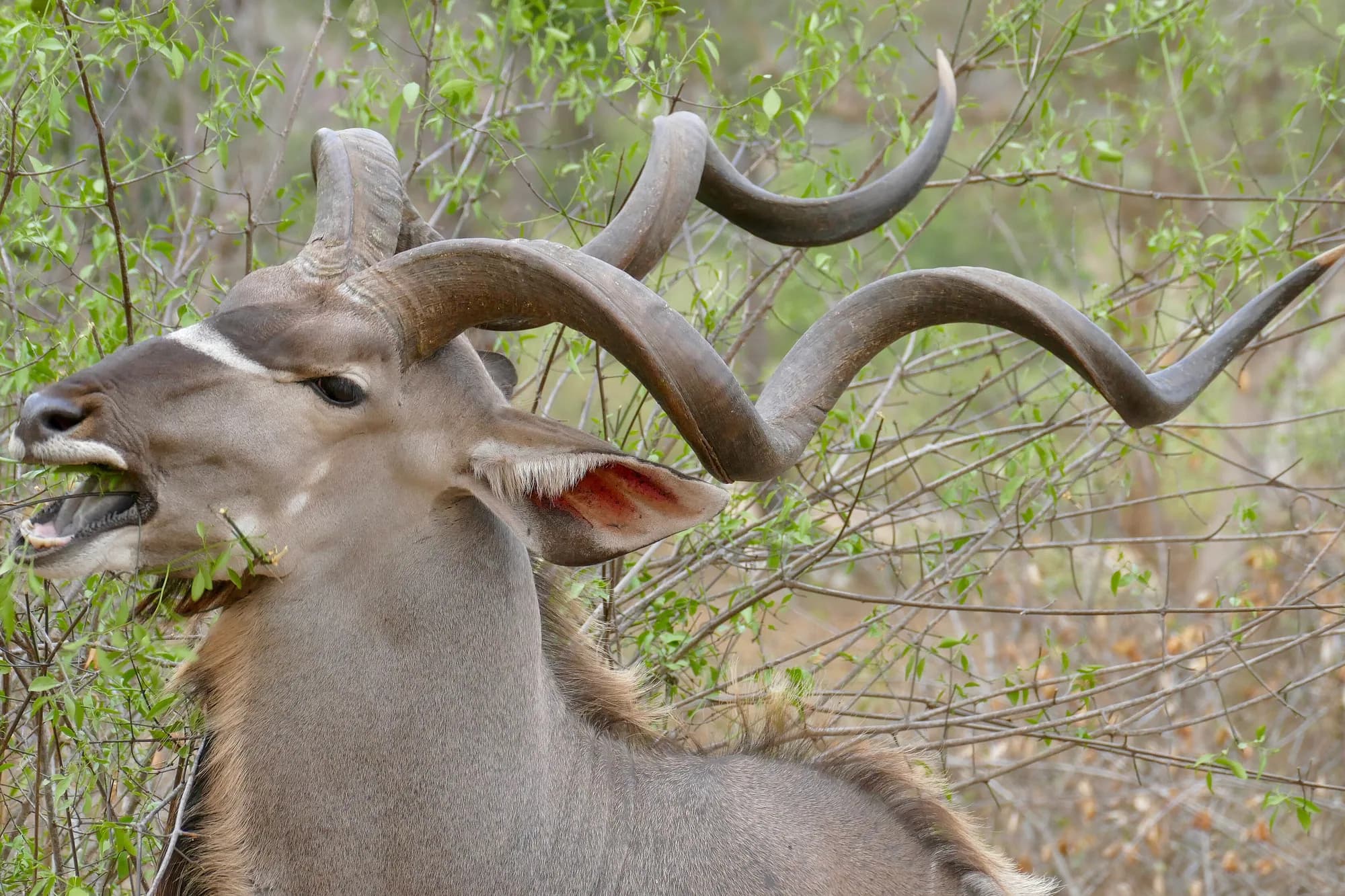
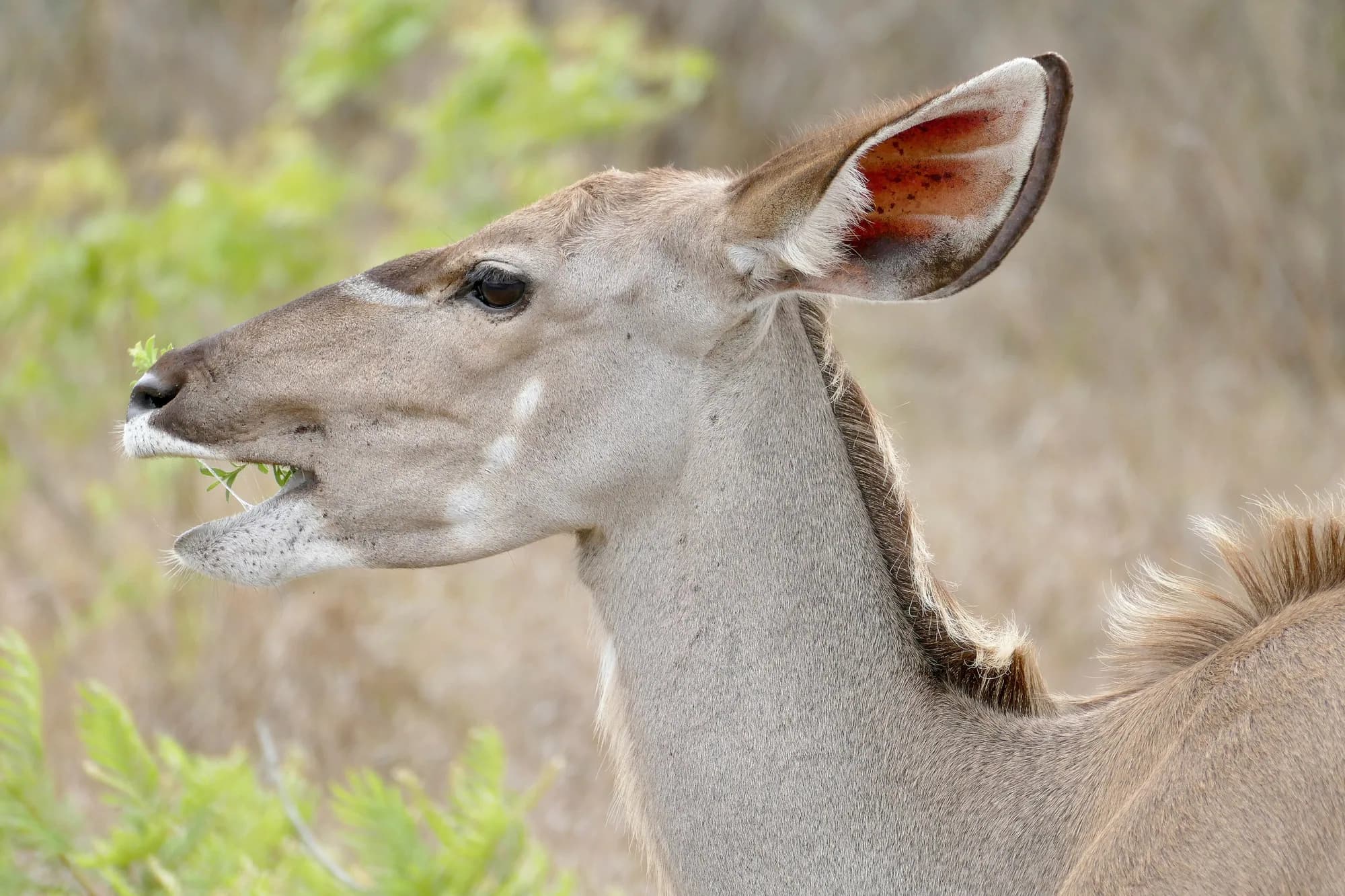
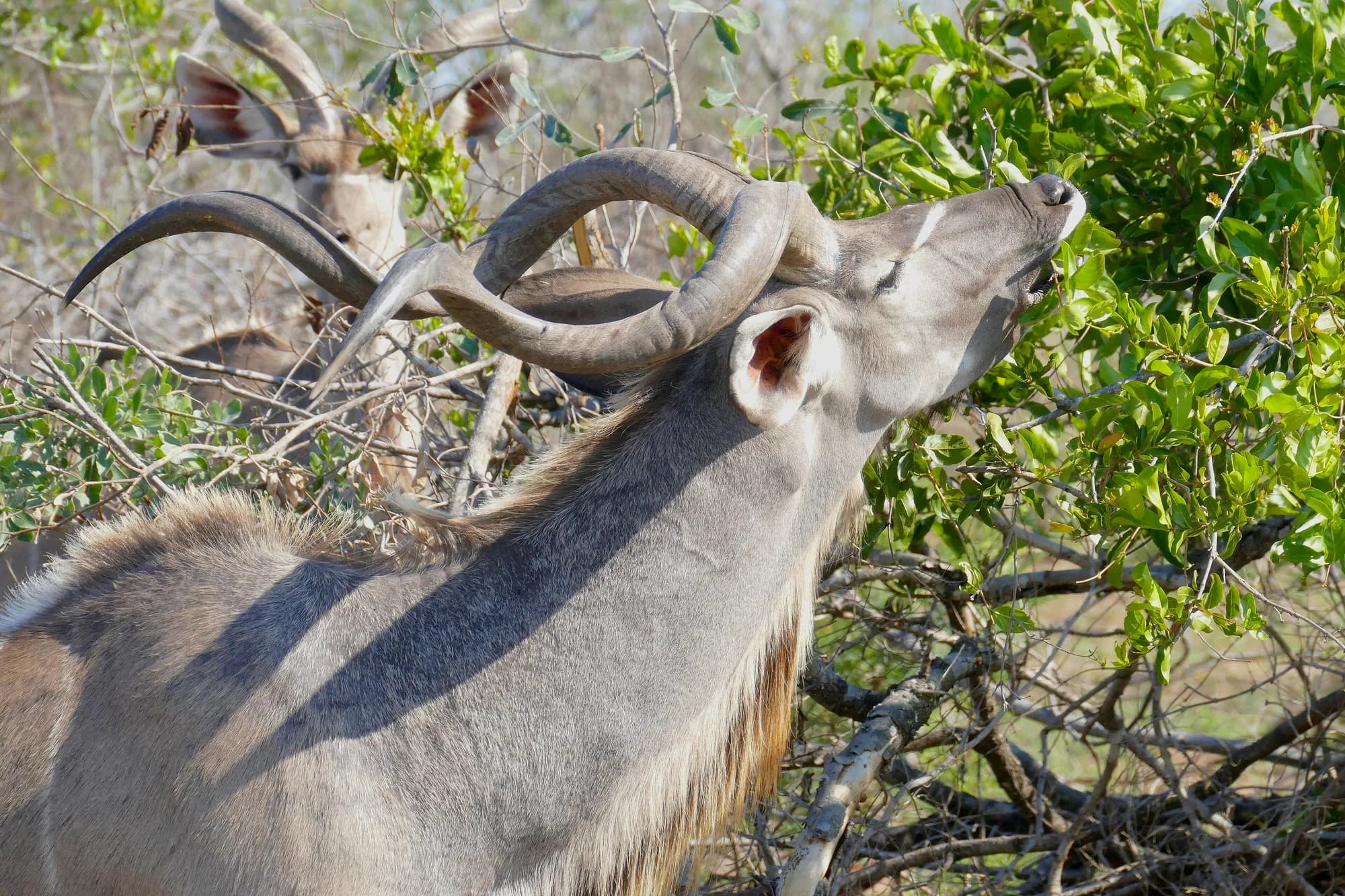
Photographs of Greater kudu in the wild, in Indian reserves. We publish no captive, baited or digitally composited images, and no photograph whose licence we cannot show.
Why you drive past them
A kudu bull stands roughly a metre and a half at the shoulder and carries horns that can exceed a metre and a half along the spiral, and people still miss them at ten metres. The reason is the strategy: a disturbed kudu freezes, and the vertical white flank stripes break the outline against vertical stems almost perfectly. The giveaway is usually an ear, or the horns above a bush.
When they do go, they go — kudu clear fences well over two metres and a bull crashing away through thornbush at close range is one of the louder things that happens on a drive. The alarm is a single sharp bark, deeper than an impala’s and usually given once.
Cows and young are hornless, grey-brown and in small groups; bulls are darker, heavier in the neck, and often alone or in bachelor groups outside the rut. Horn length is a reasonable proxy for age: the first twist comes in the first couple of years, the second by about six.
Status and protection
Status and protection
- IUCN Red List
- Least Concern
- Population trend
- → Stable
Species-level assessment for Tragelaphus strepsiceros, matching the binomial on the page.
Assessed 2020 · IUCN Red List assessment
What to book to see one
What you would be booking
- How it is seen
- Game drives in bush country, slowly, and with someone scanning rather than driving.
- Drives to book
- Two in the right habitat. Kudu are common and easy to miss.
- Zone or shift
- Thornveld and dry riverbeds. Mountain Zebra, Marakele, Ruaha, Hwange and the Namibian escarpment are all good.
One of the few large antelope you are as likely to see on a self-drive as on a guided drive, because they hold still rather than running — which favours a slow vehicle and a patient passenger over an expert tracker.
RuahaOn the same trip you would also get
- Impala — the same bush, in much larger numbers
- Nyala — the smaller relative, further east
Questions people ask
Where is the best place to see greater kudu?
Why are kudu so hard to spot?
What is the difference between greater and lesser kudu?
Read next
Almost every savanna park here, in numbers
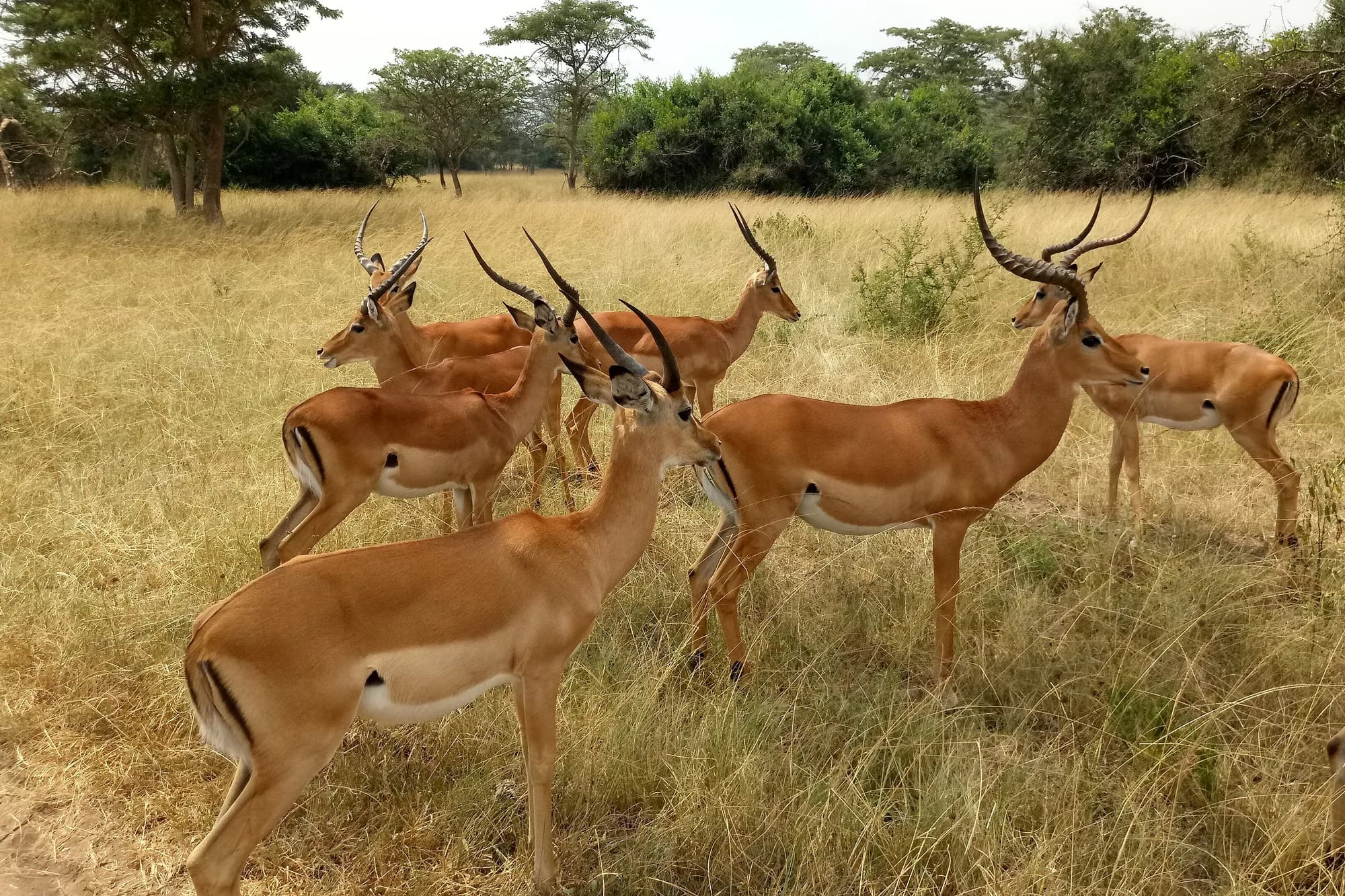
Impala
The animal everybody stops photographing on day two, and the one most of the predators on this site are eating. Learning to read impala is the cheapest way to find cats, because they will tell you there is one before you see it.
Six countries here, in miombo woodland
Sable antelope
A jet-black bull with swept-back horns most of a metre long, and the animal experienced guides point at before they point at a lion. It is a woodland species, which is why it is missing from the parks most people visit.
Ruaha