
Species · Moschiola indica
Indian chevrotain
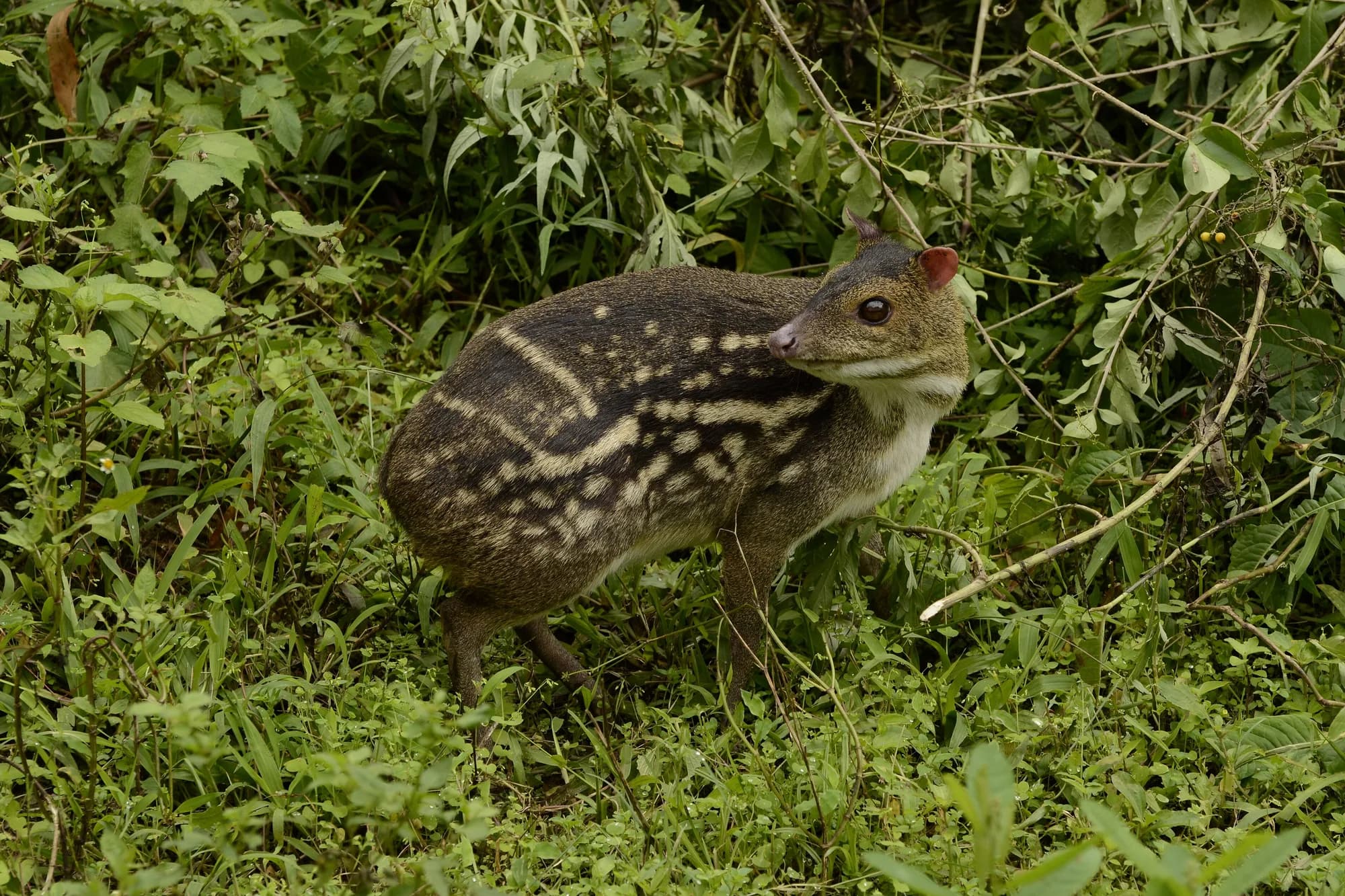
Neither a mouse nor a deer, the size of a hare, spotted and striped, on legs the thickness of a pencil. One of the oldest ruminant lineages alive, and a night-drive prize.
Also called
- Kooran · Malayalam
- Barka · Kannada
- Sarugu maan · Tamil
Checked 31 Aug 2026
- Where
- Western Ghats and eastern hill forest
- Best months
- November–March
- Size
- About the size of a hare
- Seen on
- Night drives, almost exclusively
Moist forest with dense undergrowth, mostly in the Western Ghats but scattered through the eastern hill forests too. Needs cover at ground level, which is why it disappears from grazed forest.
Where it is
Where to actually go
Ranked, with the reason each — these are not interchangeable.
Where you will not see one
- Inside the park after darkIndian national parks close at dusk. Night drives happen on buffer and fringe roads, arranged through a lodge, not inside the core.
- Confused with a young deerAdult chevrotains stay hare-sized and never grow antlers. A small spotted animal with a fawn beside a hind is a chital calf; this is alone and much smaller.
When to go
When to go
- J
- F
- M
- A
- M
- J
- J
- A
- S
- O
- N
- D
January: best. February: best. March: good. April: marginal. May: marginal. June: closed or unproductive. July: closed or unproductive. August: closed or unproductive. September: closed or unproductive. October: good. November: best. December: best.
Through the day
- Dawn
- Morning
- Midday
- Afternoon
- Dusk
- Night
Dawn: usually resting. Morning: not normally seen. Midday: not normally seen. Afternoon: not normally seen. Dusk: active. Night: most active.
What it looks like in the field
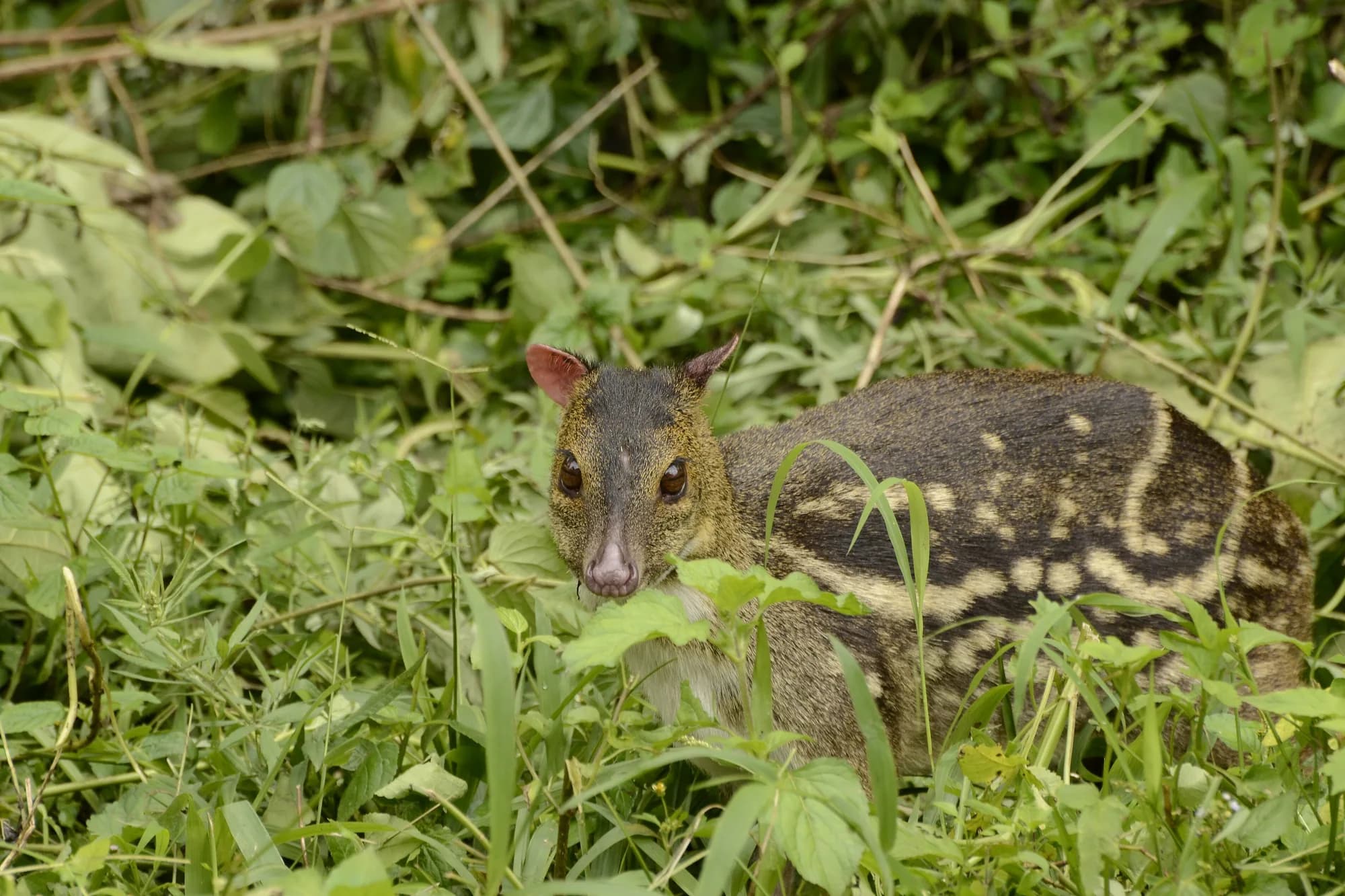
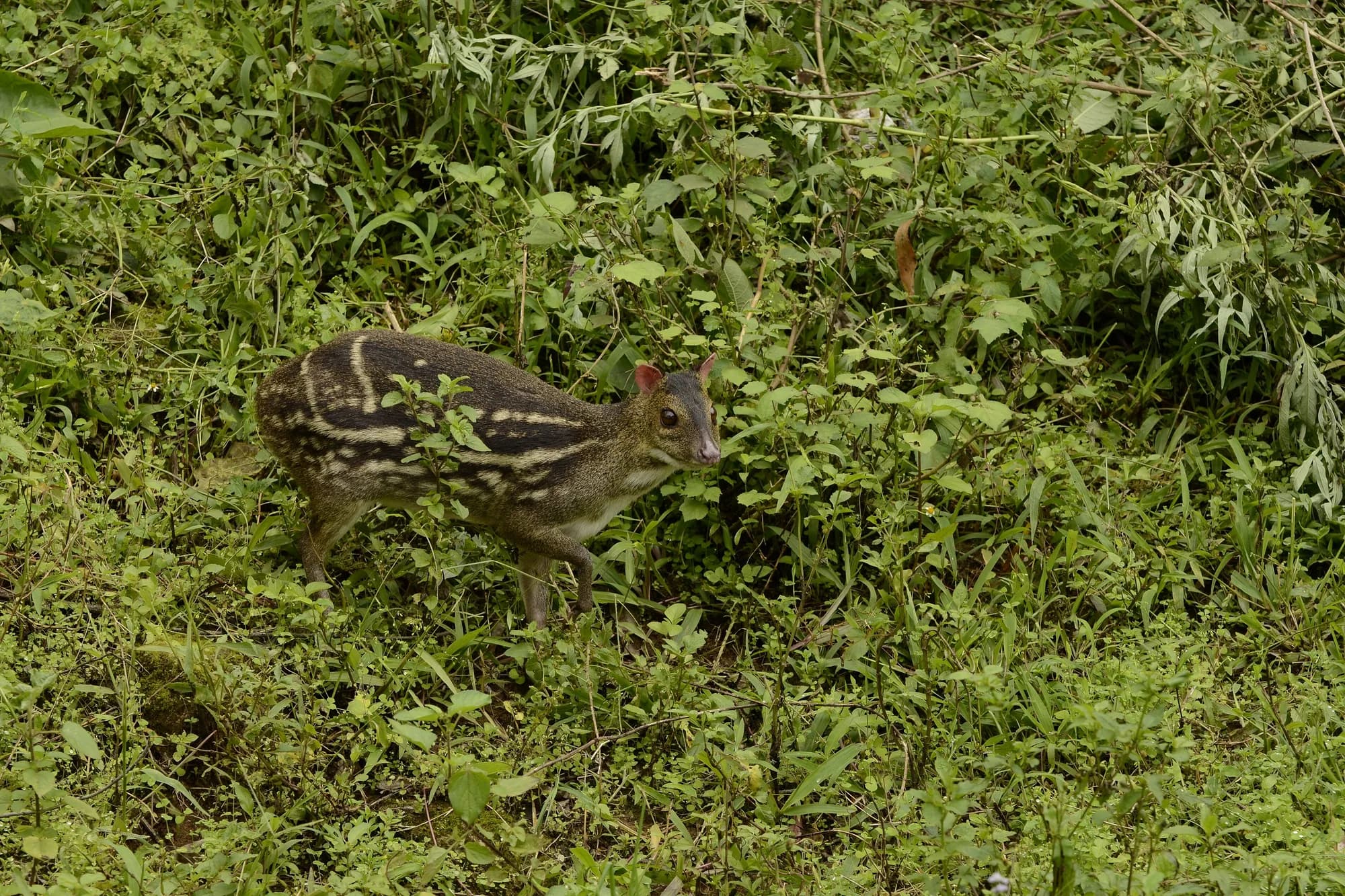
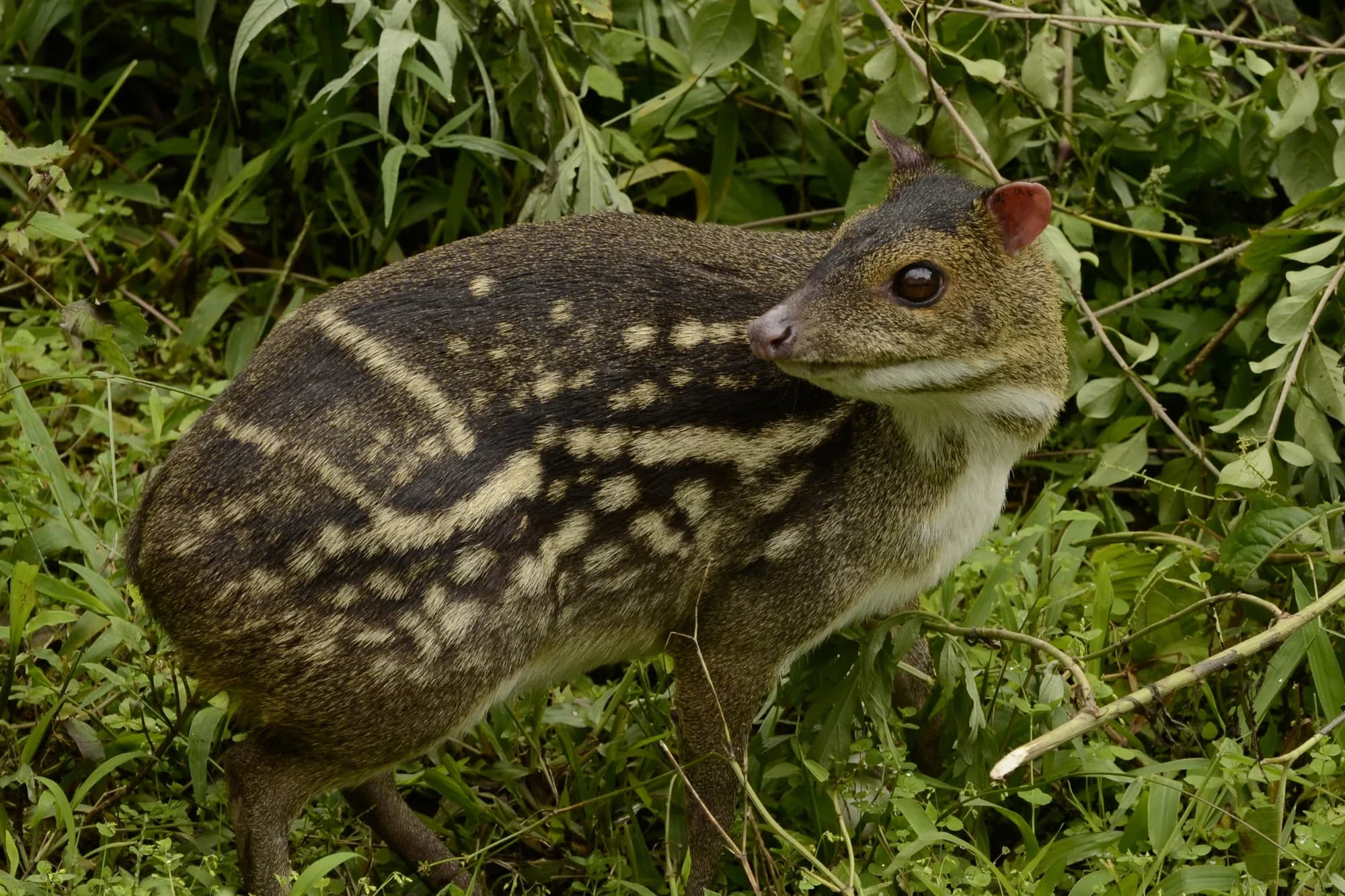
Photographs of Indian chevrotain in the wild, in Indian reserves. We publish no captive, baited or digitally composited images, and no photograph whose licence we cannot show.
Older than the deer
Chevrotains are not deer and are not closely related to them. They sit near the base of the ruminant family tree, and the lineage has been more or less this shape for tens of millions of years. The males have small tusks instead of antlers, which is the older arrangement.
What a sighting is actually like
Two eyes low to the ground in a torch beam, much lower than you expect, and then a small spotted body on absurdly thin legs, frozen. It holds for a few seconds and then goes, fast and low, and does not come back.
Status and protection
Status and protection
- IUCN Red List
- Least Concern
- Population trend
- · Unknown
- Wildlife Protection Act 1972
- Schedule I
- CITES
- Not listed
Species-level assessment of Moschiola indica, matching the binomial given. Date assessed 17 November 2014; year published 2015 (Duckworth & Timmins 2015, e.T136585A61979067);
Assessed 2014 · IUCN Red List assessment
What to book to see one
What you would be booking
- How it is seen
- A night drive on buffer roads, arranged through a lodge in a Ghats park.
- Drives to book
- After dark, slowly, with a handheld light rather than a roof-mounted one.
Ask specifically whether the lodge runs night drives on legal fringe roads. It is a real distinction — inside the park after dark is not permitted, and a lodge that offers it is offering something it should not.
Periyar — the park in fullQuestions people ask
Where can I see an Indian chevrotain?
Can I see it in daylight?
How big is it really?
Read next
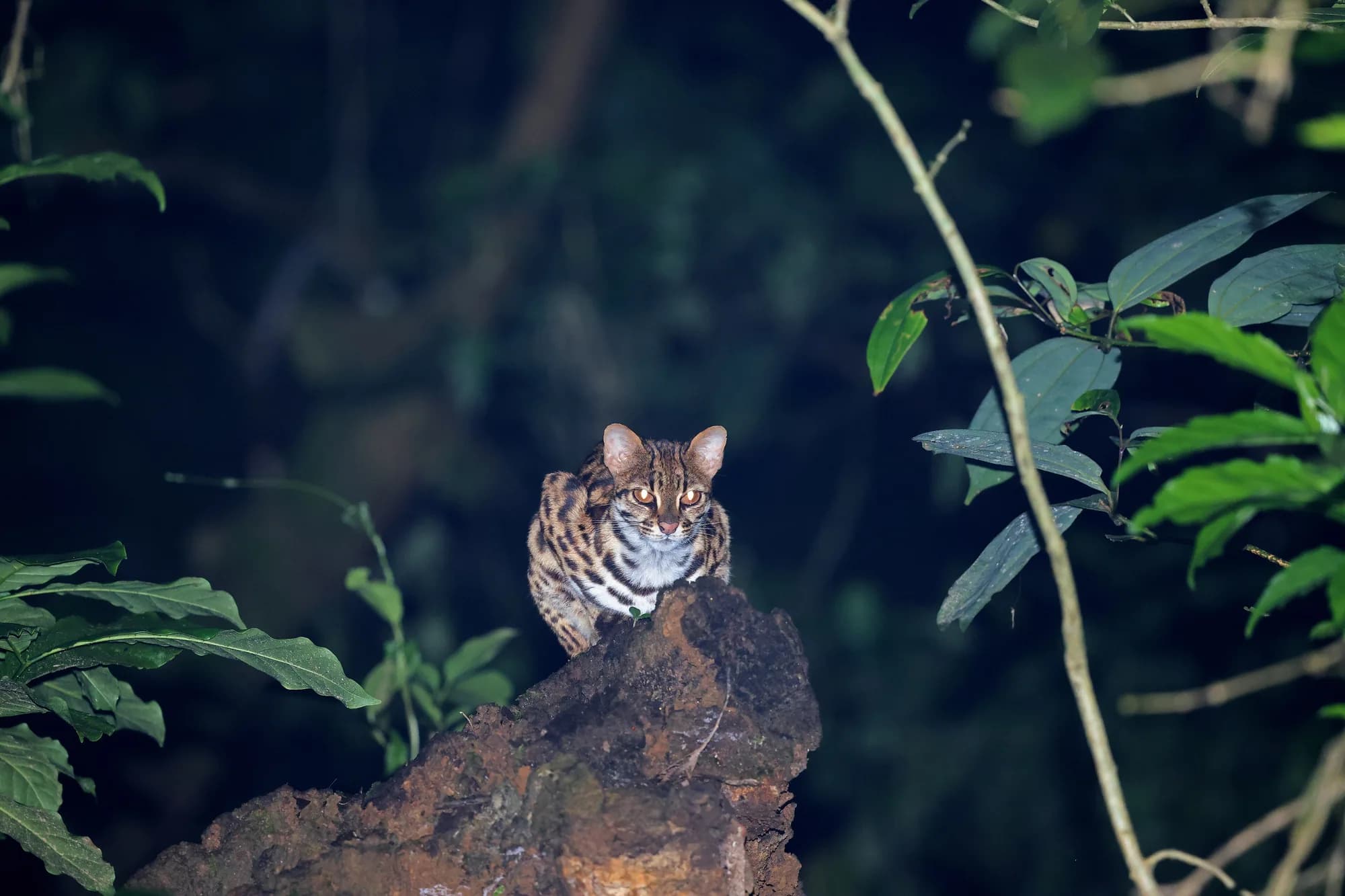
Night drives, and misreported constantly
Leopard cat — the same night drives
A house-cat-sized spotted cat with bold white face stripes, common across forested India, and the animal most often reported as a leopard cub.
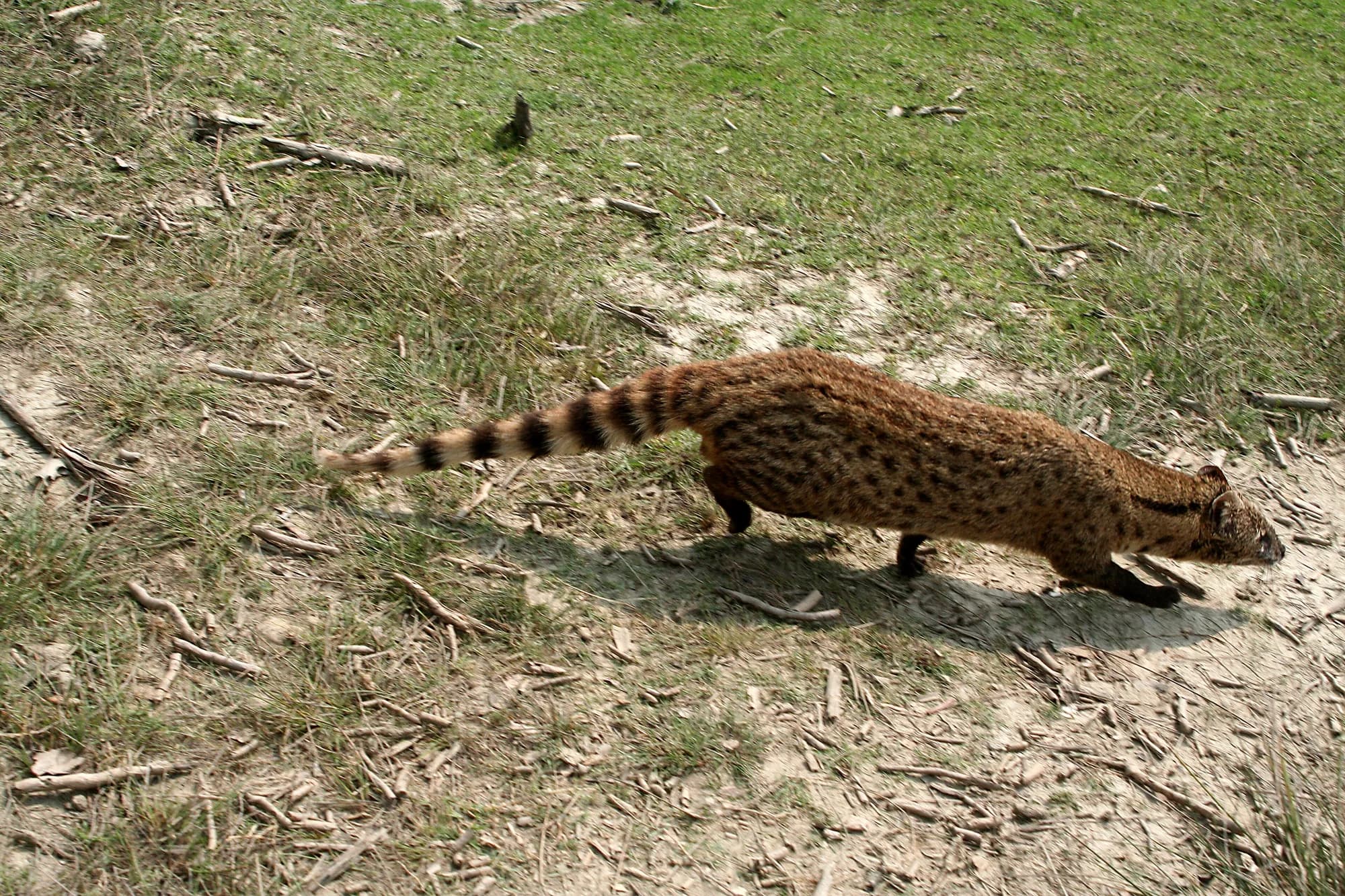
Night drives, on the ground
Small Indian civet — also nocturnal
Spotted, banded-tailed and far more terrestrial than the palm civet it is constantly confused with. A regular on any Indian night drive, and rarely named correctly.
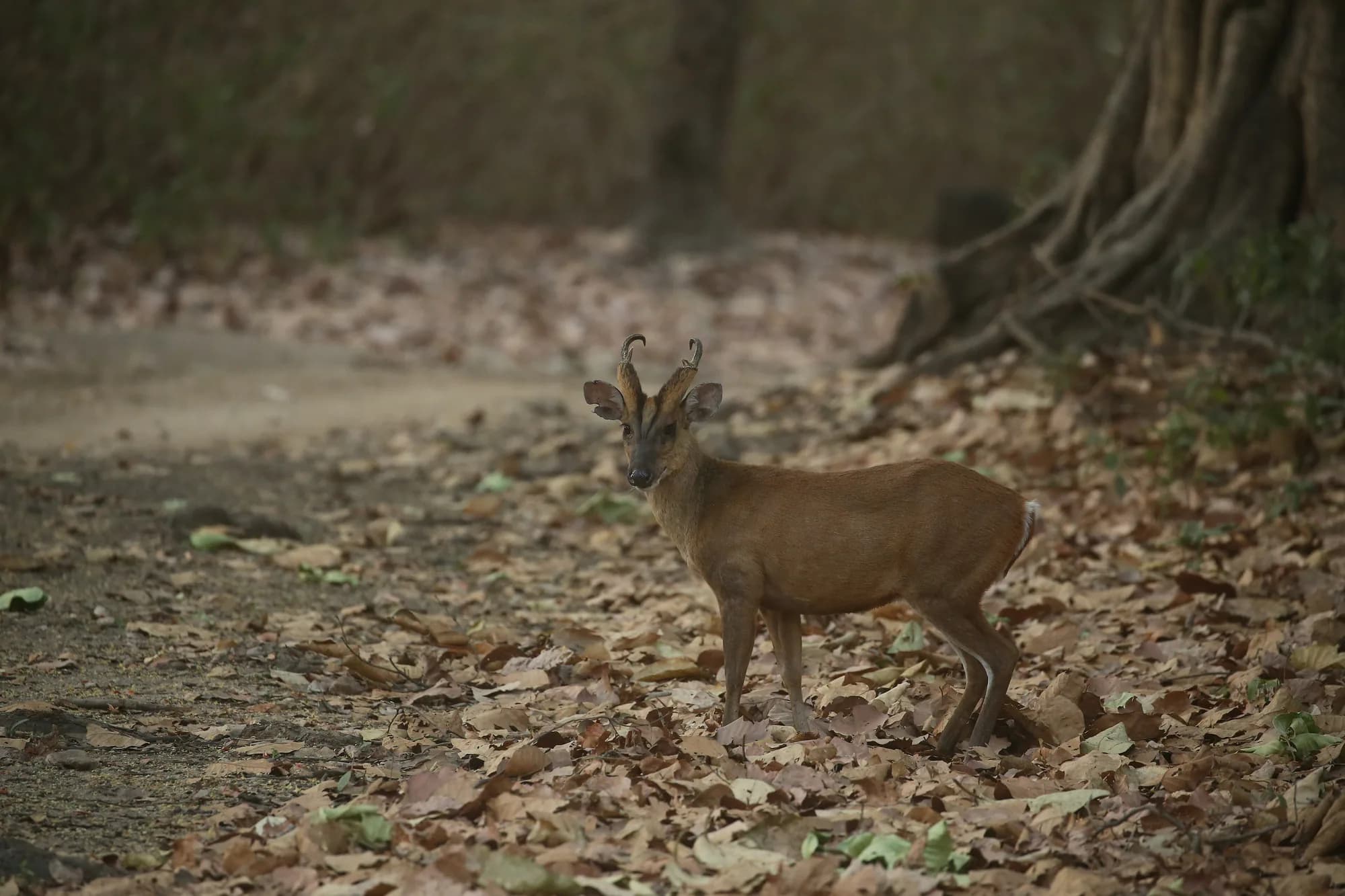
Heard far more than seen
Barking deer — the small deer people confuse it with
A small russet deer with tusks and a bark like a dog, solitary in thick cover. Its call is routinely mistaken for an alarm, and usually is not one.
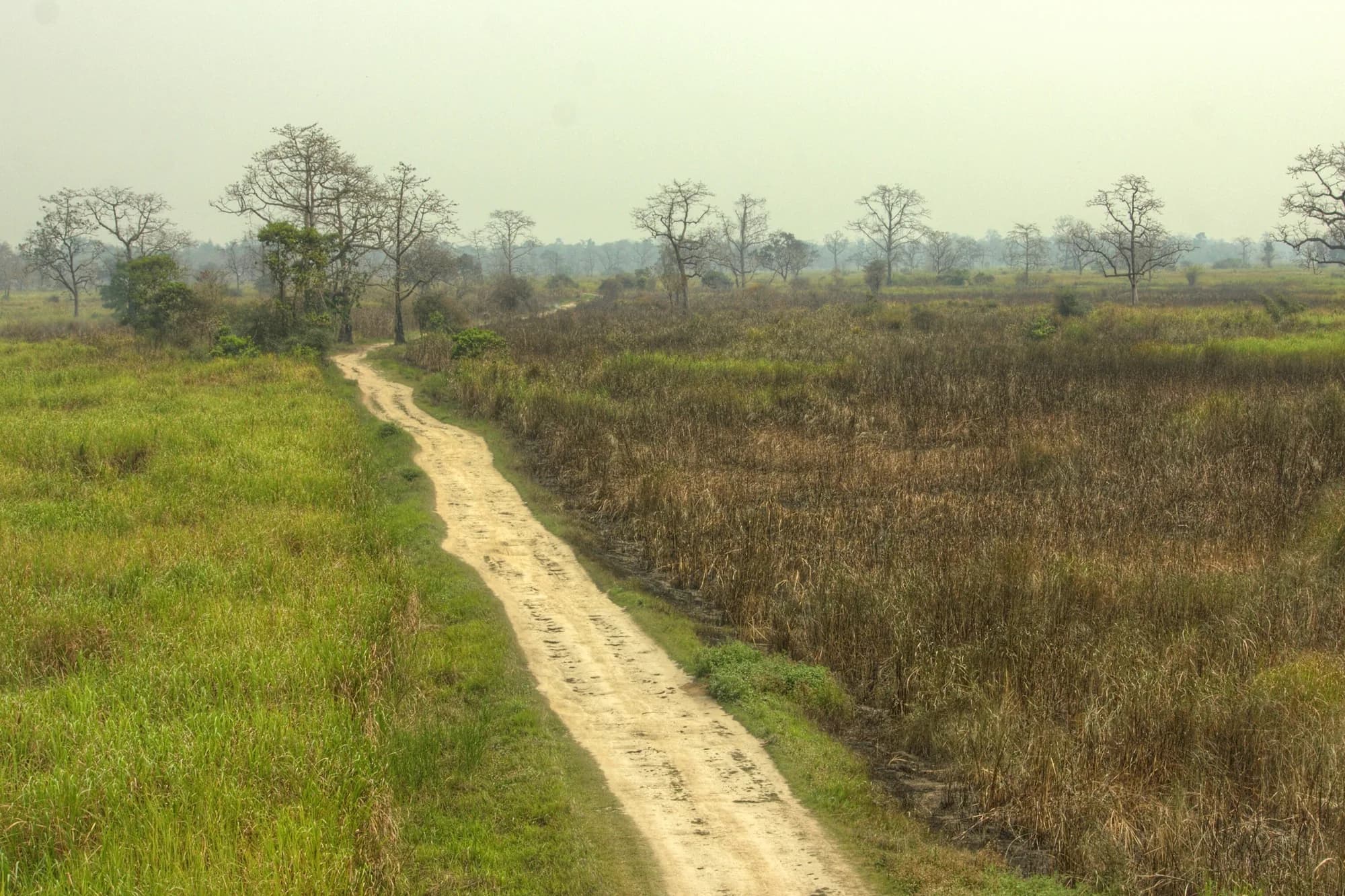
Kerala
Periyar — the park in full
A lake in the Western Ghats, walked and boated rather than driven. Elephants, hornbills and rain — not a tiger destination in any practical sense.