
Species · Haliaeetus leucoryphus
Pallas's fish eagle
A huge, endangered fish eagle with a pale sandy head and one broad white band across a black tail. It breeds in the terai in winter, which is exactly when you will be there.
Also called
- Machhrang / Machhmar (मछमार) · Hindi
- Kuruwa · Assamese
Checked 31 Aug 2026
- Where
- Terai wetlands and the Brahmaputra
- Best months
- November–March
- Wingspan
- Around two metres
- Note
- One broad white tail band
Large inland wetlands, reservoirs and slow rivers across the northern plains and the Brahmaputra valley, with wanderers reaching central India and the Chambal. The global population is small and declining, and India holds a significant share of it.
Where it is
Where to actually go
Ranked, with the reason each — these are not interchangeable.
- 01CorbettUttarakhandThe Ramganga reservoir holds a resident breeding population, and Dhikala puts you on the water for two days.Dhikala, on the reservoir
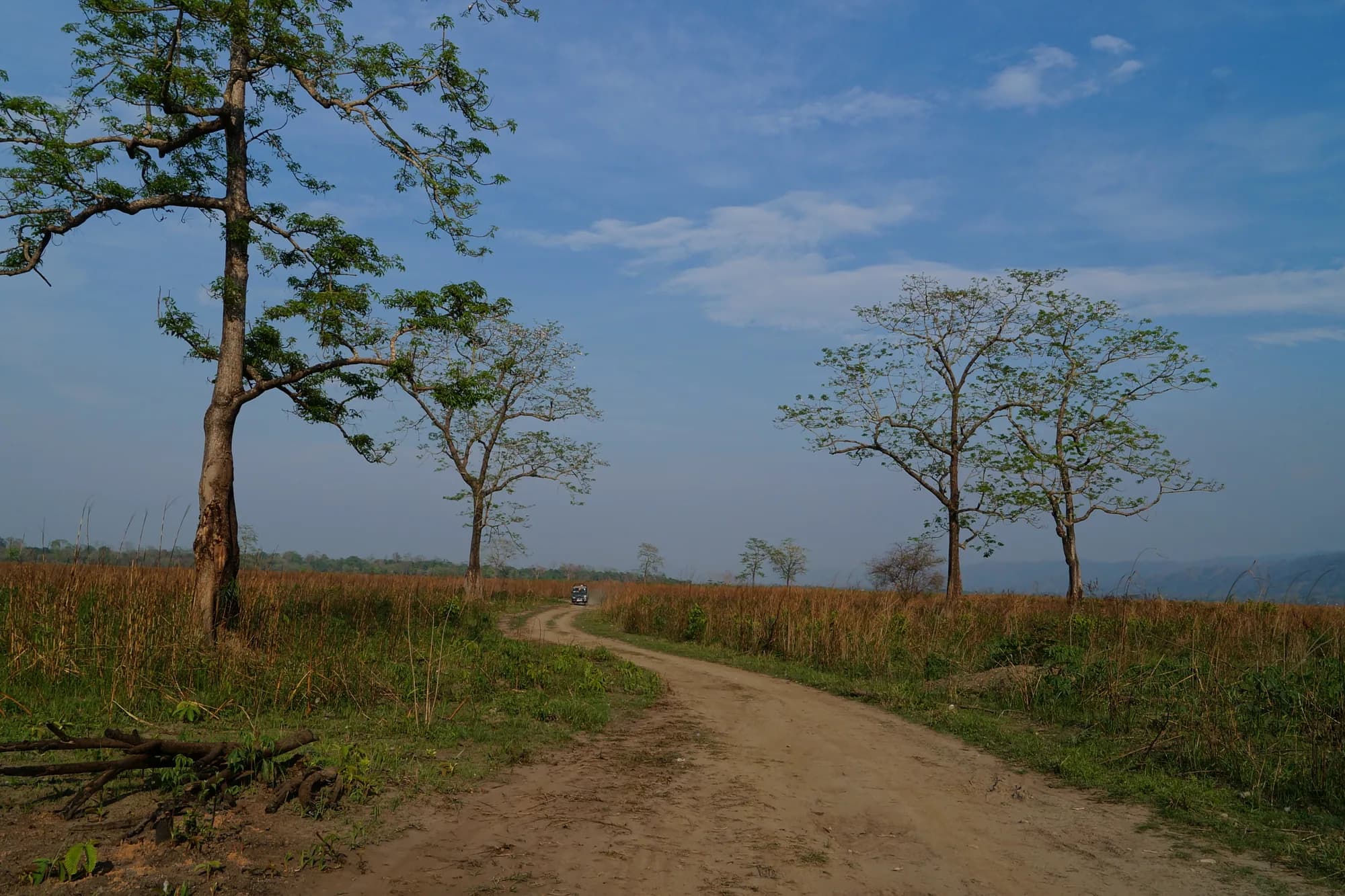
- 02KazirangaAssamRegular over the beels, alongside grey-headed fish eagles for a direct comparison.Both fish eagles together
- 03ChambalMadhya PradeshWinter birds along the river, seen from the gharial boats.From a boat
Where you will not see one
- Coastal IndiaThe big fish eagle over the sea and the mangroves is the white-bellied sea eagle. Pallas's is an inland bird — reservoirs, beels and rivers.
- Assumed from any large brown eagle over waterGrey-headed fish eagle, and immature Pallas's and Bonelli's, all get logged as Pallas's. The tail is the only field mark that settles it every time.
When to go
When to go
- J
- F
- M
- A
- M
- J
- J
- A
- S
- O
- N
- D
January: best. February: best. March: best. April: good. May: marginal. June: closed or unproductive. July: closed or unproductive. August: closed or unproductive. September: closed or unproductive. October: marginal. November: best. December: best.
Through the day
- Dawn
- Morning
- Midday
- Afternoon
- Dusk
- Night
Dawn: active. Morning: most active. Midday: active. Afternoon: most active. Dusk: active. Night: not normally seen.
Telling it apart
Told apart from
Grey-headed fish eagle
Kaziranga and the terai, constantly
Tail and head. The grey-headed has a white tail with a broad black terminal band — the reverse pattern — and a grey head. Pallas's has a black tail with one white band across the middle and a pale sandy head.
White-bellied sea eagle
Bhitarkanika and the Sundarbans
Colour and coast. The sea eagle is clean white below with grey wings, and is a coastal and mangrove bird.
Marks chosen to be usable from a moving vehicle — a pallas's fish eagle is rarely still and never close enough for anything subtler.
What it looks like in the field
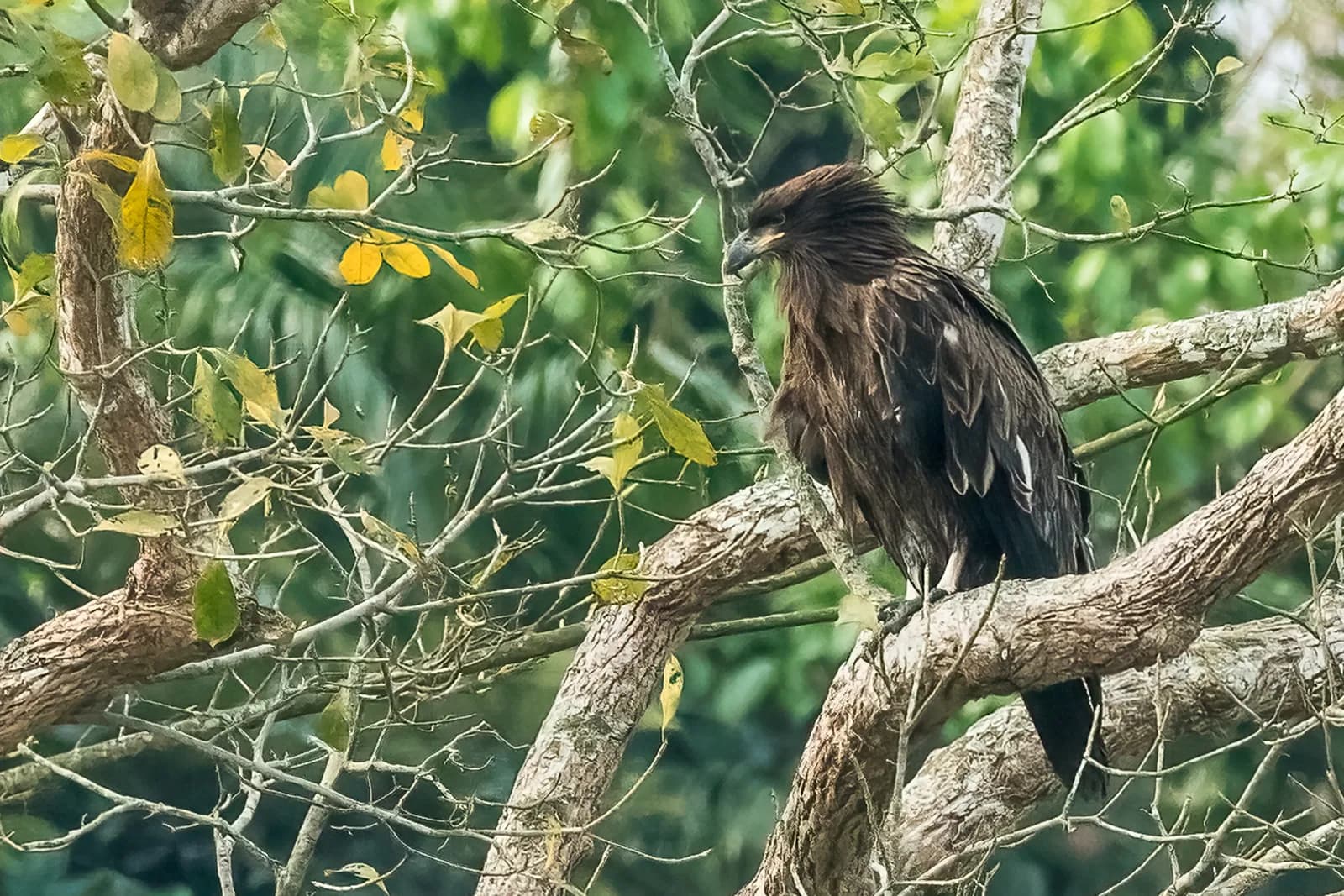
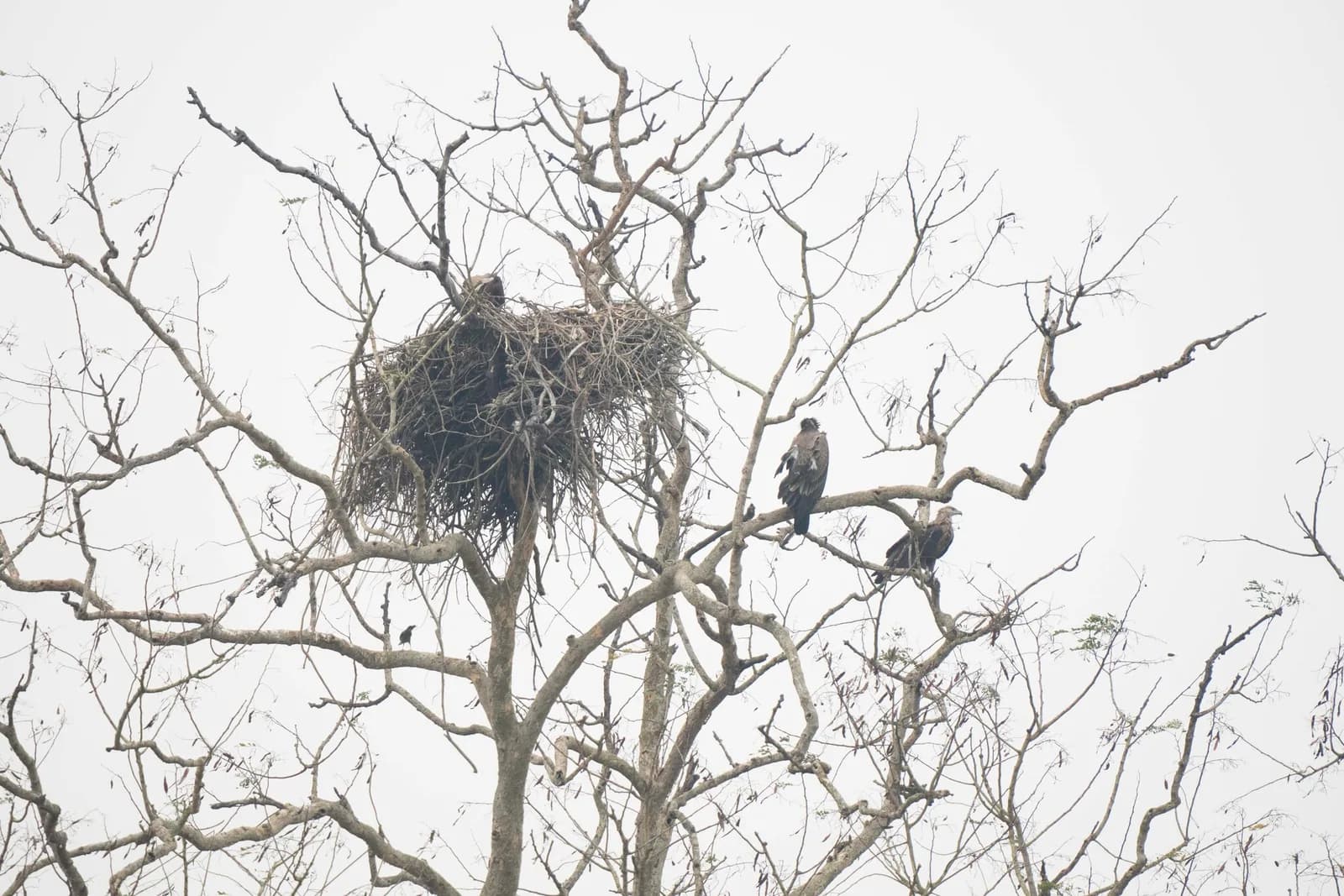
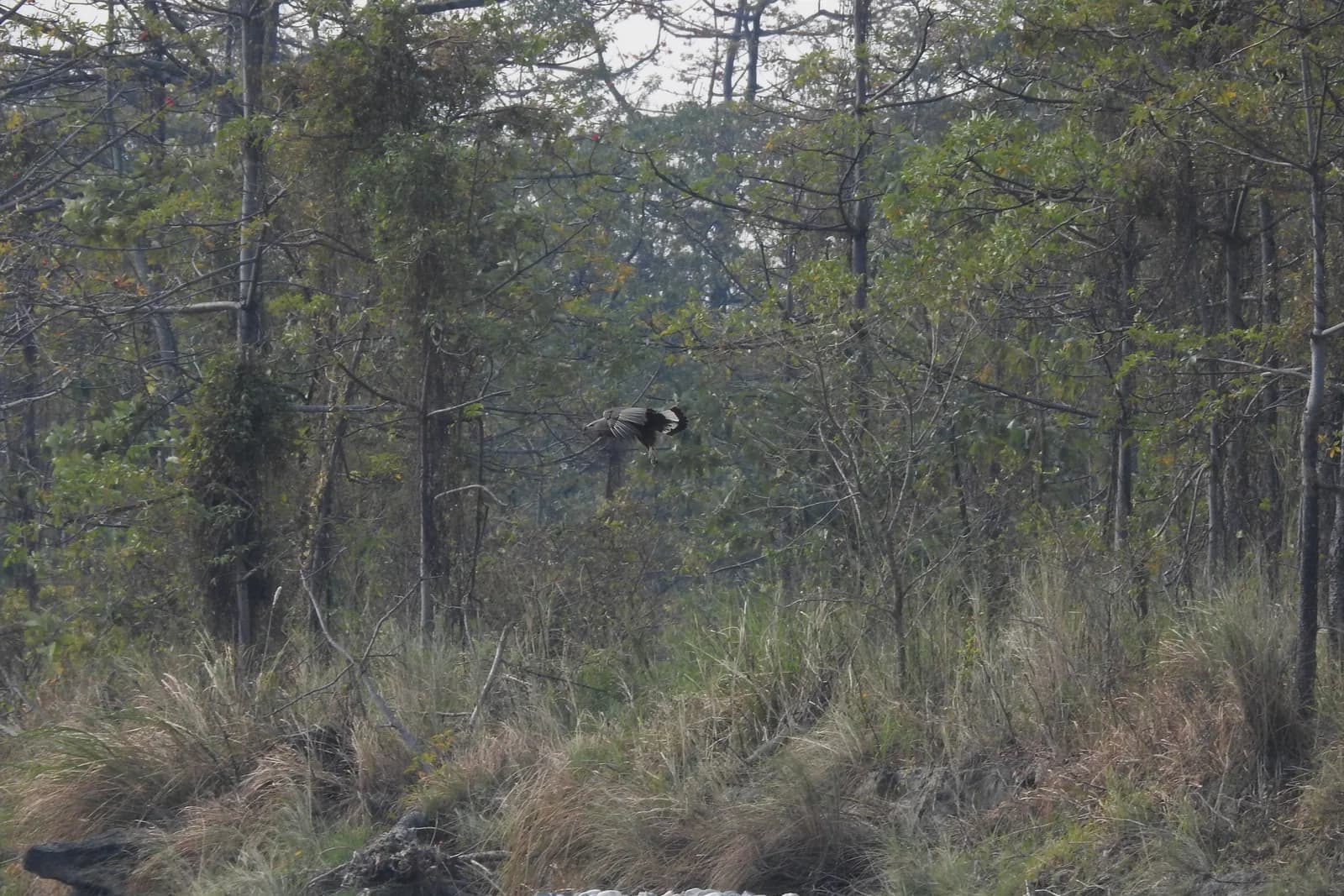
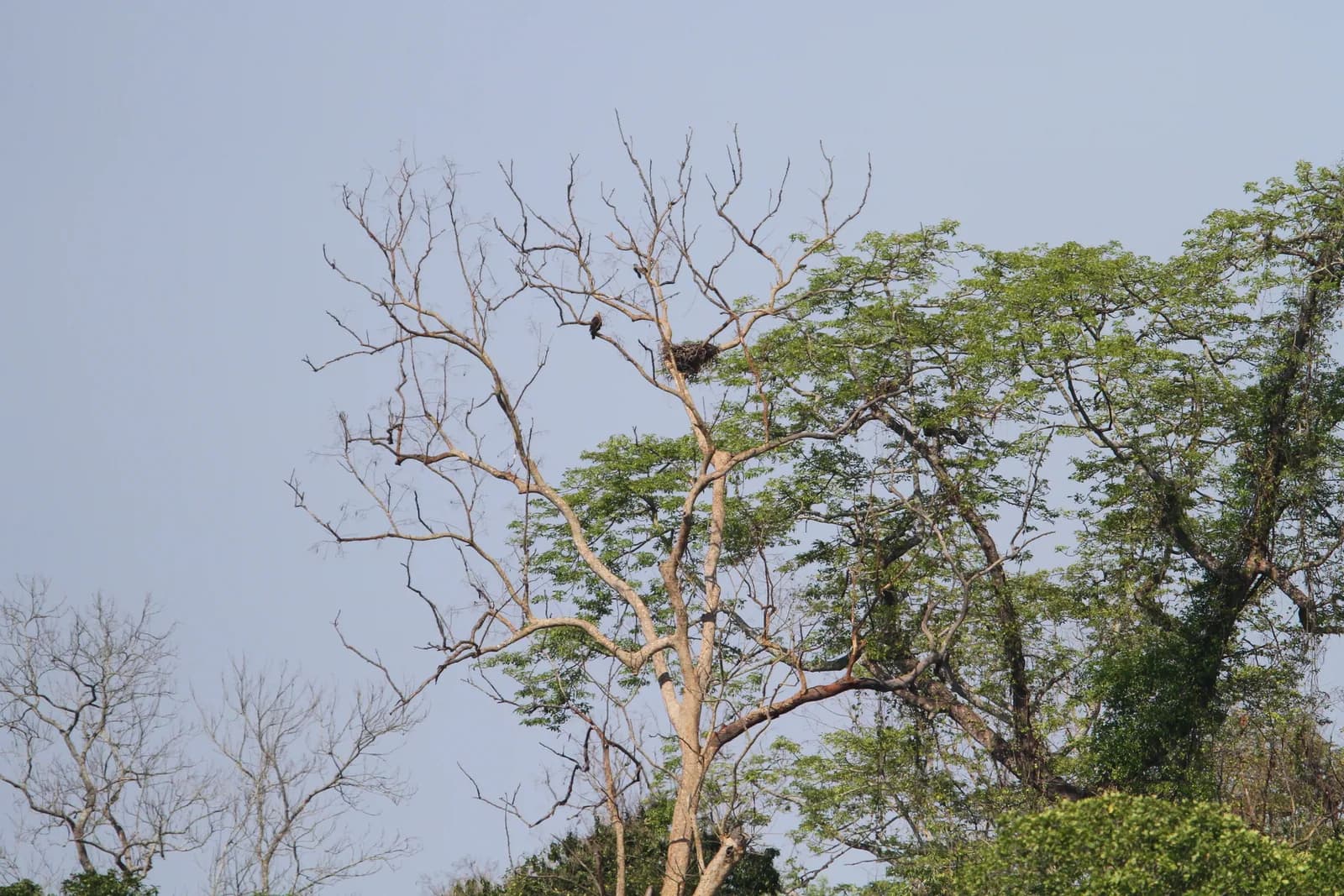
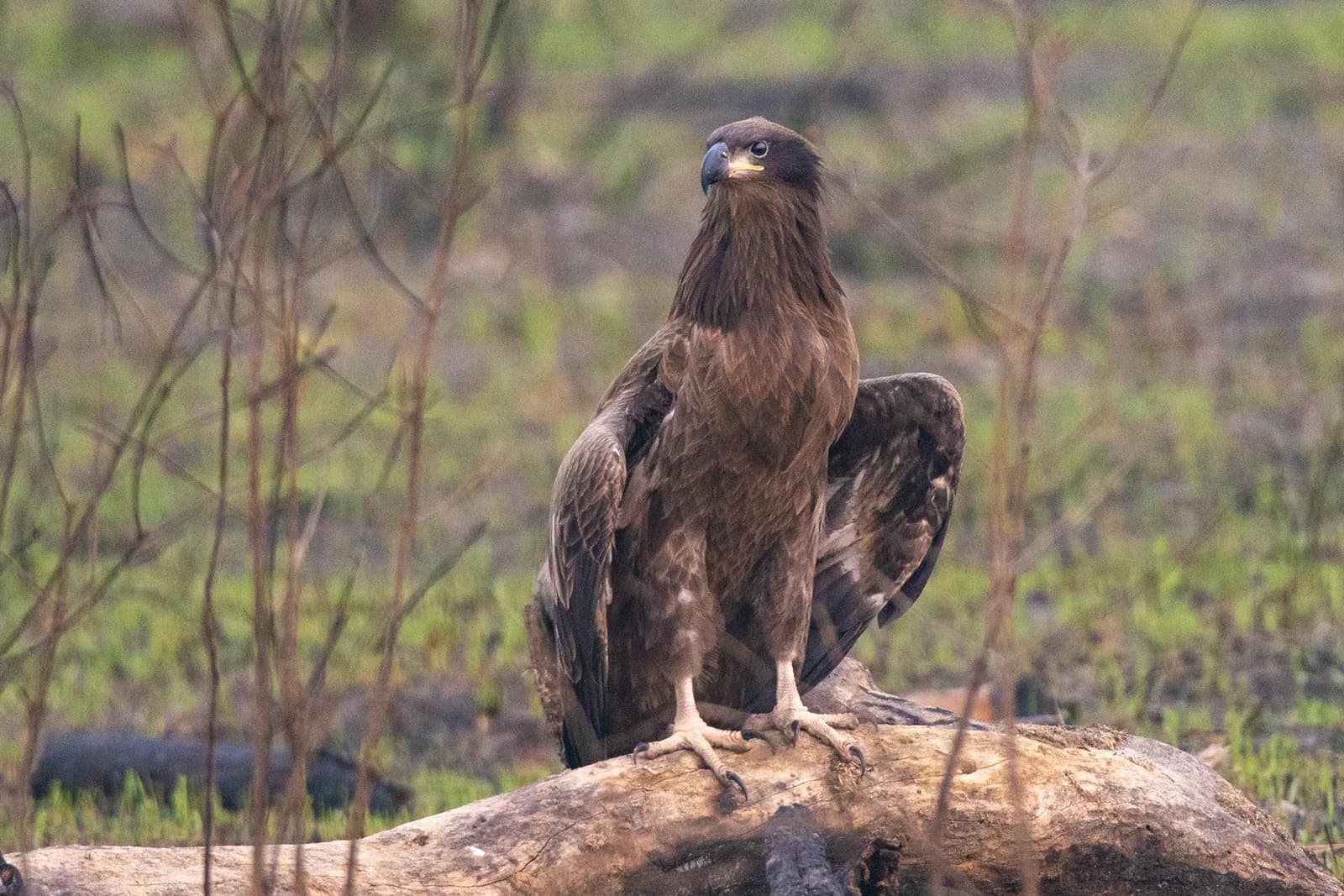
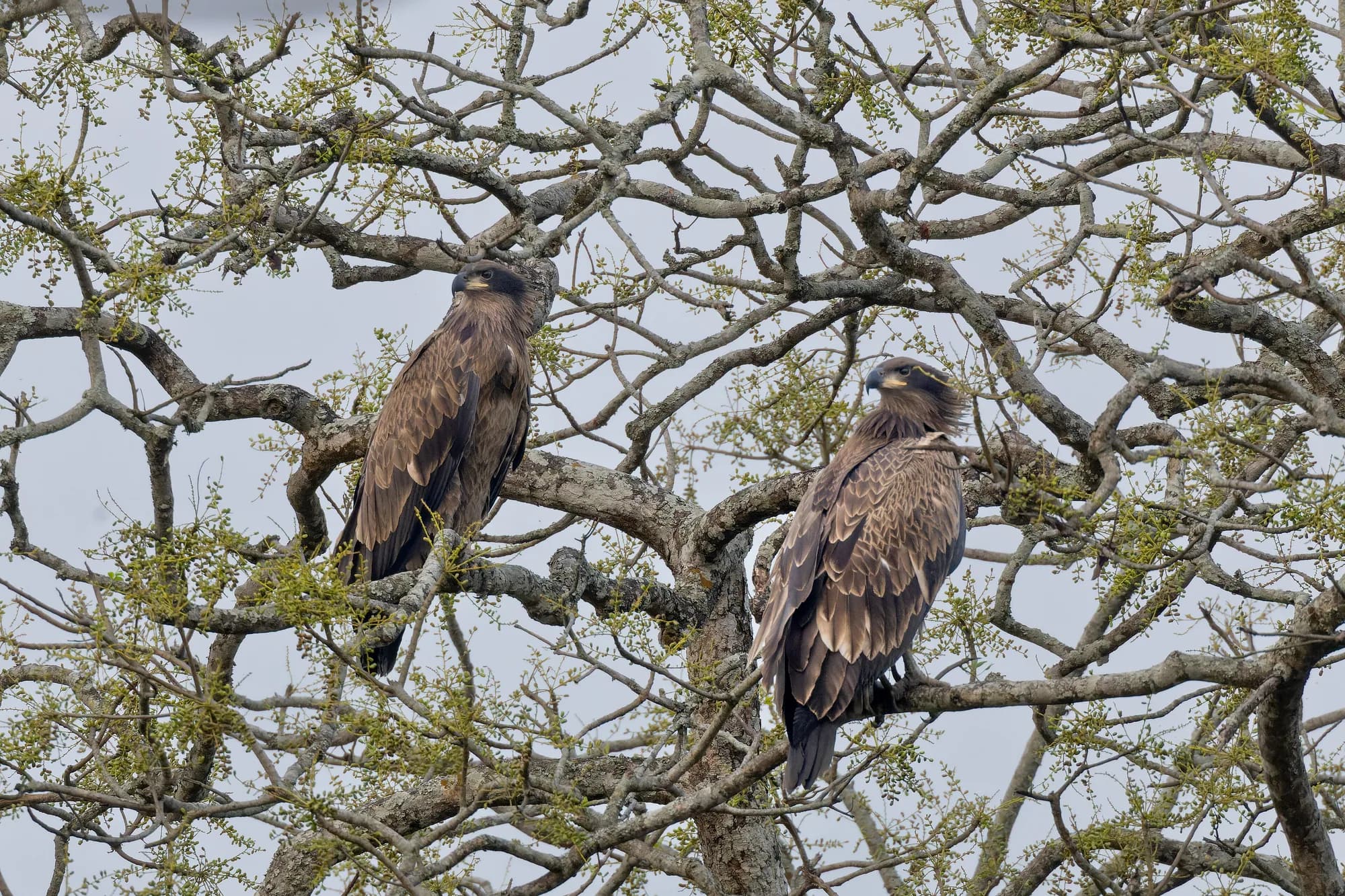
Photographs of Pallas's fish eagle in the wild, in Indian reserves. We publish no captive, baited or digitally composited images, and no photograph whose licence we cannot show.
The tail settles it
An adult Pallas’s fish eagle has a black tail crossed by one broad white band. The grey-headed fish eagle, which shares every wetland it uses, has the opposite: a white tail with a broad black band at the tip.
A winter breeder
Unlike most Indian raptors it nests through the cold months, building a large stick platform in a tall bare tree beside water and reusing it season after season. That is why the same pairs are found at the same reservoirs every winter.
The bird is endangered and the nests are fixed, conspicuous and known. That combination puts the responsibility on the vehicle, not the eagle.
Status and protection
Status and protection
- IUCN Red List
- Endangered
- Population trend
- ↓ Decreasing
- Wildlife Protection Act 1972
- Schedule I
- CITES
- Appendix II
Species-level assessment; monotypic species, binomial as given. Taxon id 22695130.
Assessed 2021 · IUCN Red List assessment
What to book to see one
What you would be booking
- How it is seen
- A drive along a reservoir or a boat on a large wetland. At Corbett the Ramganga reservoir from the Dhikala road; at Kaziranga, the beels in the central and eastern ranges.
- Drives to book
- Two drives at Corbett in winter, staying at Dhikala. It is a bird you find by scanning perches, so time at the water matters more than distance covered.
Nesting birds are conspicuous and fixed in place, and the nests are used repeatedly. Do not have a vehicle sit under one; birds abandon exposed nests readily.
Corbett — the park in fullQuestions people ask
Where can I see a Pallas's fish eagle?
How do I tell it from a grey-headed fish eagle?
When does it breed?
Read next
The Chambal, above all
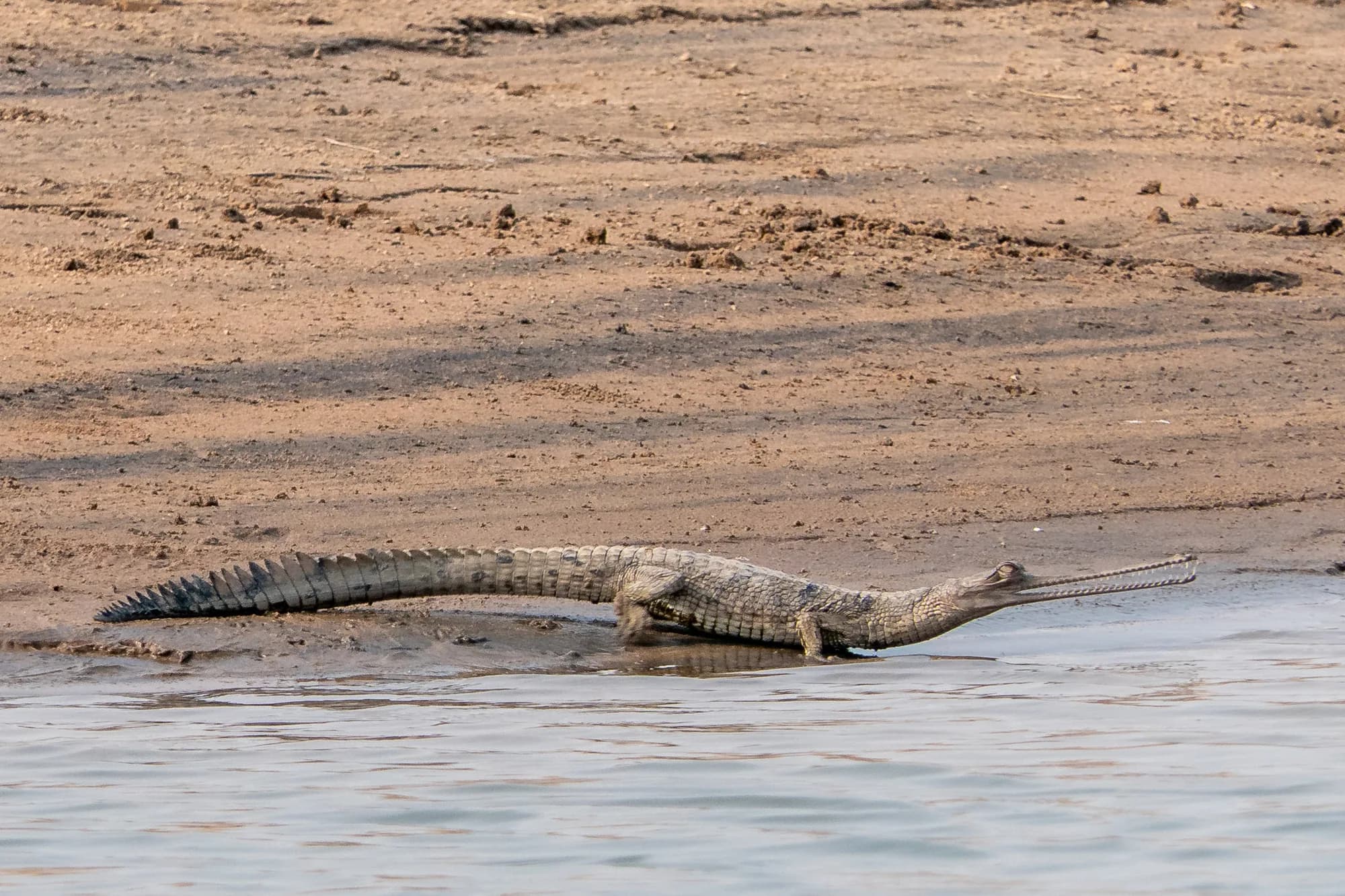
Gharial — the same rivers
A fish-eating crocodilian with a snout like a pair of tongs, down to a few hundred breeding adults, and hauled out on Chambal sandbanks in winter in numbers that make it look common.
The Chambal, and few rivers else
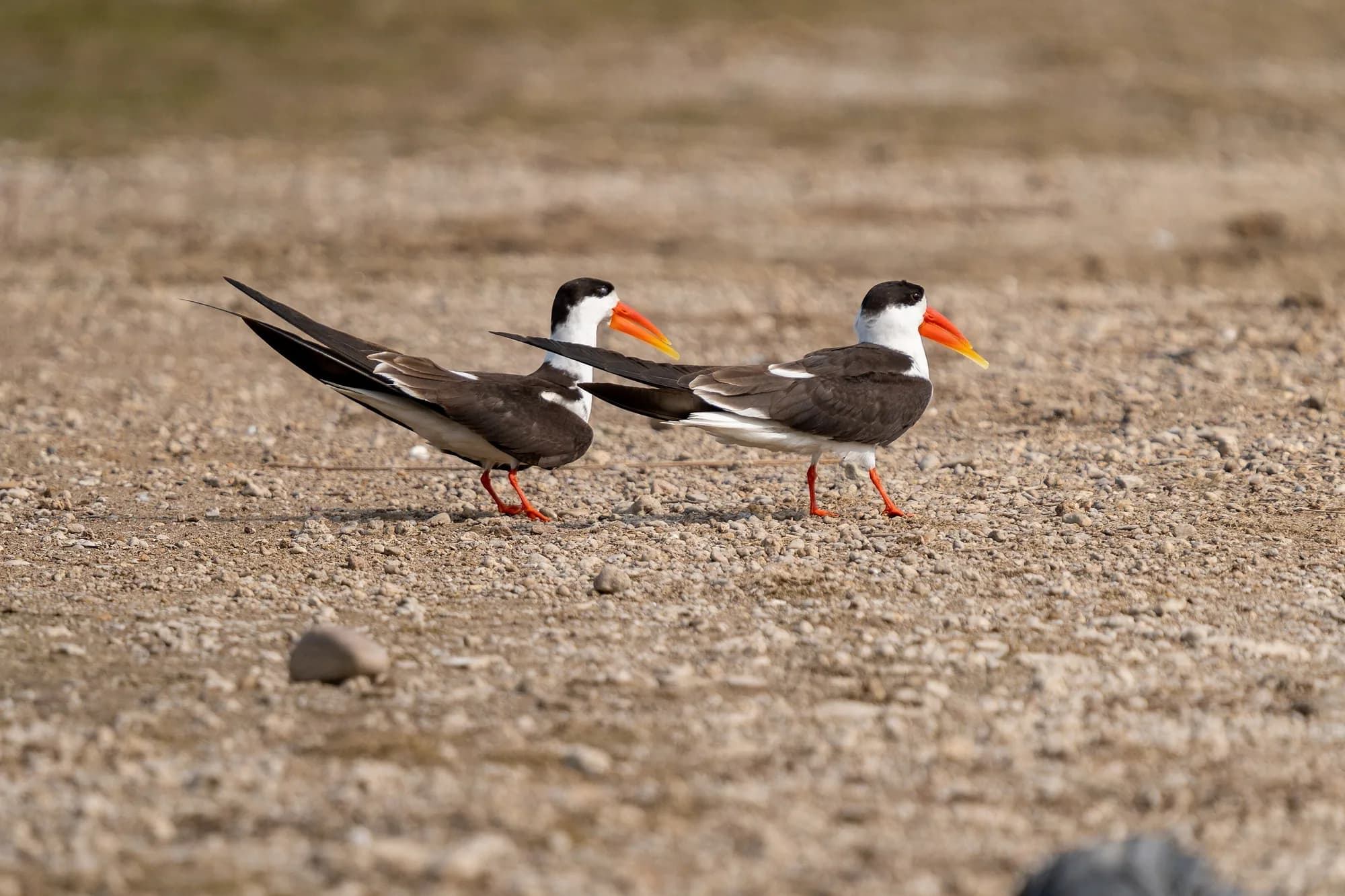
Indian skimmer — the same sandbars
A tern-like bird with an orange bill whose lower half is longer than the upper, feeding by ploughing the water surface at speed. The Chambal holds most of what is left.
Rivers, in noisy family groups
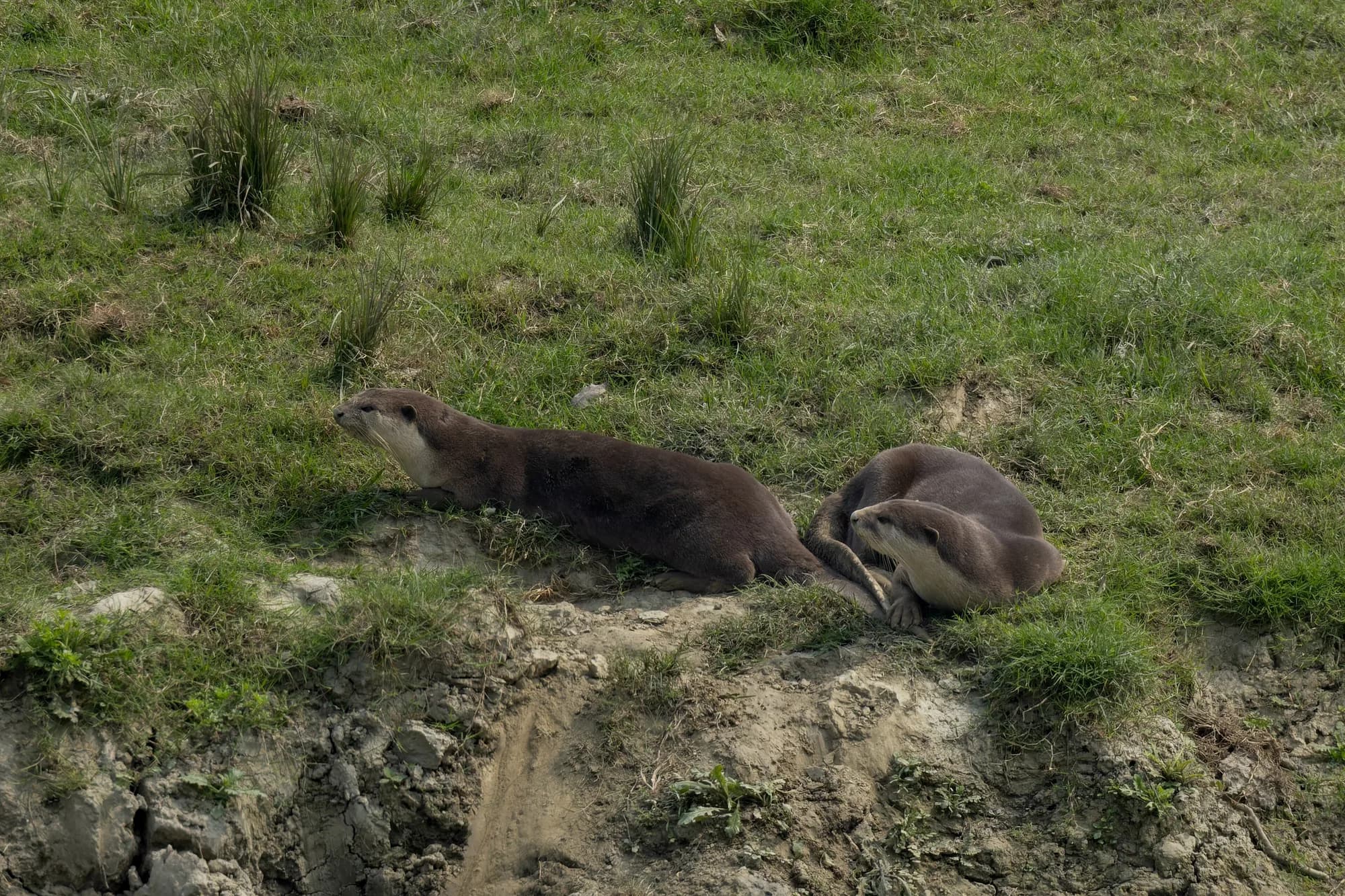
Smooth-coated otter — the same water
A family of otters working a river is one of the best sightings in India and almost nobody books for it. Loud, social, and easier to hear than to see.
Uttarakhand
Corbett — the park in full
River, sal and grassland in the Himalayan foothills, and the oldest national park in India. The most varied terrain on this list and the hardest tigers to see because of it.