
Species · Houbaropsis bengalensis
Bengal florican
One of the rarest birds anyone reading this will realistically see. A few hundred remain in India, almost all of them in a handful of grasslands that are burned and cut on a schedule the bird depends on.
Also called
- Ulu mora · Assamese
- Charat · Hindi
- Bengal bustard · Bengali
Checked 31 Aug 2026
- Where
- Assam, Uttar Pradesh terai
- Best months
- March–May
- India population
- A few hundred birds
- Depends on
- Grassland burned and cut on a cycle
Alluvial grassland along the Brahmaputra and in the terai. The range is not shrinking evenly — it is collapsing to the few places where grassland is still actively managed.
Where it is
Where to actually go
Ranked, with the reason each — these are not interchangeable.
- 01ManasAssamThe strongest surviving population, in grassland still managed on a burning cycle.Best odds in India
- 02KazirangaAssamEastern grasslands hold displaying males, and you are on an elephant anyway.Height, from the elephant
- 03DudhwaUttar PradeshThe terai population, smaller but on the classic grassland circuit.Terai grassland
Where you will not see one
- Grassland that has not been burnedDisplaying males need a short patch to be seen from. Grassland left uncut for several seasons stops holding them, even where the birds were common before.
- Confused with the lesser floricanRange and season. Lesser florican is a western and central bird that displays in the monsoon; this one is north-eastern and terai, and displays in spring.
When to go
When to go
- J
- F
- M
- A
- M
- J
- J
- A
- S
- O
- N
- D
January: marginal. February: marginal. March: best. April: best. May: good. June: closed or unproductive. July: closed or unproductive. August: closed or unproductive. September: closed or unproductive. October: marginal. November: marginal. December: marginal.
Through the day
- Dawn
- Morning
- Midday
- Afternoon
- Dusk
- Night
Dawn: most active. Morning: active. Midday: usually resting. Afternoon: active. Dusk: most active. Night: not normally seen.
What it looks like in the field
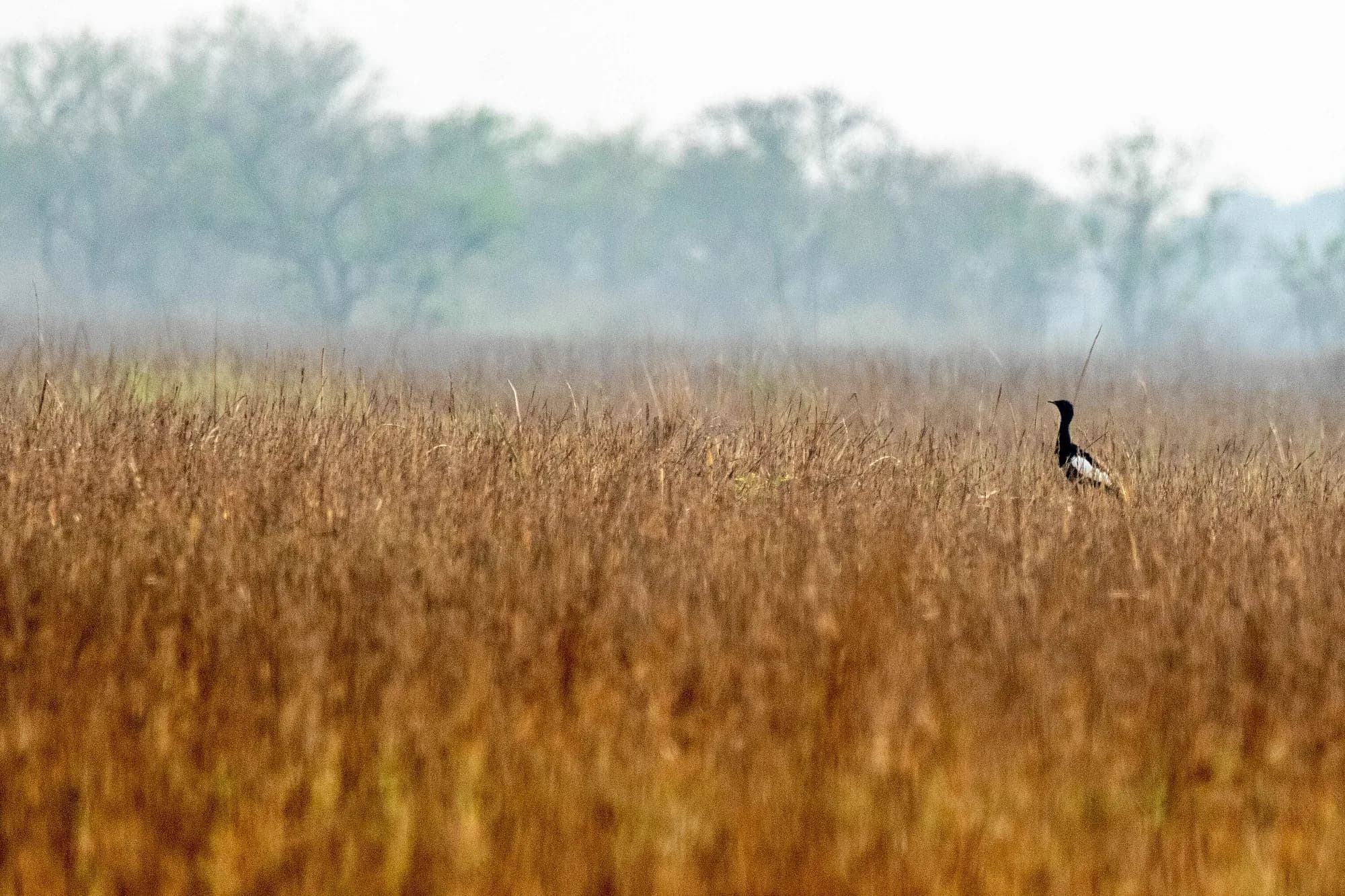
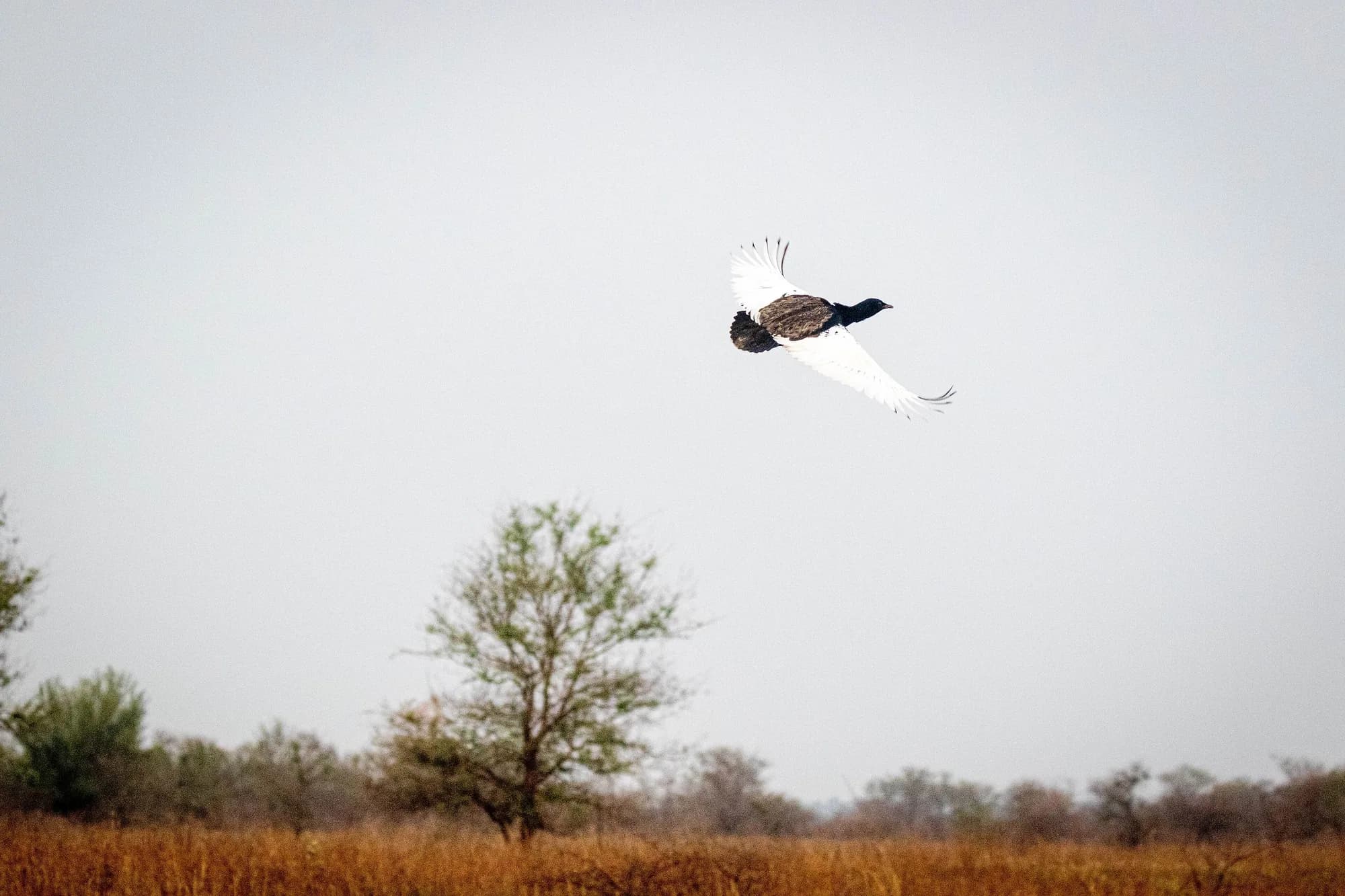
Photographs of Bengal florican in the wild, in Indian reserves. We publish no captive, baited or digitally composited images, and no photograph whose licence we cannot show.
Why the grass matters more than the bird
This is not an animal you find by looking harder. It is an animal that exists where grassland is still burned and cut on a cycle, and does not exist where that has stopped — which is most places. A park that held displaying males a decade ago and manages its grassland differently now will have none, and nothing about the landscape will look obviously different to you.
It is worth knowing that before you book, because it means asking the park about this season’s grassland management is a more useful question than asking about sightings.
What a sighting is actually like
A black-and-white bird standing on a short patch in a sea of taller grass, visible for as long as it chooses to stand there. If a male displays, he lifts a few metres, flicks, and drops. From a jeep you will often see only the head; from an elephant you see the bird.
Status and protection
Status and protection
- IUCN Red List
- Critically Endangered
- Population trend
- ↓ Decreasing
- Wildlife Protection Act 1972
- Schedule I
- CITES
- Appendix I
Species-level assessment covering both the Indian subcontinent and Southeast Asian (Cambodia) populations, taxon id 22692015.
Assessed 2018 · IUCN Red List assessment
What to book to see one
What you would be booking
- How it is seen
- A morning elephant ride or a vehicle on a grassland circuit, in March or April.
- Drives to book
- First light. Ask specifically for the grassland ranges rather than the forest ones.
Height helps more than distance here. An elephant puts your eye above the grass line, which is the whole problem with this bird from a jeep.
Manas — the park in fullQuestions people ask
Where can I see a Bengal florican?
When is the best time?
How rare is it?
Read next
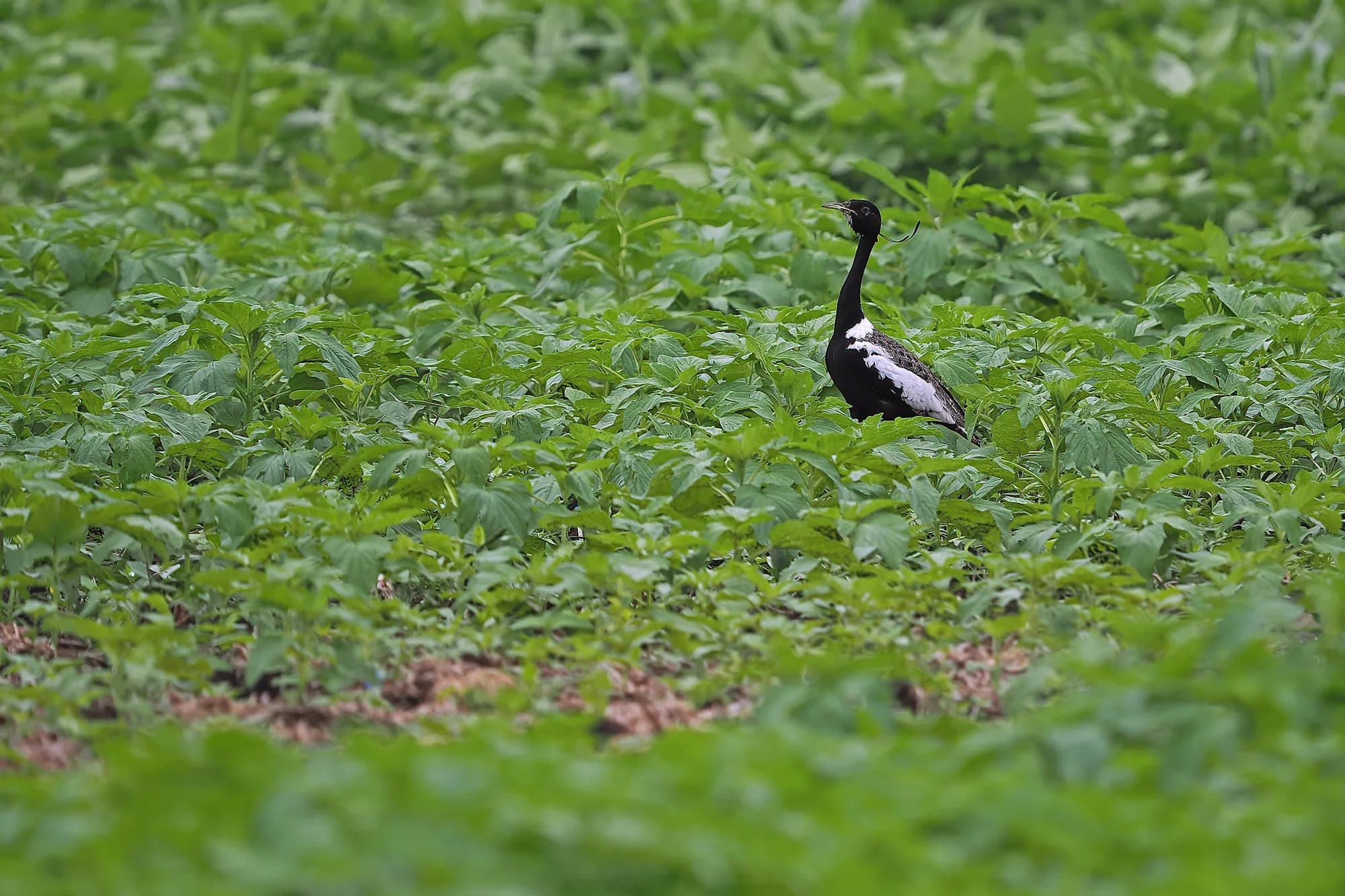
Standing grass in the monsoon, and nowhere else
Lesser florican — the monsoon one
A small bustard whose male leaps two metres out of tall grass, several hundred times a day, for about eight weeks a year. Outside those weeks it is functionally invisible.
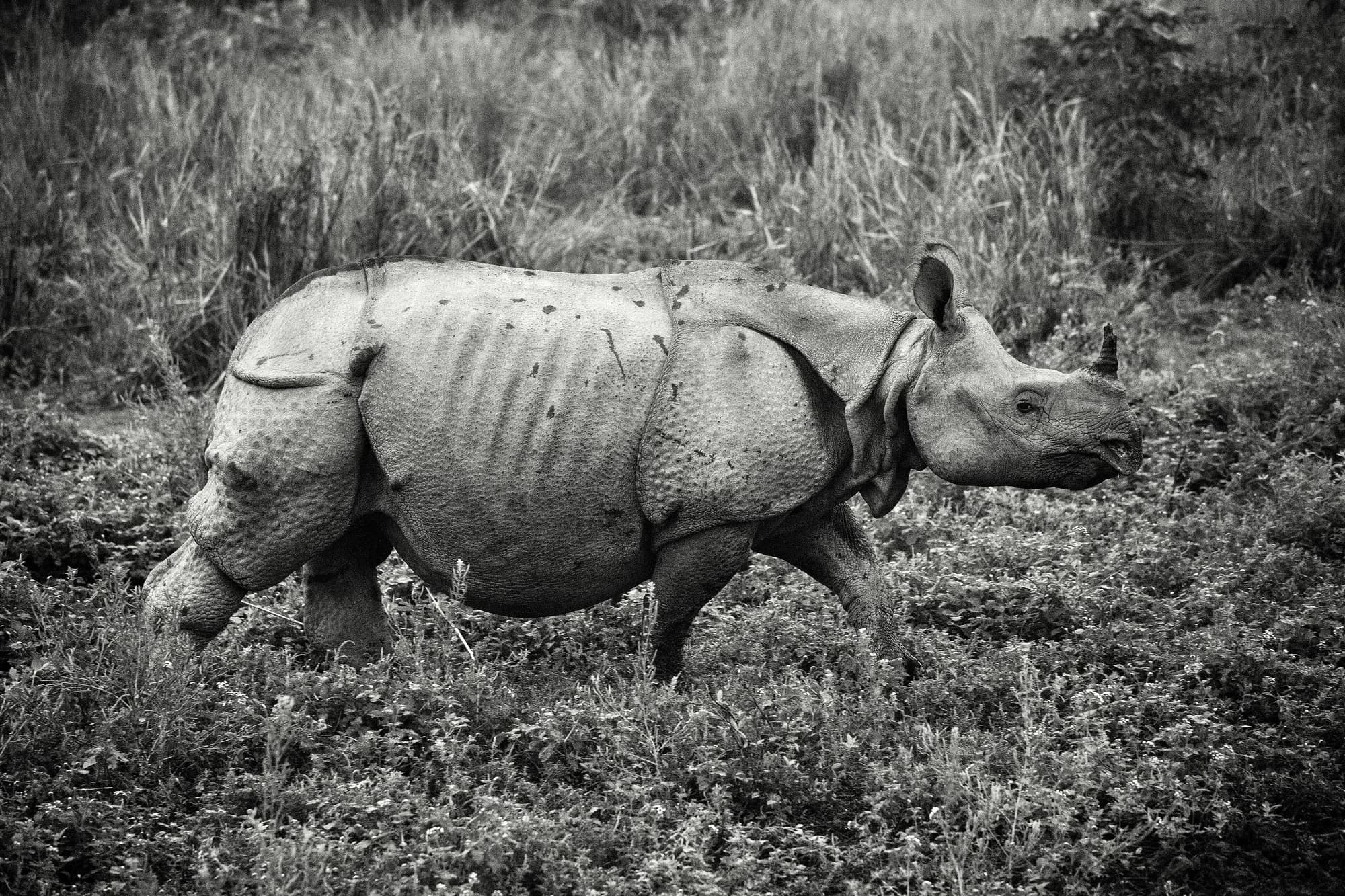
Assam floodplain, near-certain
One-horned rhino — the same grasslands
The easiest large mammal in India to see well. Two-thirds of the world's population stands in open grass, in daylight, in one Assam floodplain.
Manas — the park in full
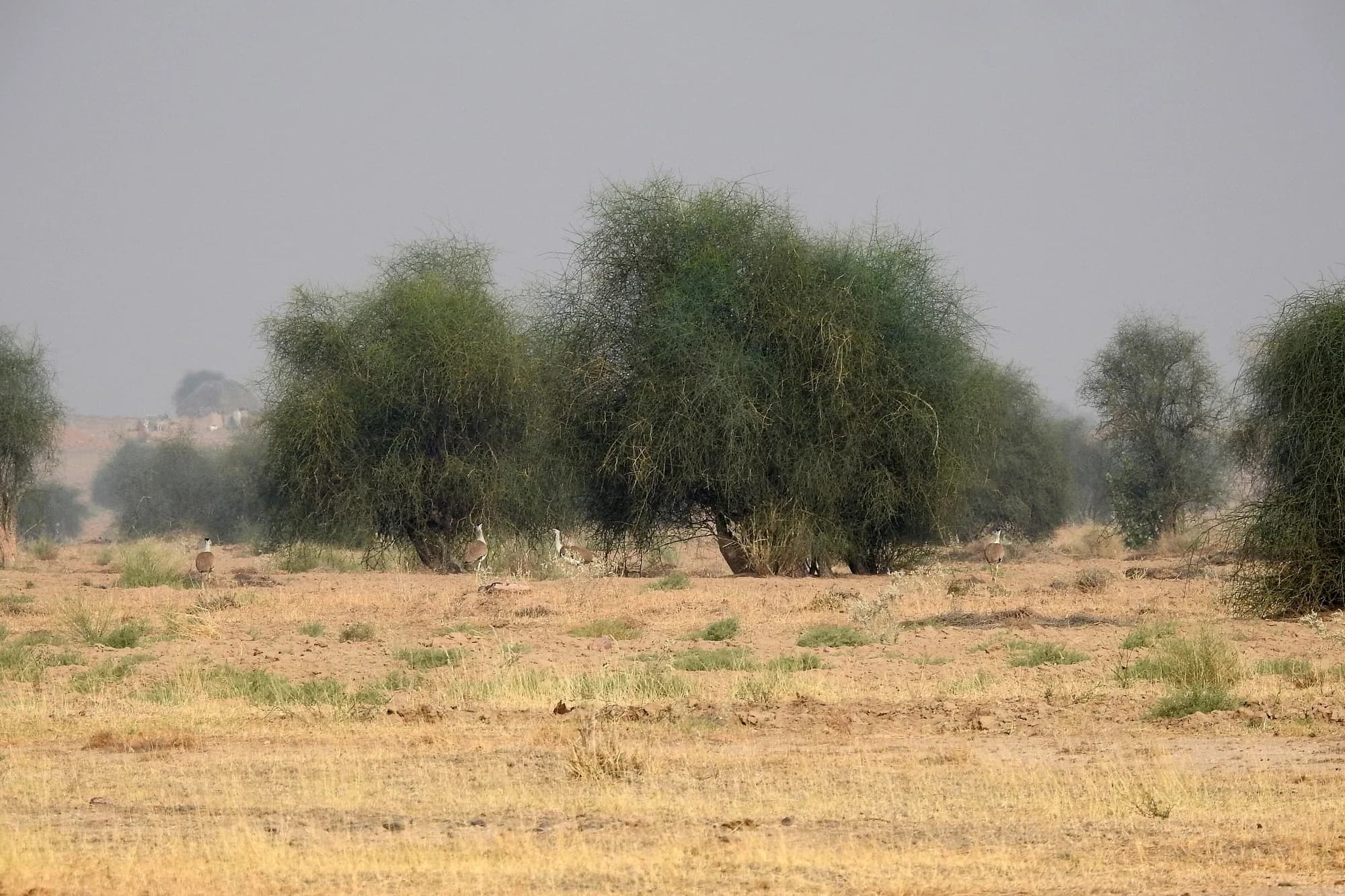
The Thar, and almost nowhere else now
Great Indian bustard — the other bustard
A metre-tall grassland bird down to double figures in the wild, killed mainly by power lines. The most urgent conservation emergency in Indian birding, and a sighting that will not be available much longer.