
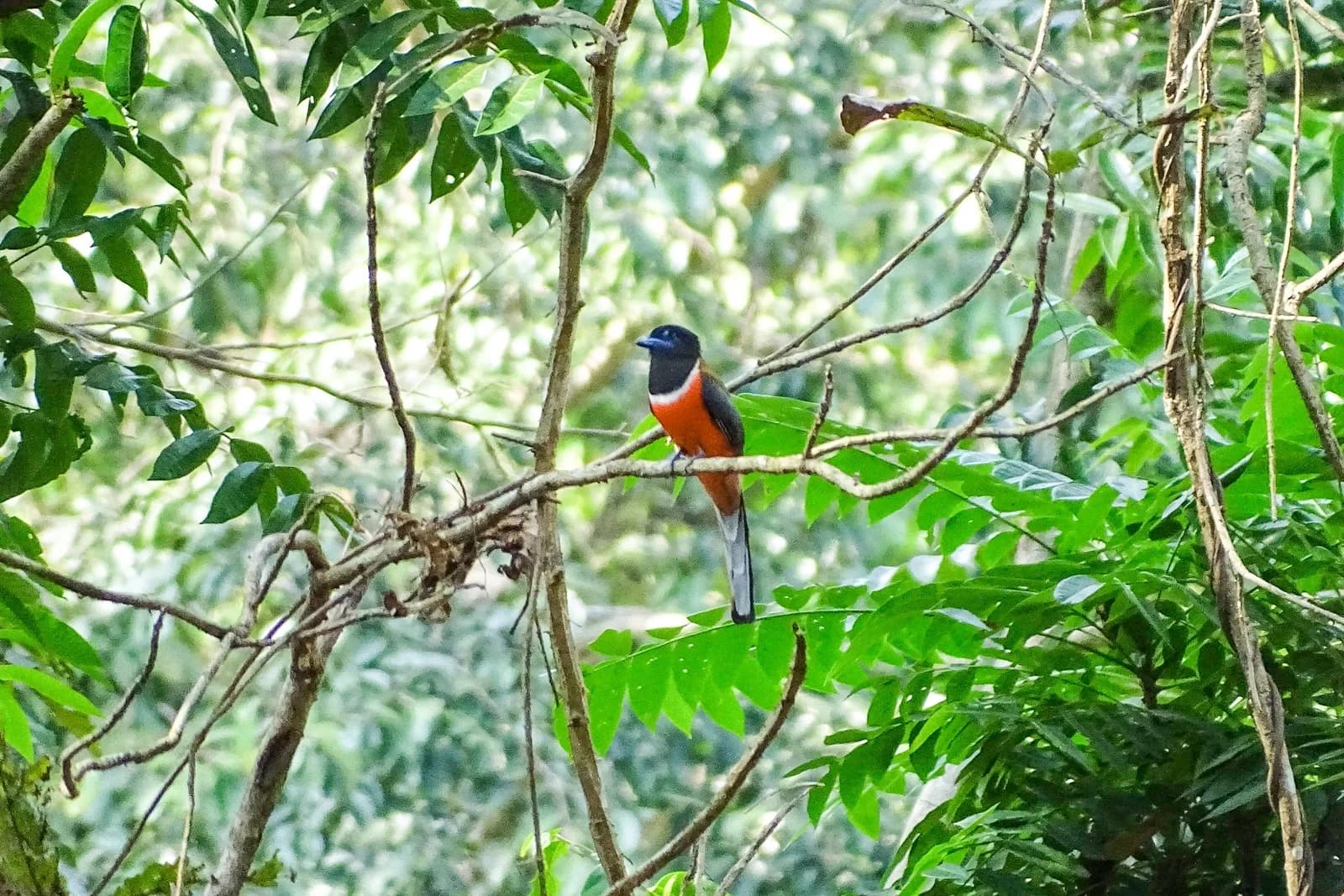
Species · Harpactes fasciatus
Malabar trogon
Crimson, black and white, and almost impossible to see until it moves. It is the bird that teaches people the difference between looking at a forest and reading one.
Also called
- Theekkakka (തീക്കാക്ക) · Malayalam
- Kempu hakki · Kannada
Checked 31 Aug 2026
- Where
- Western Ghats and parts of the east
- Best months
- December–April
- Habit
- Sits motionless, low down
- Note
- Found by call, not by eye
Moist evergreen and semi-evergreen forest, mainly along the Western Ghats, with a separate and much thinner population in the eastern hill forests of Odisha and Andhra Pradesh. It needs shaded understorey and rotten stumps to nest in.
Where it is
Where to actually go
Ranked, with the reason each — these are not interchangeable.
- 01ThattekadKeralaThe best-guided forest in India for this kind of bird, and guides who know individual trogon territories.Known territories
- 02ParambikulamKeralaGood moist forest with quiet trails, and enough structure to hold trogons through the year.Quiet trails
- 03Silent ValleyKeralaSuperb intact evergreen forest, with trogons in the understorey along the approach trails.The best forest
Where you will not see one
- Open or dry forestTrogons need shaded, humid understorey. In dry deciduous forest or plantation you are in the wrong structure entirely, however good the tree list looks.
- The canopyPeople scan upward for a red bird and miss it at chest height. Trogons work the lower and middle storey, often between two and eight metres.
When to go
When to go
- J
- F
- M
- A
- M
- J
- J
- A
- S
- O
- N
- D
January: best. February: best. March: best. April: best. May: good. June: closed or unproductive. July: closed or unproductive. August: closed or unproductive. September: marginal. October: good. November: best. December: best.
Through the day
- Dawn
- Morning
- Midday
- Afternoon
- Dusk
- Night
Dawn: active. Morning: most active. Midday: usually resting. Afternoon: active. Dusk: active. Night: not normally seen.
Telling it apart
Told apart from
The same forest floor and understorey
Both are brilliantly coloured understorey birds found by call. The pitta is on the ground and hops; the trogon perches upright and motionless above it.
Marks chosen to be usable from a moving vehicle — a malabar trogon is rarely still and never close enough for anything subtler.
What it looks like in the field
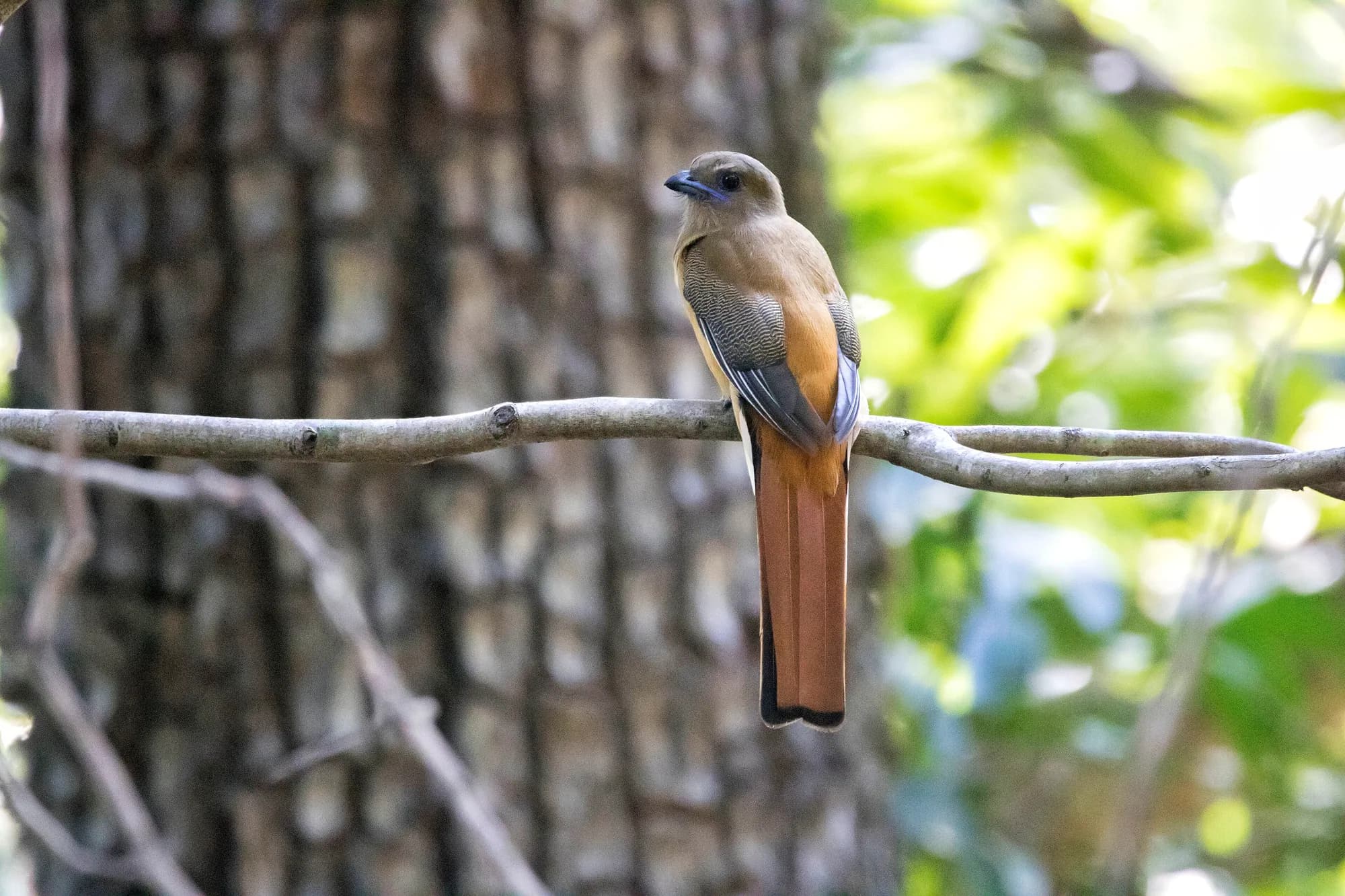
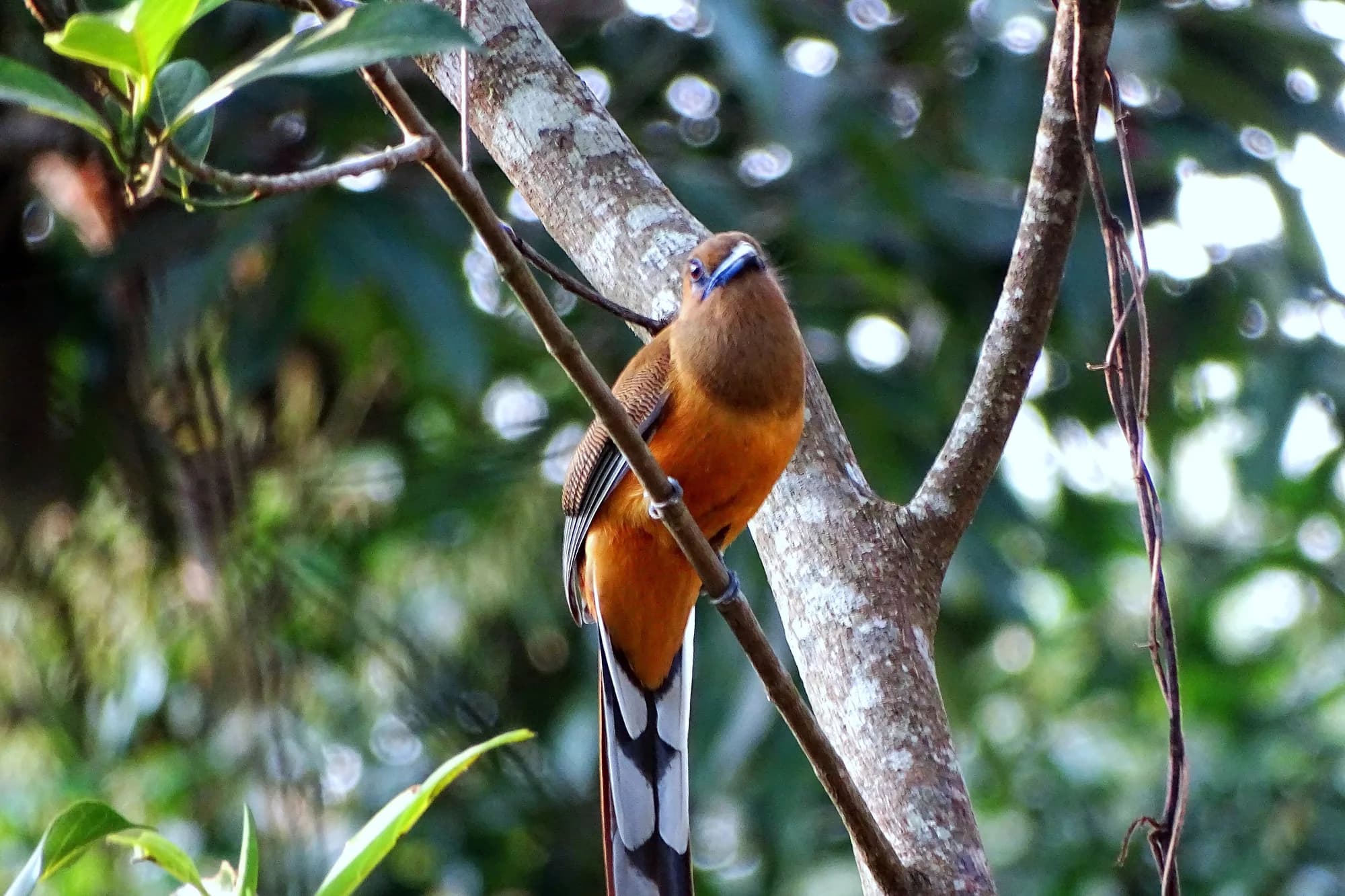
Photographs of Malabar trogon in the wild, in Indian reserves. We publish no captive, baited or digitally composited images, and no photograph whose licence we cannot show.
Why you walk past them
A trogon’s strategy is to not move. It perches upright, holds still for minutes at a time, and turns only its head. In shaded understorey the crimson reads as a dark patch, and motion — which is what your eye is actually scanning for — never comes.
The call, and how to use it
A soft series of low mellow notes, evenly spaced and easy to lose under a mixed flock. It carries less far than you would expect, which is useful: if you can hear it, the bird is close.
Playback in a small forest with known territories is a real cost to the birds. A guide who refuses to use a speaker is doing their job properly, not being difficult.
Status and protection
Status and protection
- IUCN Red List
- Least Concern
- Population trend
- ↓ Decreasing
- Wildlife Protection Act 1972
- Schedule II
- CITES
- Not listed in the CITES Appendices
Species-level assessment for Harpactes fasciatus; binomial matches exactly. Assessor BirdLife International 2025, last assessed 28 May 2025.
Assessed 2025 · IUCN Red List assessment
What to book to see one
What you would be booking
- How it is seen
- A forest walk with a guide who knows the calls — Thattekad above all, and any good Ghats birding forest.
- Drives to book
- One or two mornings on foot in the right forest. This is not a vehicle bird; you need to stand still and listen.
The call is a soft, evenly spaced series of low mellow notes, easy to miss under other birdsong. Ask your guide to play it once in your ear before you set off, not through a speaker in the forest.
Thattekad — the park in fullQuestions people ask
Where can I see a Malabar trogon?
Why are they so hard to see?
What is the best way to find one?
Read next
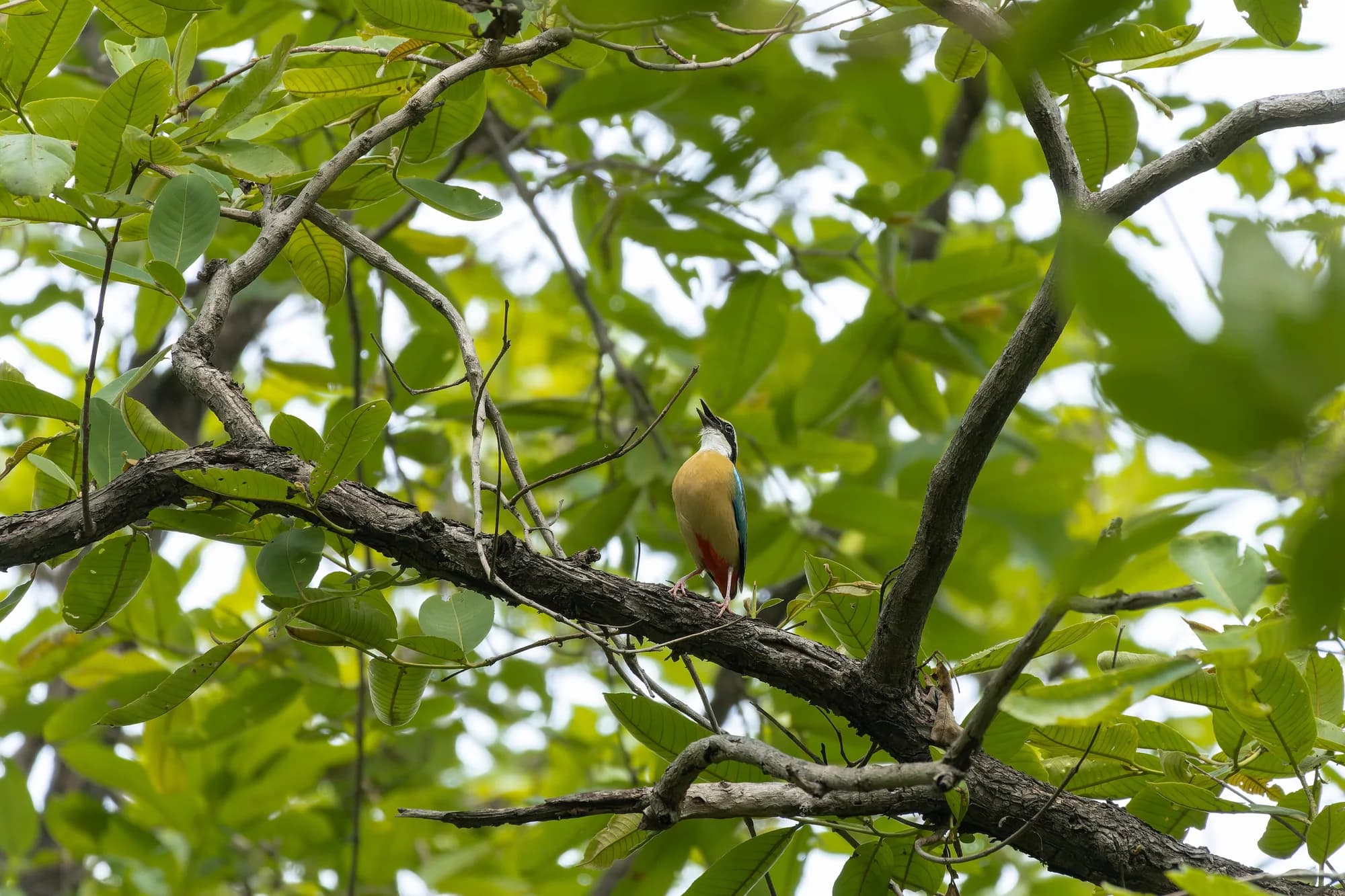
Nine colours, two notes, and a monsoon arrival
Indian pitta — the other understorey jewel
A ground bird in nine colours that most people hear and never see. The two-note dusk call is one of the defining sounds of the Indian monsoon.
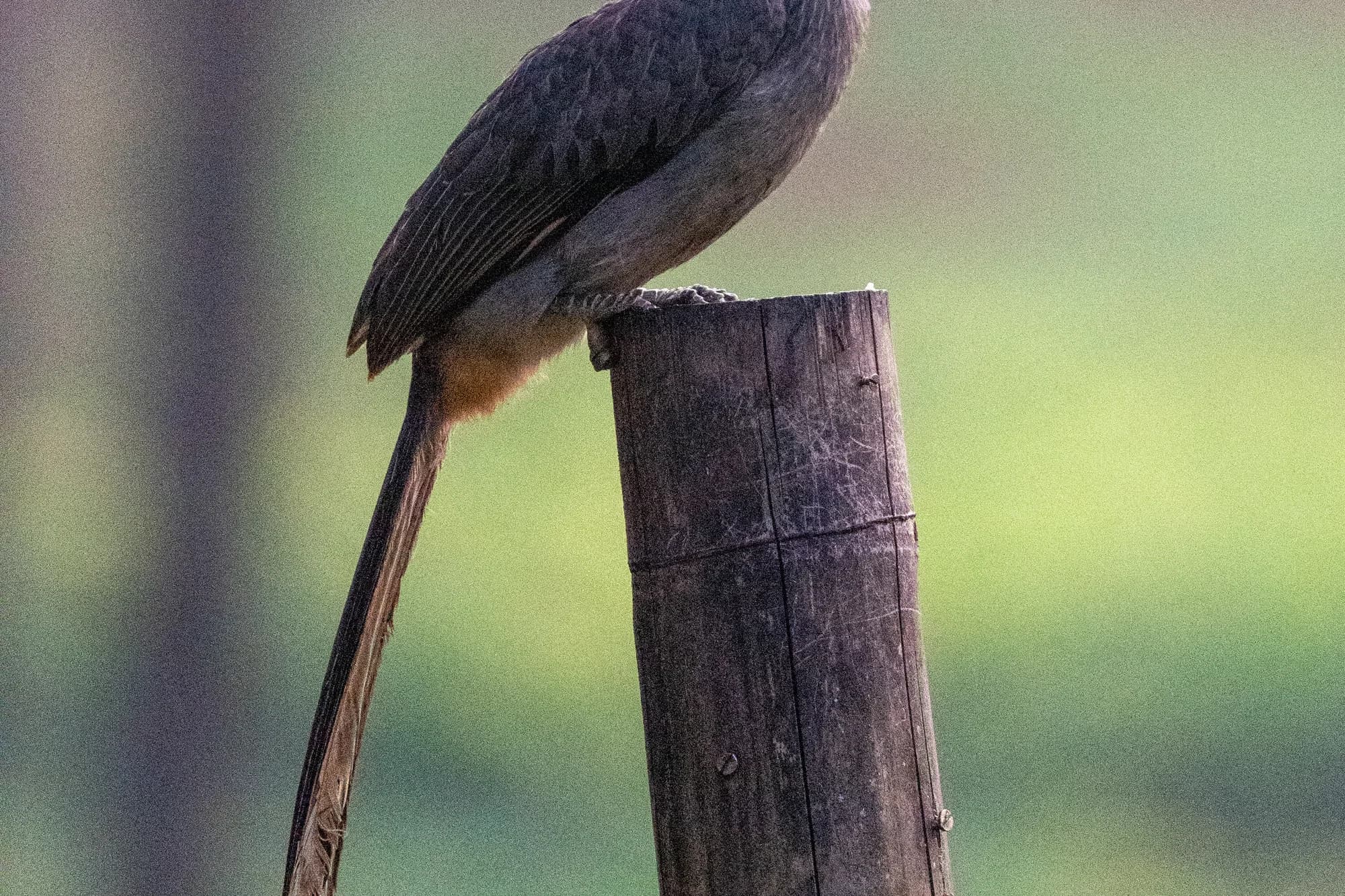
Western Ghats canopy, in noisy parties
Malabar grey hornbill — the same forest
The Western Ghats' own hornbill — small, casque-less and endemic. It is common where the forest is intact, it announces itself constantly, and it is the easiest of India's four widespread hornbills to see badly and hardest to see well.
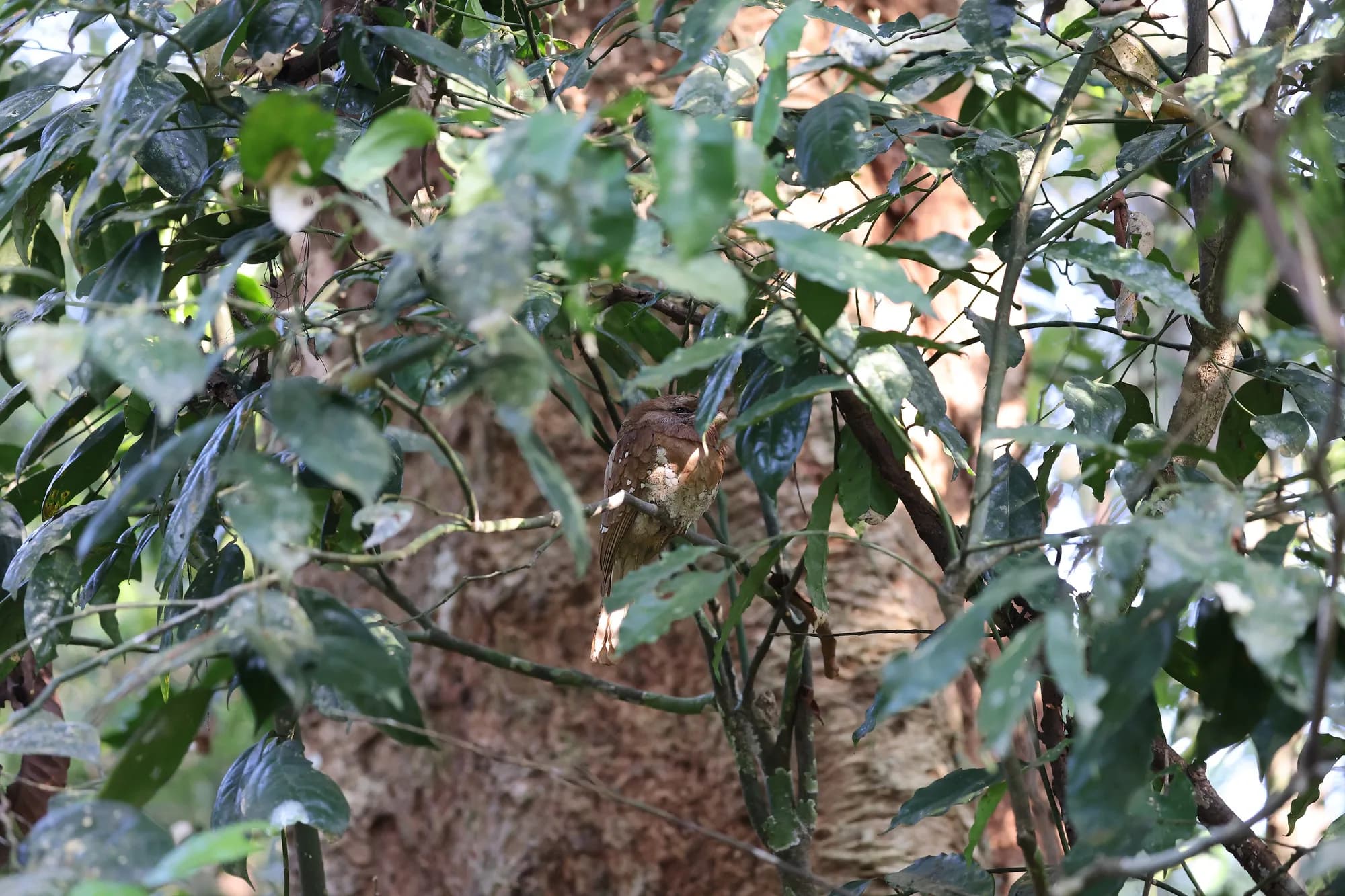
A known roost tree, shown to you
Sri Lanka frogmouth — the same guides
A bird you do not find. Local guides in the Western Ghats know individual roost trees and the pairs that use them, and a sighting is somebody walking you to a specific branch.
Thattekad — the park in full