
Species · Batrachostomus moniliger
Sri Lanka frogmouth
A bird you do not find. Local guides in the Western Ghats know individual roost trees and the pairs that use them, and a sighting is somebody walking you to a specific branch.
Also called
- Thavala vaayan · Malayalam
- Thavalai vaai · Tamil
- Kappe bayi hakki · Kannada
Checked 31 Aug 2026
- Where
- Western Ghats
- Best months
- October–April
- Found by
- A guide who knows the tree
- Active
- After dark
Wet evergreen forest and dense secondary growth along the Western Ghats, from Goa south. Absent from dry forest entirely.
Where it is
Where to actually go
Ranked, with the reason each — these are not interchangeable.
Where you will not see one
- Dry deciduous forestStrictly a wet-forest bird. Nothing in central or northern India, at any season.
- Found alone, realisticallyCamouflage is the entire defence and it works. Almost every sighting is a guide showing you a roost they already knew about.
When to go
When to go
- J
- F
- M
- A
- M
- J
- J
- A
- S
- O
- N
- D
January: best. February: best. March: good. April: marginal. May: marginal. June: marginal. July: marginal. August: marginal. September: good. October: good. November: best. December: best.
Through the day
- Dawn
- Morning
- Midday
- Afternoon
- Dusk
- Night
Dawn: usually resting. Morning: usually resting. Midday: usually resting. Afternoon: usually resting. Dusk: active. Night: most active.
What it looks like in the field
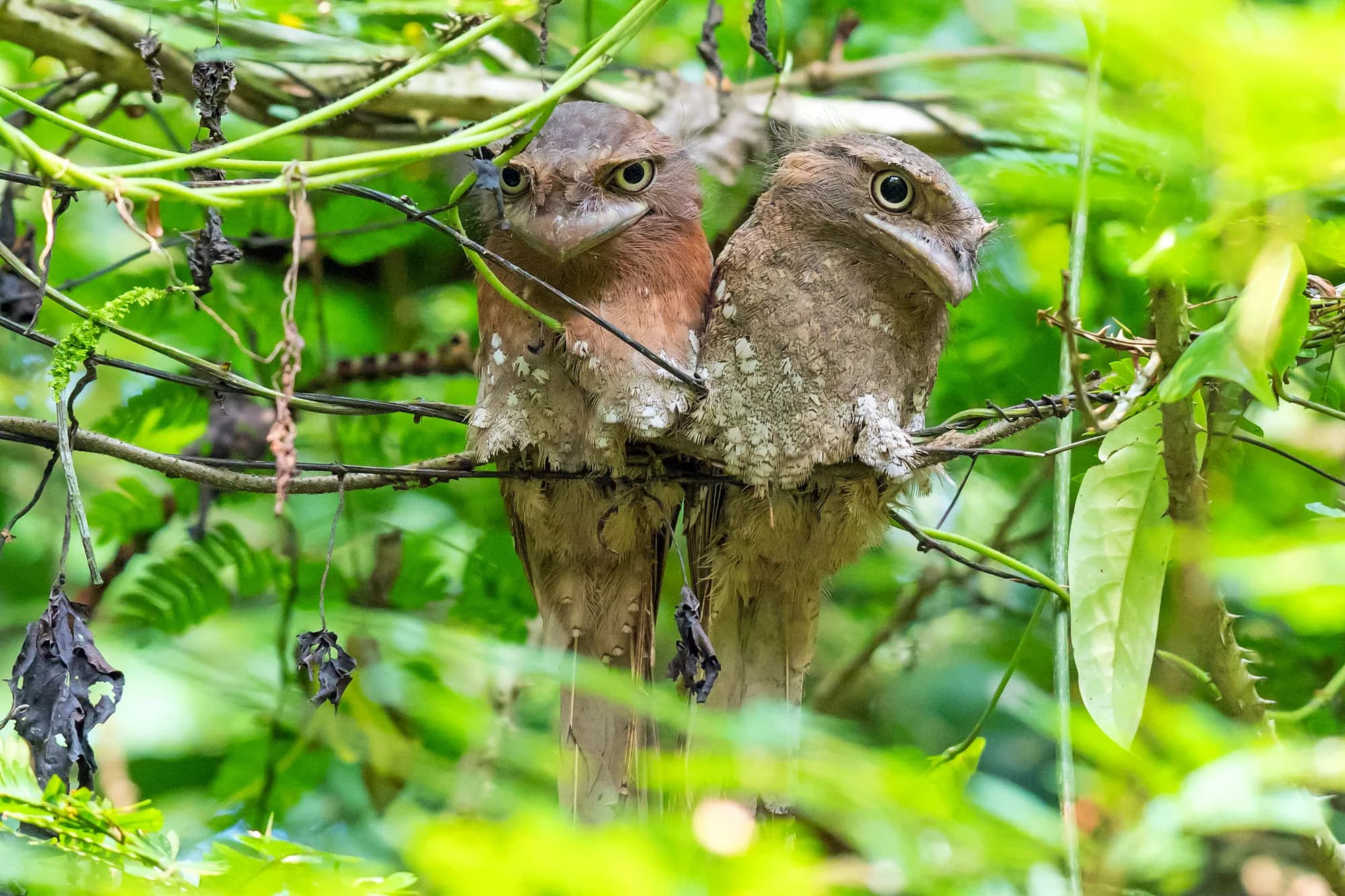
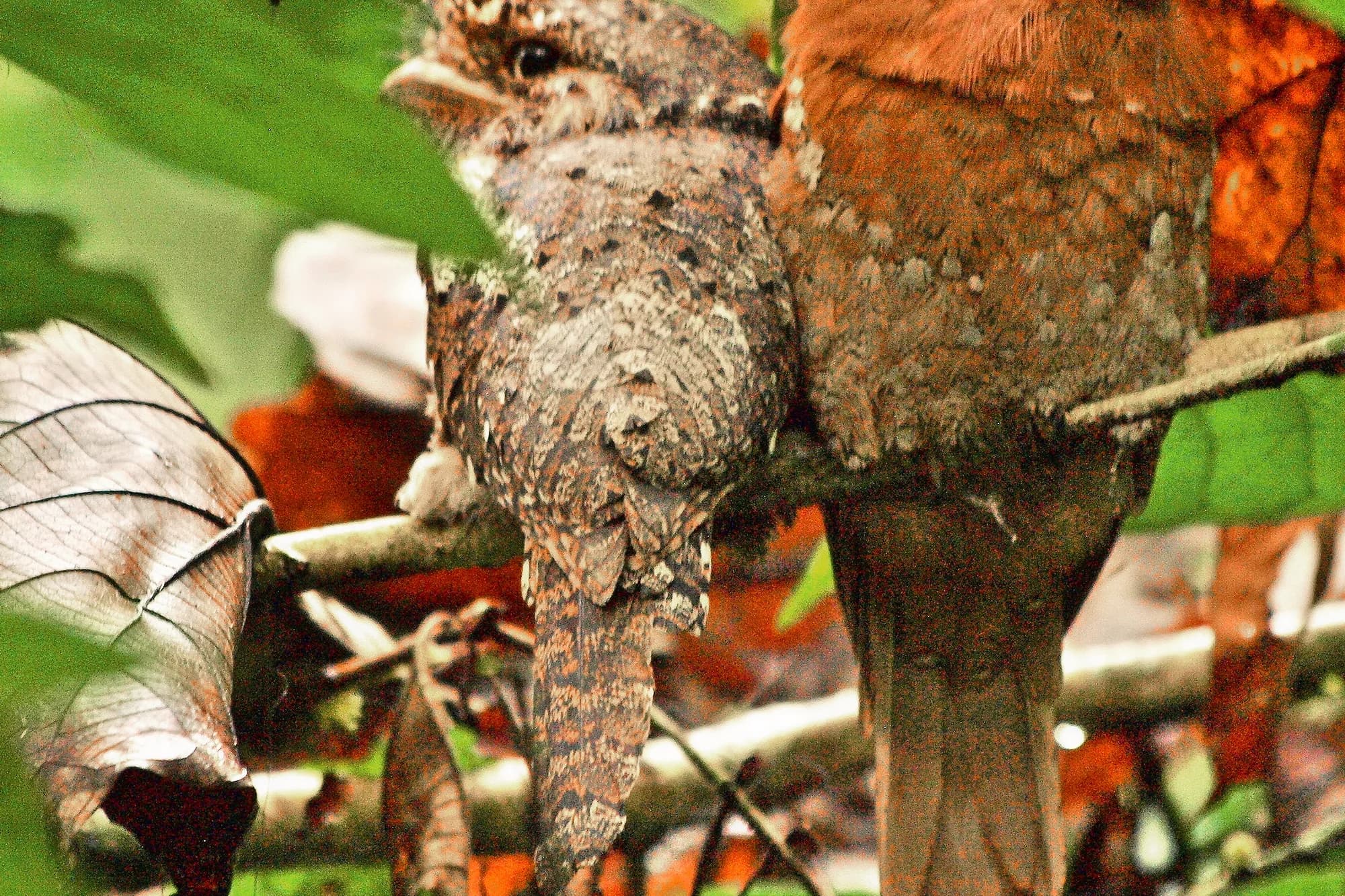
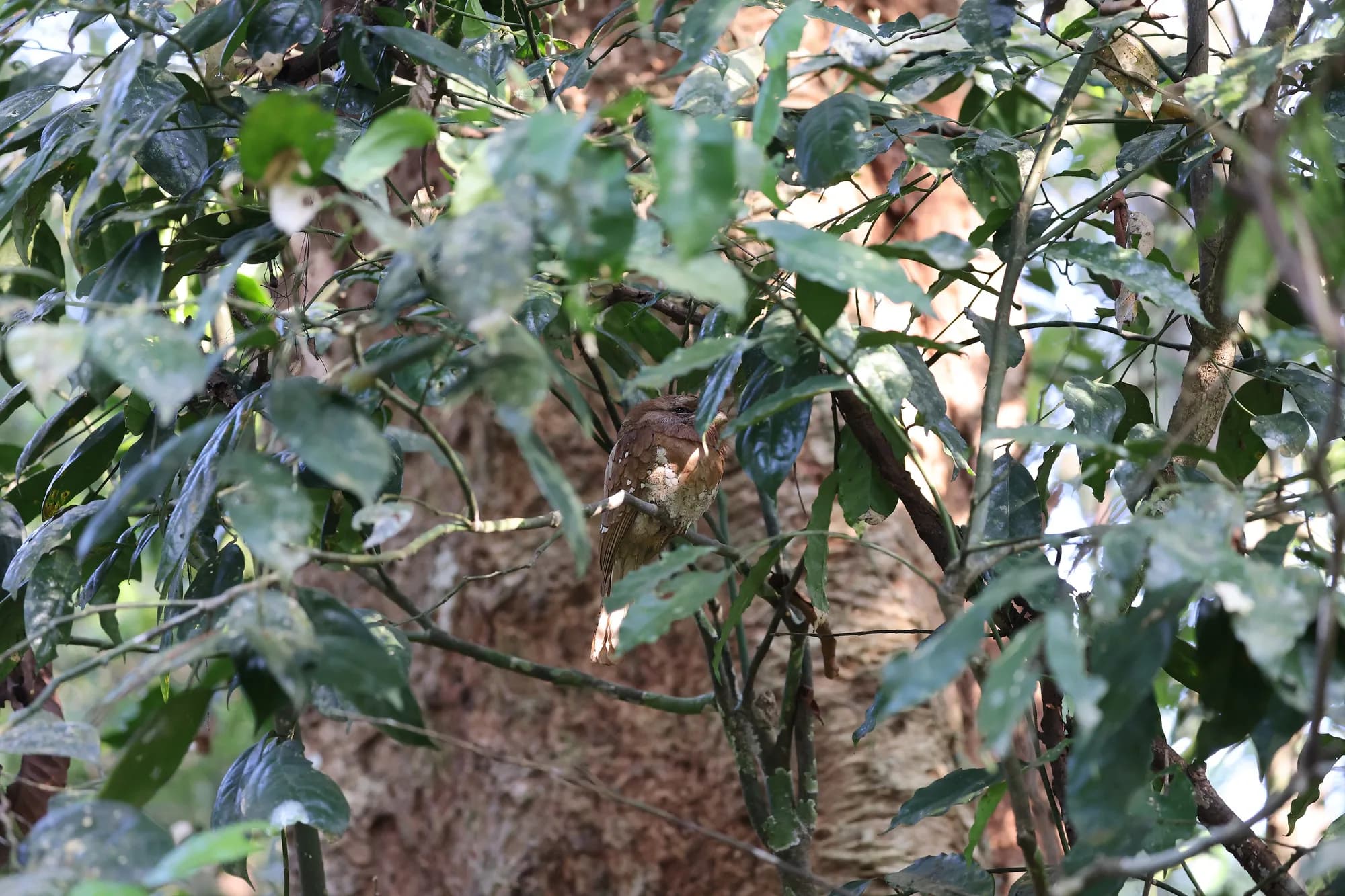
Photographs of Sri Lanka frogmouth in the wild, in Indian reserves. We publish no captive, baited or digitally composited images, and no photograph whose licence we cannot show.
Why the guide is the whole thing
This bird does not move, does not call in daylight, and looks exactly like a broken branch. Nobody scans it out of the understorey. What happens instead is that a guide who has watched the same pairs for years walks you a hundred metres off a path and points at a branch, and after ten seconds of not seeing anything, you see it.
That is worth understanding before you book, because it means the thing to research is not which park but which guide. Thattekad’s reputation rests on exactly that.
What a sighting is actually like
A pair pressed together on a low branch — one rufous, one grey — eyes almost shut, entirely still. They know you are there and they do not move, because moving is the only thing that would give them away. You get as long as you want, and you leave before they do.
Status and protection
Status and protection
- IUCN Red List
- Least Concern
- Population trend
- → Stable
- Wildlife Protection Act 1972
- Schedule I
- CITES
- Not listed in the CITES Appendices
Species-level assessment for Batrachostomus moniliger; binomial matches exactly. Assessor BirdLife International 2024, last assessed 12 June 2024.
Assessed 2024 · IUCN Red List assessment
What to book to see one
What you would be booking
- How it is seen
- A local bird guide, booked in advance, in a Ghats birding village.
- Drives to book
- Not a drive. A short walk to a specific tree, usually in the afternoon.
Thattekad is where most people see this bird, and it is worth naming your guide when you book. This is a species where the guide, not the park, is what you are paying for.
Thattekad — the park in fullQuestions people ask
Where can I see a Sri Lanka frogmouth?
Can I find it myself?
Is it related to an owl?
Read next
Over a river crossing, in plain sight
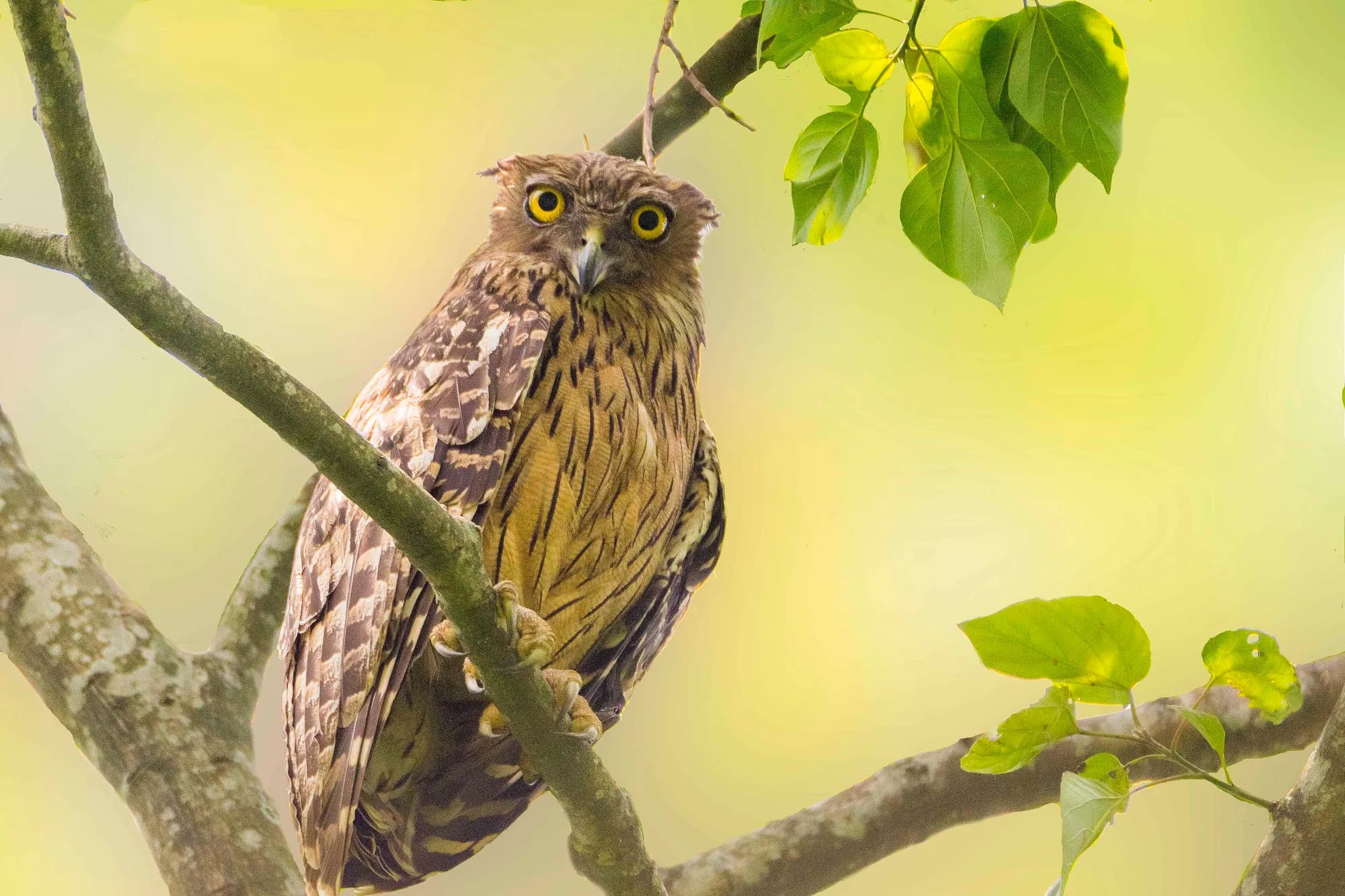
Brown fish owl — the other night bird you will see
A large owl that hunts fish from riverside branches and roosts above the crossings every vehicle drives through. Regularly overhead, and almost always missed.
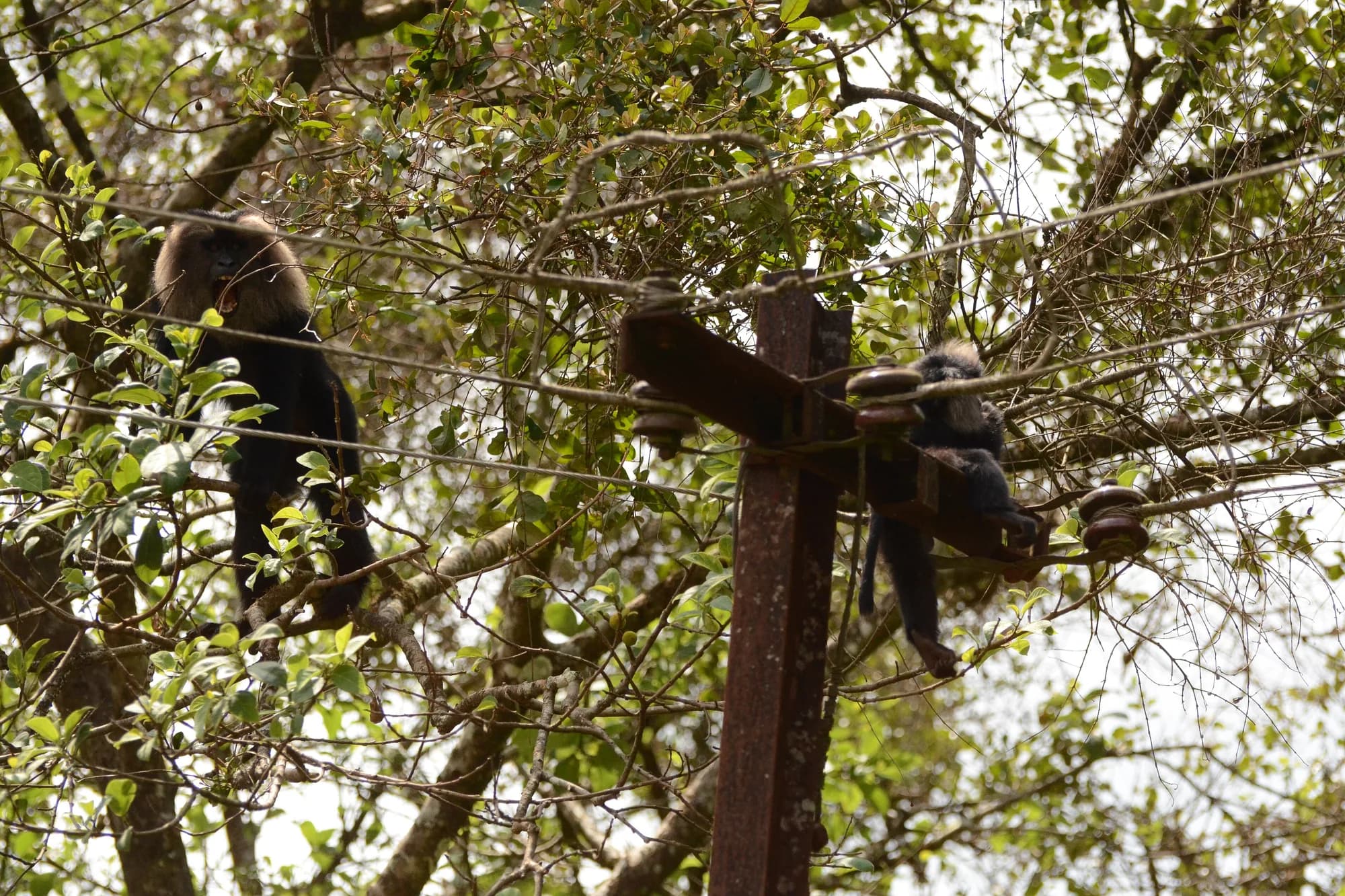
Western Ghats rainforest canopy
Lion-tailed macaque — the same forests
A black macaque with a silver mane and a tufted tail, confined to fragments of Western Ghats rainforest. One of the most distinctive primates in Asia and among the least seen in India.
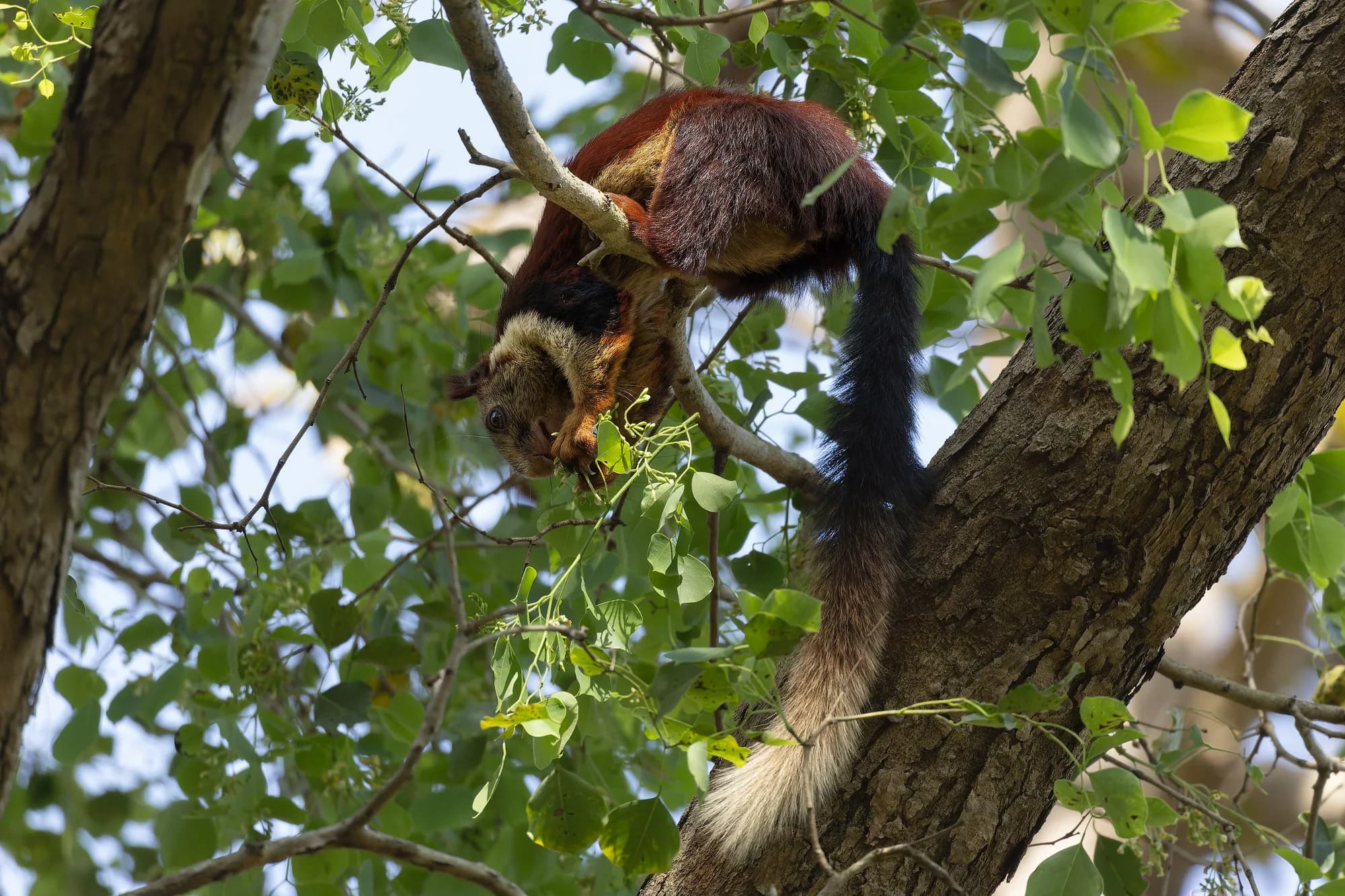
Six reserves, and always overhead
Indian giant squirrel — the same canopy
A squirrel the length of your arm, in maroon and cream, that leaps six metres between trees. The animal that most reliably delights people who came for a tiger and did not get one.
November to February
Birding on an Indian safari
Every reserve here is a birding destination whether or not it is sold as one. Say so when you book.