
Kenya / Tsavo West / Itineraries — Tsavo West
Itineraries — Tsavo West
Tsavo West is the rare park where the standard short itinerary is roughly the right length — two nights in the northern triangle is a complete trip, not a sample — and where the commonest mistake is not too few days but no days at all, because the park was a stop on the way somewhere.
The drive-through, honestly
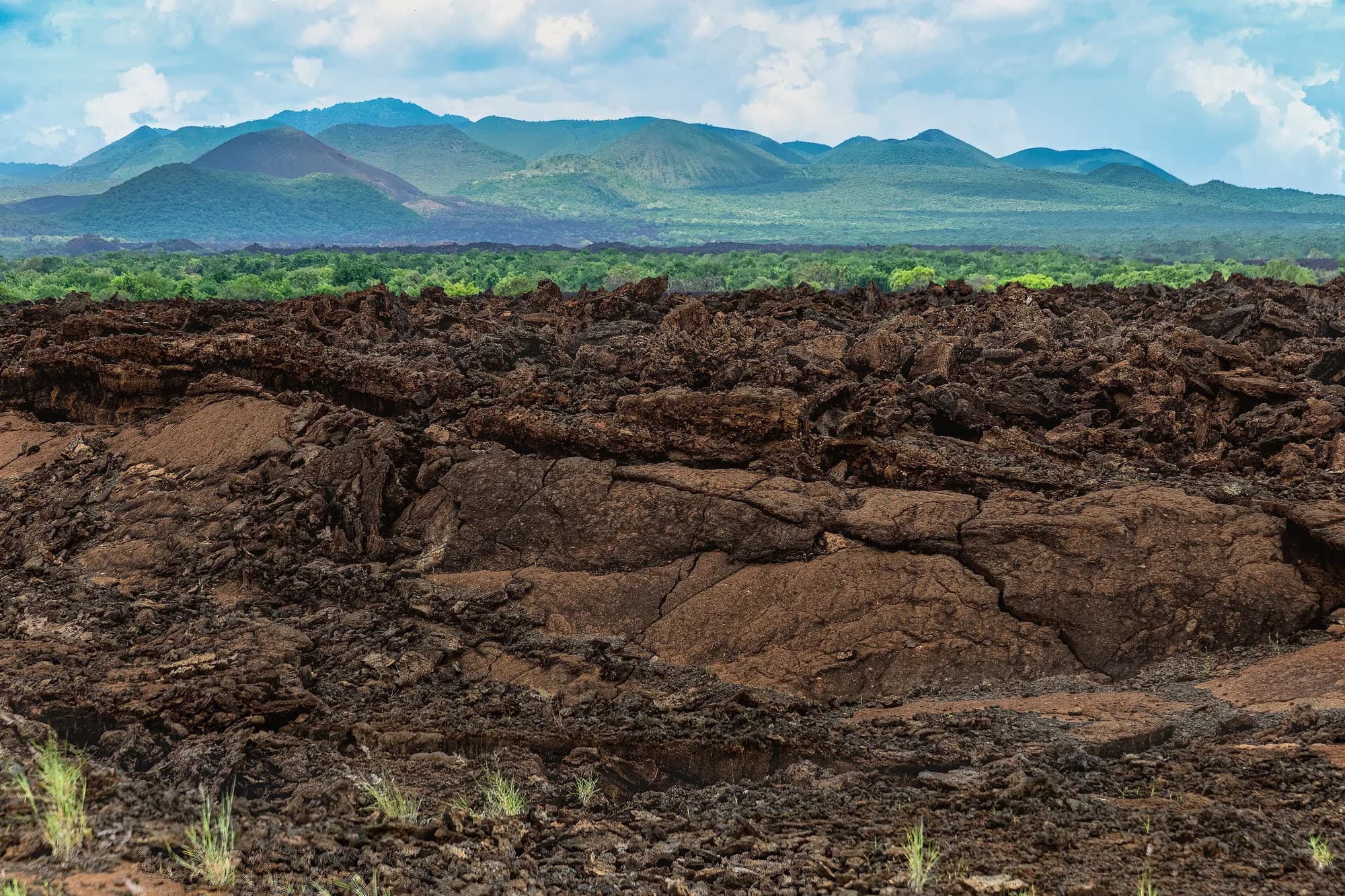
Because Mtito Andei gate is on the A109 and Chyulu gate is on the other side, a great many people enter Tsavo West, drive to Mzima Springs, walk the circuit, and leave through the far gate on their way to Amboseli or the coast. It is sold as a Tsavo West visit and it costs a full day's conservation fee for each person in the car.
What a drive-through actually contains
| Element | Typical | What it means |
|---|---|---|
| Time inside the park | Three to five hours, in the middle of the day | The worst hours for animals and the best for a car park |
| What you see | Mzima Springs, the Shetani flow if it is on the route | Two of the park's features and none of its wildlife |
| Game drives | None; this is a transit with a stop | You are driving a road, not working a sector |
| Park fees, non-resident adult | USD 80 for the day | The same as a full day |
| Ngulia and the south | Not reached | The rhino country and the lake are nowhere near this route |
The fee row is the one worth noticing. A four-hour transit and a full day in the park cost a non-resident adult exactly the same USD 80, because the fee is per day and there is no shorter unit.
The verdict is not that this is worthless. Mzima Springs is genuinely remarkable and seeing it beats not seeing it. But it should be understood as a paid sightseeing stop on a transit, not as a visit to a national park, and the people who report Tsavo West as underwhelming have almost always done this version of it at one in the afternoon.
Two nights in the northern triangle — the trip that works
Two nights from a northern base is a genuinely complete Tsavo West trip, which is a sentence that cannot be written about Tsavo East at any length under four nights. The park's named features are clustered, the distances are short, and two full mornings plus two evenings covers them without a single long transit.
A two-night shape
| When | What |
|---|---|
| Day 1, afternoon | Enter at Mtito Andei or Chyulu, drive in slowly, Shetani flow on the way, settle |
| Day 1, last light | The waterhole in front of the property, or a short loop |
| Day 2, first light | Mzima Springs, arriving as it opens and before anybody else |
| Day 2, late morning | The Roaring Rocks and Chaimu on the way back, both on foot |
| Day 2, last light | Towards Ngulia and the rhino country, or the river |
| Day 3, first light | A final drive, then out |
Mzima at first light rather than at midday is the single change that most improves a Tsavo West itinerary, and almost every commercially sold version gets it wrong because Mzima is where the coach stops for lunch.
If a two-night itinerary does not have Mzima early on day two, ask why, and ask for it to be moved. The animals are in the water in the morning, the light through clear water works in the morning, and the walkway is empty in the morning. By eleven it is the busiest hundred metres in either Tsavo.
Three or four nights — the south, or the other park
At three nights a real choice opens. You can stay in the north and slow down, which in a park where the constraint is cover rather than distance is a better use of a day than it sounds. You can move south to Lake Jipe and see a part of Kenya almost no visitor sees. Or you can cross the A109 and spend the extra nights in Tsavo East, which is a different country.
Three ways to spend three or four nights
| Shape | What it gives you | What it costs |
|---|---|---|
| All in the northern triangle, slower | Time at waterholes, second attempts at Mzima, the Ngulia side properly | One park fee throughout; the least driving |
| North, then two nights in the south at Jipe | Open plains, water birds, a border lake, real solitude | One park fee, a long internal transit, and very few beds at the far end |
| Split between Tsavo West and Tsavo East | Volcanic hills and springs, then flat red scrub and scale | Two park fees, and a gate crossing on the A109 |
For a non-resident adult the third option adds USD 80 a day for the Tsavo East days, unless the three-park package applies — and the record this site holds shows no package covering only the two Tsavos, which the permits pages of both parks explain.
Our view, for a first visit with three nights: stay north and slow down. The Jipe trip is the better story and the worse holiday for most people, because it spends a lot of a short trip getting somewhere with almost nothing at the end of it but a view. Save it for a second visit, when you already know what the north looks like and the emptiness is the point rather than the surprise.
The crossing to Tsavo East is a fee, not a drive
Moving between the parks means exiting one and entering the other through gates on opposite sides of the A109, and paying the second park's conservation fee for that day. It is a short piece of road and a full day's money. Budget it as a line rather than discovering it at a barrier.
The southern circuit, and what the USD 150 pair rewards
The classic southern Kenya road trip runs Nairobi, Amboseli, Tsavo West, Tsavo East and finishes on the coast. Tsavo West sits in the middle of it, and the KWS schedule's package structure is built around the first two stops rather than the last two: the pair on the schedule is Tsavo West with Amboseli at USD 150 for a non-resident adult, and the triple with Tsavo East added is USD 215.
A southern circuit, and what each stop supplies that the others do not
| Nights | Where | What only this stop gives you |
|---|---|---|
| 1 | Nairobi | Arrival, and it makes the run south a morning rather than a day |
| 2-3 | Amboseli | Elephants at close quarters, the swamps and Kilimanjaro |
| 2-3 | Tsavo West | Volcanic country, Mzima Springs, rhino, and the best scenery of the three |
| 2-3 | Tsavo East | Scale, red dust, the Galana, and the emptiest driving in Kenya |
| 2+ | Diani or Mombasa | The beach the whole circuit points at |
Nothing on this list repeats anything else on it, which is the case for doing the whole thing rather than choosing between the parks.
The money question for a circuit of this shape is settled on the permits page and comes to one line: the upgrade from the pair to the triple is USD 65, and one day's adult entry to Tsavo East is USD 80, so if Tsavo East is in the trip at all the triple is the instrument. If you are doing only the first three stops and turning for home, the pair at USD 150 is the cheaper and correct choice, and it is the only package on the schedule that names this park without naming Tsavo East.
Ask two questions and write the answers down
How many days does each package cover, and must the parks be visited consecutively. We could not settle either against KWS on 28 September 2026 because the department's site refused us. Until you have those answers in writing, treat both packages as questions to put at the point of sale rather than savings already in your budget.
Kenya Wildlife Service — Conservation Fees, October 2025 schedule
Carried from the verified fee record this site holds against KWS's own published schedule, taken from the PDF above on 27 September 2026. We tried the department again on 28 September 2026 and the read failed at the same wall: the fee PDF returned a TLS certificate that could not be verified, and so did the department's own December 2025 press release on the rhino sanctuary. The figures here are therefore carried as recorded rather than re-read live, and no operator's copy of the tariff has been substituted for the department's — an operator's fee table is not a source, however confidently it is laid out. One caveat belongs on the face of the page rather than in a footnote: the schedule bands parks rather than naming a rate park by park, and Tsavo West sits in the band printed "WILDERNESS PARKS (A)", given on the document as "Tsavo East and Tsavo West National Parks". The mapping from that band to this park is the single step between the document and these tables.
https://kws.go.ke/wp-content/uploads/2026/05/KWS-Conservation-Fee-October-2025.pdfTsavo West or Tsavo East, if you only do one
This is the question every reader of these two pages actually has, and both parks deserve a straight answer rather than a diplomatic one. They cost the same. They are next to each other. They are not remotely alike.
The two Tsavos, side by side
| Tsavo West | Tsavo East | |
|---|---|---|
| Reported area, WDPA | 9,065 sq km | 11,747 sq km |
| Landscape | Volcanic hills, lava, springs, green | Flat red thorn scrub, enormous sky |
| Game viewing | Harder; cover hides everything | Easier; open ground, concentrated at water |
| Elephant | Same population, darker, harder to see | More of them, red, and the park's signature |
| Rhino | Yes, in a 3,200 sq km sanctuary | No |
| Hippo and crocodile | Mzima Springs, at close range and on foot | The Galana, from a vehicle |
| Birds | Continentally significant; Ngulia and Jipe | Good, and not a destination for it |
| Shortest trip that works | Two nights | Three, honestly four |
| Package rate of its own | Yes, with Amboseli at USD 150 | No pair; only the USD 215 triple |
Areas are WDPA's, read 28 September 2026, and the Key Biodiversity Areas factsheet's disagreement with the Tsavo West figure is set out on the zones page. Fees are KWS's.
Our answer, stated plainly. A first-time safari visitor with three nights and one Tsavo to spend them in should choose Tsavo East, because the object of a first safari is seeing animals and Tsavo East is materially better at producing them. A visitor who has already done Amboseli or the Mara, or who cares about landscape, birds, geology or rhino, should choose Tsavo West and will probably like it more than the first visitor liked the east. And anybody with five nights should do both, because they are forty minutes apart and the only cost of the trade is a second conservation fee.
UNEP-WCMC, World Database on Protected Areas — Tsavo West, WDPA site 19564
Read 28 September 2026. Protected Planet gives Tsavo West a reported area of 9,065.0 square kilometres. Tsavo East, on site 752, was read the same day and is given as 11,747.0 square kilometres. Both are the WDPA's reported-area field and neither was readable from Kenya Wildlife Service itself, because kws.go.ke refused us on 28 September 2026.
https://www.protectedplanet.net/19564Kenya Wildlife Service — Conservation Fees, October 2025 schedule
Carried from the verified fee record this site holds against KWS's own published schedule, taken from the PDF above on 27 September 2026. We tried the department again on 28 September 2026 and the read failed at the same wall: the fee PDF returned a TLS certificate that could not be verified, and so did the department's own December 2025 press release on the rhino sanctuary. The figures here are therefore carried as recorded rather than re-read live, and no operator's copy of the tariff has been substituted for the department's — an operator's fee table is not a source, however confidently it is laid out. One caveat belongs on the face of the page rather than in a footnote: the schedule bands parks rather than naming a rate park by park, and Tsavo West sits in the band printed "WILDERNESS PARKS (A)", given on the document as "Tsavo East and Tsavo West National Parks". The mapping from that band to this park is the single step between the document and these tables.
https://kws.go.ke/wp-content/uploads/2026/05/KWS-Conservation-Fee-October-2025.pdfWhat not to do
- The midday drive-through. It costs a full day's fee, it puts you at Mzima at the worst hour, and it is the reason this park has a reputation for being less good than it is.
- Booking Tsavo West as a cheaper, prettier Tsavo East. Same price, prettier, and genuinely harder for wildlife.
- Putting Lake Jipe in a two-night northern itinerary. It is not a morning from Kilaguni and asking on the day will not make it one.
- Buying the pair package when Tsavo East is anywhere in the plan, because the triple upgrade is USD 65 against an USD 80 day.
- Doing Amboseli and Tsavo West back to back for elephants and being disappointed by the second. Amboseli is the best elephant viewing in Kenya and this is a park where elephants live behind bushes.
- Going in April with two nights and no guide. Thickest cover of the year, and nobody to point through it.
- Treating the rhino sanctuary as a guaranteed stop. Whatever its rules are now, 3,200 square kilometres is not an enclosure.