
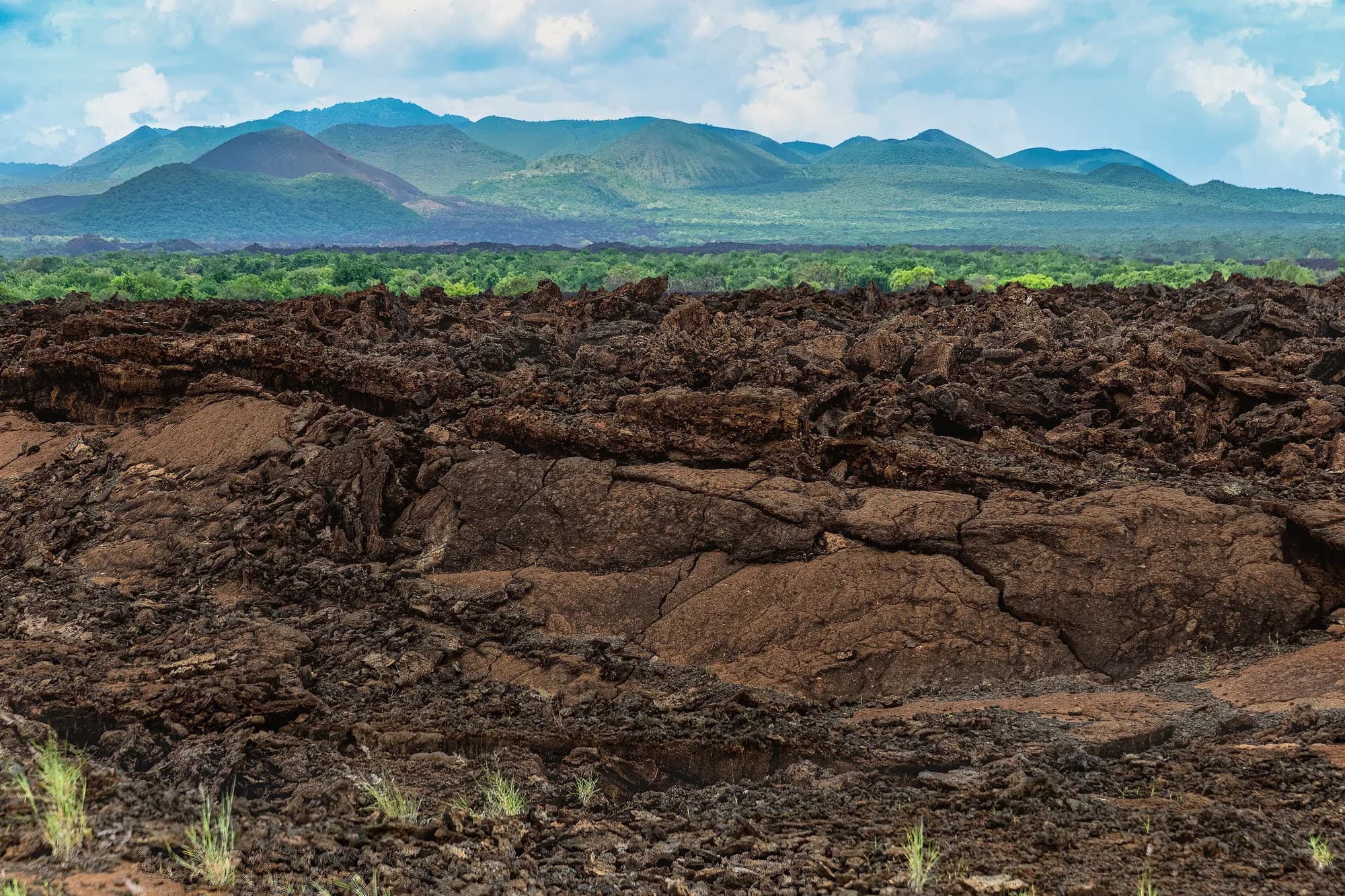
Kenya / Tsavo West / Permits and fees — Tsavo West
Permits and fees — Tsavo West
Tsavo West costs exactly what Tsavo East costs, which is the least interesting fact about its fees. The interesting one is that of the two Tsavos, only this one has a package rate of its own — and the upgrade from that package to the three-park one costs less than the day it buys.
The same band, and what sharing a band does not mean
Tsavo West is a national park, so Kenya Wildlife Service sets and collects its fee on the countrywide conservation-fee schedule — the same machinery as Amboseli, and the opposite of the Maasai Mara, where Narok County sets the rate under its own gazetted Finance Act. Amboseli's permits page sets out that distinction in full. What matters here is the band. KWS prints rates against groups of parks rather than against parks, and Tsavo West sits in the band headed WILDERNESS PARKS (A), given on the document as Tsavo East and Tsavo West National Parks.
So the two Tsavos cost the same to enter. That is a statement about price and nothing else, and it is the source of the most expensive misunderstanding available in this ecosystem. Tsavo East's permits page works that trap through from the other side and there is no point repeating the argument: one band, two gazetted parks, two gates, two fees, and the A109 Nairobi-Mombasa road running between them.
The direction the error runs at Tsavo West
At Tsavo East the classic mistake is being quoted Amboseli's premium rate for a wilderness park. Here it is subtler and costs more: a party that has bought the Tsavo West and Amboseli package at USD 150 assumes the word Tsavo in it covers both Tsavos. It does not. The package as recorded names Tsavo West. Crossing the road to Tsavo East on that ticket is a fresh USD 80 a head for a non-resident adult.
Kenya Wildlife Service — Conservation Fees, October 2025 schedule
Carried from the verified fee record this site holds against KWS's own published schedule, taken from the PDF above on 27 September 2026. We tried the department again on 28 September 2026 and the read failed at the same wall: the fee PDF returned a TLS certificate that could not be verified, and so did the department's own December 2025 press release on the rhino sanctuary. The figures here are therefore carried as recorded rather than re-read live, and no operator's copy of the tariff has been substituted for the department's — an operator's fee table is not a source, however confidently it is laid out. One caveat belongs on the face of the page rather than in a footnote: the schedule bands parks rather than naming a rate park by park, and Tsavo West sits in the band printed "WILDERNESS PARKS (A)", given on the document as "Tsavo East and Tsavo West National Parks". The mapping from that band to this park is the single step between the document and these tables.
https://kws.go.ke/wp-content/uploads/2026/05/KWS-Conservation-Fee-October-2025.pdfThe conservation fee
Conservation fee, per person per day
| Visitor | Adult | Child or student |
|---|---|---|
| Non-resident, all other nationalities | USD 80 | USD 40 |
| African citizen | USD 40 | USD 20 |
| East African citizen | KSh 1,000 | KSh 500 |
| Kenya resident | KSh 1,350 | KSh 675 |
Per person, per day, and it buys entry to Tsavo West and nothing else. No seasonal rate, no weekend rate, no tapering for a longer stay. It also buys every named feature inside the boundary — Mzima Springs, the Shetani lava flow, the Roaring Rocks, the Chaimu crater and Lake Jipe are all inside the fee, not on top of it.
That last line in the table is worth more here than it would be at Tsavo East, because Tsavo West is the Kenyan park with the longest list of things a visitor might reasonably expect to be charged separately for. In most countries on this site, a signposted walking trail to an underwater viewing chamber is a second ticket. Here it is not, and nobody tells you so.
The Kenya resident again pays more than the East African citizen
KSh 1,350 against KSh 1,000 for an adult, and KSh 675 against KSh 500 for a child. It is the same inversion the Amboseli and Tsavo East pages flag, it is not a transcription error on our side, and gate staff apply it as printed. A Kenyan citizen is an East African citizen and holds the cheaper card; a foreign national with Kenyan residence holds the dearer one.
Kenya Wildlife Service — Conservation Fees, October 2025 schedule
Carried from the verified fee record this site holds against KWS's own published schedule, taken from the PDF above on 27 September 2026. We tried the department again on 28 September 2026 and the read failed at the same wall: the fee PDF returned a TLS certificate that could not be verified, and so did the department's own December 2025 press release on the rhino sanctuary. The figures here are therefore carried as recorded rather than re-read live, and no operator's copy of the tariff has been substituted for the department's — an operator's fee table is not a source, however confidently it is laid out. One caveat belongs on the face of the page rather than in a footnote: the schedule bands parks rather than naming a rate park by park, and Tsavo West sits in the band printed "WILDERNESS PARKS (A)", given on the document as "Tsavo East and Tsavo West National Parks". The mapping from that band to this park is the single step between the document and these tables.
https://kws.go.ke/wp-content/uploads/2026/05/KWS-Conservation-Fee-October-2025.pdfVehicles, charged on seats
The vehicle is charged separately from the people in it, and on the number of seats it has rather than the number of bodies in them. The bands are the national KWS ones and are identical to Tsavo East's and Amboseli's.
Vehicle entry, per vehicle per day
| Vehicle | Fee |
|---|---|
| Under 6 seats | KSh 600 |
| 6 to 12 seats | KSh 1,500 |
| 13 to 24 seats | KSh 3,000 |
| 25 to 44 seats | KSh 4,500 |
| Above 44 seats | KSh 5,000 |
Seats, not occupants. Against Narok County's schedule for the Maasai Mara the same size bands carry different money — the under-six band there is KSh 1,000 rather than KSh 600, the six-to-twelve band KSh 1,500 in both, and the thirteen-to-twenty-four band KSh 3,500 rather than KSh 3,000.
Tsavo East's cost page works out what this charge does to an East African family's bill, and the finding there — that a flat shilling vehicle fee claws back a fifth to a quarter of what the nationality tiering gave a Kenyan party, and nothing at all from a foreign one — applies here unchanged. It is not repeated. What is different at Tsavo West is which vehicle you want, and that is a question about ground clearance rather than about seats: this is broken lava country with rock underfoot in places, not the long graded tracks of Tsavo East.
One case where two small cars beat one van, and one where they do not
For an East African family the seat band is real money and two five-seat cars at KSh 600 each beat one nine-seat van at KSh 1,500. At Tsavo West add a second consideration the arithmetic does not see: the southern sector towards Lake Jipe is rougher than anything in Tsavo East, and a saloon car that saves KSh 300 a day is not the vehicle to take down there. Save the money in the north, not the south.
Kenya Wildlife Service — Conservation Fees, October 2025 schedule
Carried from the verified fee record this site holds against KWS's own published schedule, taken from the PDF above on 27 September 2026. We tried the department again on 28 September 2026 and the read failed at the same wall: the fee PDF returned a TLS certificate that could not be verified, and so did the department's own December 2025 press release on the rhino sanctuary. The figures here are therefore carried as recorded rather than re-read live, and no operator's copy of the tariff has been substituted for the department's — an operator's fee table is not a source, however confidently it is laid out. One caveat belongs on the face of the page rather than in a footnote: the schedule bands parks rather than naming a rate park by park, and Tsavo West sits in the band printed "WILDERNESS PARKS (A)", given on the document as "Tsavo East and Tsavo West National Parks". The mapping from that band to this park is the single step between the document and these tables.
https://kws.go.ke/wp-content/uploads/2026/05/KWS-Conservation-Fee-October-2025.pdfNarok County Finance Act 2023 (Kenya Gazette Supplement No. 7, Narok County Acts No. 3, 13 October 2023), First Schedule
Read 28 September 2026, and used here only for the Maasai Mara comparison. The First Schedule prices non-resident adult entry at USD 200 in high season, defined in the Act as 1 July to 31 December, and USD 100 in low season, 1 January to 30 June, against USD 80 in the 2022/2023 column. Children aged 9 to 17 and students are USD 50, and children of 8 and below are free. Vehicle entry is KSh 1,000 under six seats, KSh 1,500 for six to twelve and KSh 3,500 for thirteen to twenty-four. The Act defines park entry as an amount charged for entry from 6.00am to 6.00pm, time of entry notwithstanding. These are county fees set under this Act, not KWS fees, and the caveats about whether they remain current are set out in full on the Mara's own permits page.
https://narok.go.ke/wp-content/uploads/2025/10/Narok-County-Finance-Act-2023-1.pdfThe USD 150 pair, which is Tsavo West's own
The KWS schedule as this site holds it carries two combined rates. One covers Tsavo West and Amboseli at USD 150 for a non-resident adult. The other covers Tsavo East, Tsavo West and Amboseli at USD 215. Tsavo East's permits page makes the negative point — there is no two-Tsavo pair on the schedule, and both combined rates include Amboseli. Seen from this side the point is positive and more useful: of the two Tsavos, only this one has a pair rate at all, and the whole package structure is built around Tsavo West and Amboseli as the natural couple.
The USD 150 pair, against paying separately, non-resident adult
| What you buy | Calculation | Cost |
|---|---|---|
| One day in Tsavo West and one in Amboseli | USD 80 + USD 90 | USD 170 |
| Two days in each | 2 x USD 80 + 2 x USD 90 | USD 340 |
| Three days in each | 3 x USD 80 + 3 x USD 90 | USD 510 |
| Two days in Tsavo West alone | 2 x USD 80 | USD 160 |
| The pair package | Days covered not stated on the schedule as recorded | USD 150 |
USD 90 is Amboseli's premium-band adult rate, carried from the same KWS schedule and set out in full on Amboseli's own permits page. The package rates as recorded are stated for a non-resident adult and no child package rate appears in the record.
Read the fourth row against the last one. Two days in Tsavo West on their own cost a non-resident adult USD 160. The pair package costs USD 150. If the package covers two days in each park — and we cannot say that it does — then adding the whole of Amboseli to a two-day Tsavo West visit does not merely cost nothing, it makes the trip ten dollars cheaper than the Tsavo West half would have been alone. That is the shape of the thing even on quite pessimistic assumptions, and it is why this is the package to ask about rather than the famous three-park one.
The floor, stated conservatively
The least generous possible reading is that the package covers one day in each park. Even then it is USD 150 against USD 170, a saving of USD 20 a head. There is no reading of the schedule in which a non-resident adult doing both parks loses money by buying it. That floor is worth having because it means the decision to ask is free; the size of the win is the only open question.
Kenya Wildlife Service — Conservation Fees, October 2025 schedule
Carried from the verified fee record this site holds against KWS's own published schedule, taken from the PDF above on 27 September 2026. We tried the department again on 28 September 2026 and the read failed at the same wall: the fee PDF returned a TLS certificate that could not be verified, and so did the department's own December 2025 press release on the rhino sanctuary. The figures here are therefore carried as recorded rather than re-read live, and no operator's copy of the tariff has been substituted for the department's — an operator's fee table is not a source, however confidently it is laid out. One caveat belongs on the face of the page rather than in a footnote: the schedule bands parks rather than naming a rate park by park, and Tsavo West sits in the band printed "WILDERNESS PARKS (A)", given on the document as "Tsavo East and Tsavo West National Parks". The mapping from that band to this park is the single step between the document and these tables.
https://kws.go.ke/wp-content/uploads/2026/05/KWS-Conservation-Fee-October-2025.pdfThe finding: the upgrade to the triple costs less than the day it buys
Put the two package rates side by side and subtract. The pair, Tsavo West with Amboseli, is USD 150. The triple, with Tsavo East added, is USD 215. The difference is USD 65. A single day's adult entry to Tsavo East, bought at the gate, is USD 80.
What adding Tsavo East costs, non-resident adult
| Route to a day in Tsavo East | Cost | Against the pair |
|---|---|---|
| Buy the pair at USD 150, then pay Tsavo East at the gate | USD 150 + USD 80 | USD 230 |
| Buy the triple instead | USD 215 | USD 215 |
| The difference | USD 15 in the triple's favour, before any second Tsavo East day |
The upgrade from pair to triple is USD 65. One day's entry to Tsavo East is USD 80. The upgrade is therefore cheaper than the smallest possible quantity of the thing it adds, which is an unusual property for a bundle to have.
The practical rule falls straight out of it. If there is any realistic chance at all that your trip touches Tsavo East — one day, one transit, one afternoon crossing the A109 to look at the red elephants — buy the triple rather than the pair. You are USD 65 worse off if you never go, and USD 15 better off the moment you do, with every further Tsavo East day pure gain. For a party of four adults that is USD 260 risked against USD 60 saved on the first day and USD 320 a day saved thereafter.
And the honest limit of the argument
All of this assumes the two packages cover the same number of days as each other. The schedule as recorded states neither. If the pair covers three days and the triple covers one, the arithmetic above inverts completely. We could not settle it because kws.go.ke refused us on 28 September 2026, and we are not going to reconstruct the answer from an operator's website. Ask at the point of sale, in writing: how many days does each package cover, must the parks be visited consecutively, and is there a child rate.
Kenya Wildlife Service — Conservation Fees, October 2025 schedule
Carried from the verified fee record this site holds against KWS's own published schedule, taken from the PDF above on 27 September 2026. We tried the department again on 28 September 2026 and the read failed at the same wall: the fee PDF returned a TLS certificate that could not be verified, and so did the department's own December 2025 press release on the rhino sanctuary. The figures here are therefore carried as recorded rather than re-read live, and no operator's copy of the tariff has been substituted for the department's — an operator's fee table is not a source, however confidently it is laid out. One caveat belongs on the face of the page rather than in a footnote: the schedule bands parks rather than naming a rate park by park, and Tsavo West sits in the band printed "WILDERNESS PARKS (A)", given on the document as "Tsavo East and Tsavo West National Parks". The mapping from that band to this park is the single step between the document and these tables.
https://kws.go.ke/wp-content/uploads/2026/05/KWS-Conservation-Fee-October-2025.pdfWorked example — the Hendersons, three days here and two at Amboseli
Two non-resident adults and one child of eleven, driving themselves in a five-seat hire car. Three days in Tsavo West, based in the northern sector, then east through Kimana for two days at Amboseli. This is the commonest Tsavo West shape that is not a coast add-on, and it is the exact trip the pair package exists for.
Paying separately, at the published per-day rates
| Line | Calculation | Total |
|---|---|---|
| Tsavo West, adults | 2 adults x USD 80 x 3 days | USD 480 |
| Tsavo West, child | 1 child x USD 40 x 3 days | USD 120 |
| Tsavo West, vehicle | 1 vehicle x KSh 600 x 3 days | KSh 1,800 |
| Amboseli, adults | 2 adults x USD 90 x 2 days | USD 360 |
| Amboseli, child | 1 child x USD 45 x 2 days | USD 90 |
| Amboseli, vehicle | 1 vehicle x KSh 600 x 2 days | KSh 1,200 |
| Fees payable to KWS | USD 1,050 and KSh 3,000 |
Amboseli's adult and child rates are its premium-band figures from the same KWS schedule and are set out on that park's permits page. Excludes accommodation, the hire car itself, fuel, food and everything bought outside a gate. It is the government line on the bill and nothing else.
Now price the adults on the pair package. Two adults at USD 150 is USD 300, against the USD 840 the same two adults pay for five separate park days above. The saving on the adults alone is USD 540 — a little over half the entire fee bill — provided the package covers the days. On the least generous reading, one day in each park, the two adults save USD 40 and still owe three further Tsavo West days and one further Amboseli day at the per-day rate.
What the worked example turns up about the child
The Hendersons cannot price their child on the package, because the record carries no child rate for either package — both are given for a non-resident adult. So their child's USD 210 across the two parks stays on the bill whatever the adults buy, and the family's floor is USD 300 plus USD 210 plus KSh 3,000 rather than a clean per-head figure. This is the single most likely place for a family to be quoted something we cannot verify. If an operator offers you a child package rate, ask them to show you the line on the schedule, because it is not in the record this site holds.
Kenya Wildlife Service — Conservation Fees, October 2025 schedule
Carried from the verified fee record this site holds against KWS's own published schedule, taken from the PDF above on 27 September 2026. We tried the department again on 28 September 2026 and the read failed at the same wall: the fee PDF returned a TLS certificate that could not be verified, and so did the department's own December 2025 press release on the rhino sanctuary. The figures here are therefore carried as recorded rather than re-read live, and no operator's copy of the tariff has been substituted for the department's — an operator's fee table is not a source, however confidently it is laid out. One caveat belongs on the face of the page rather than in a footnote: the schedule bands parks rather than naming a rate park by park, and Tsavo West sits in the band printed "WILDERNESS PARKS (A)", given on the document as "Tsavo East and Tsavo West National Parks". The mapping from that band to this park is the single step between the document and these tables.
https://kws.go.ke/wp-content/uploads/2026/05/KWS-Conservation-Fee-October-2025.pdfWhat it excludes, and what we could not verify
KWS sells park entry through its own eCitizen-linked system and at the gate. Entry is a fee rather than an allocation, so there is no quota, no draw and no vehicle cap to get ahead of. Nothing is lost by arriving without having bought anything in advance.
- A guide. The conservation fee buys entry. In a park where the game is genuinely hard to see, the driver-guide is the difference between a good day and a drive, and it is not in this number.
- The second Tsavo. Unless you hold the three-park package, Tsavo East is a separate fee at a separate gate on the other side of the A109.
- Chyulu Hills National Park, which adjoins and is its own park with its own gate and its own fee.
- Accommodation, inside or outside. Lodges within the boundary settle with KWS separately; your bed is priced by the property.
- Fuel. There is very little inside, and the southern sector is a long way from anywhere selling any.
- Night drives, walking safaris and off-road driving, which are not chargeable extras inside a national park because they are not available inside one. The walk at Mzima Springs is the designated exception and is inside the fee.
- Anything across the border. Lake Jipe's southern shore is Tanzania, and the fee is Kenyan.
What we could not verify, said out loud
Four things we would normally state and cannot, all of which live on kws.go.ke and all of which were unreadable to us on 28 September 2026. Whether the KWS day runs twenty-four hours from entry or to a fixed closing time — the Maasai Mara's county Act defines its day as six to six and prints that definition, and KWS's schedule is a different document with different conventions. The gate opening and closing hours, at any of the six gates. The overstay rule and what it costs. And, most important at this park, whether entry to the rhino sanctuary is inside the conservation fee or carries a separate charge or permission. The zones page explains why that last one changed in December 2025 and why nobody should assume the old answer.